I can’t say for certain where this ends
I don’t know exactly when it started. At some point, without any formal discussion or planning permission, I appear to have developed a chandelier obsession.
Not inside the house, obviously. Let’s not be ridiculous. Our ceilings are far too low for that kind of ambition. I may be short, but even I have limits, and repeatedly concussing myself on decorative lighting feels like the sort of thing that would trigger a redhead temper tantrum of truly historic proportions.
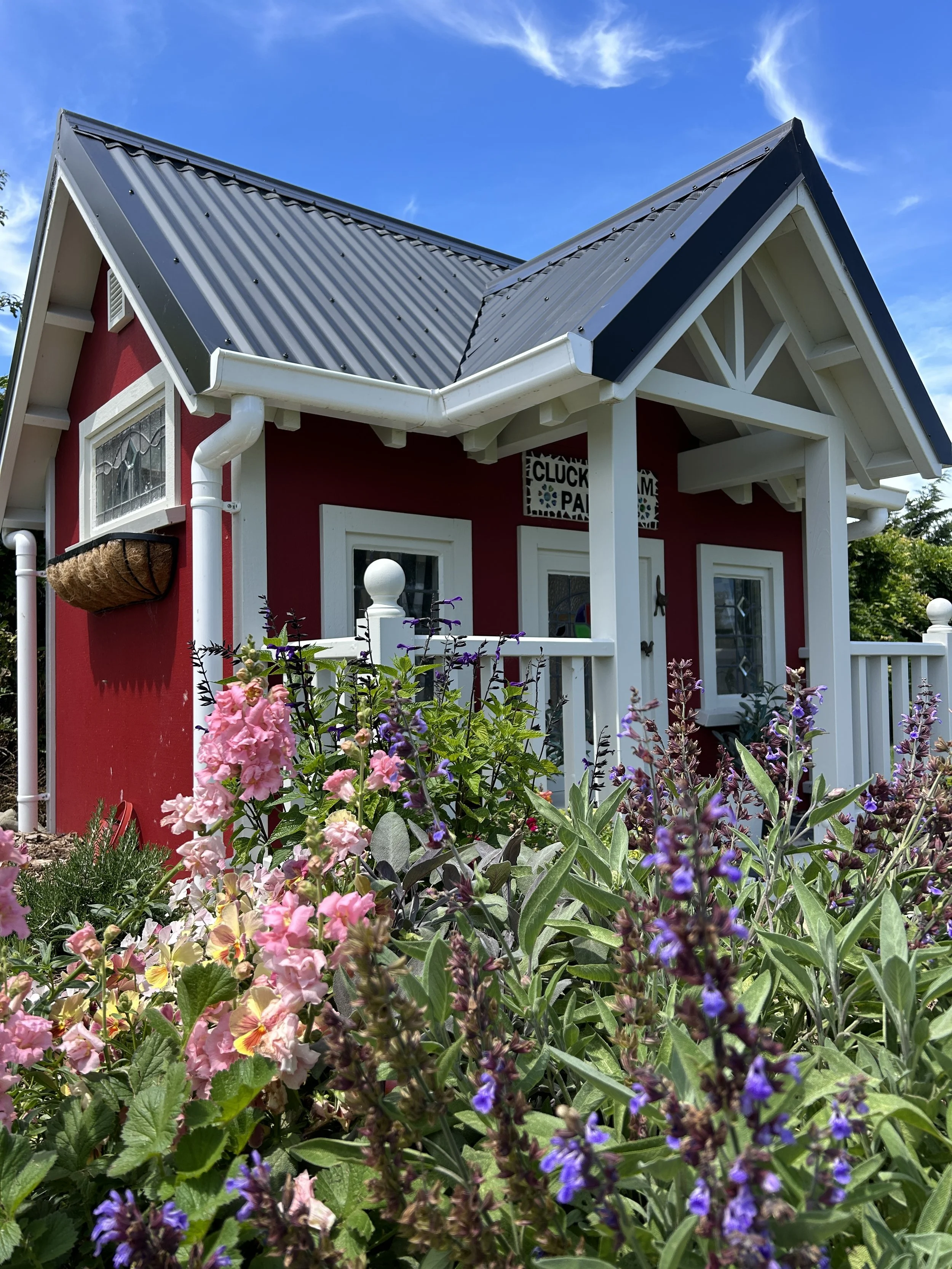
No - these are outdoor chandeliers. Which, I realise, might sound unusual to some people. But then again, not everyone has a chicken coop with a china cabinet, so I think we’ve established that I’m not aiming for “usual.”

Photo: Not my chandeliers, but pretty ones all the same.
It started with the chickens (as these things often do)
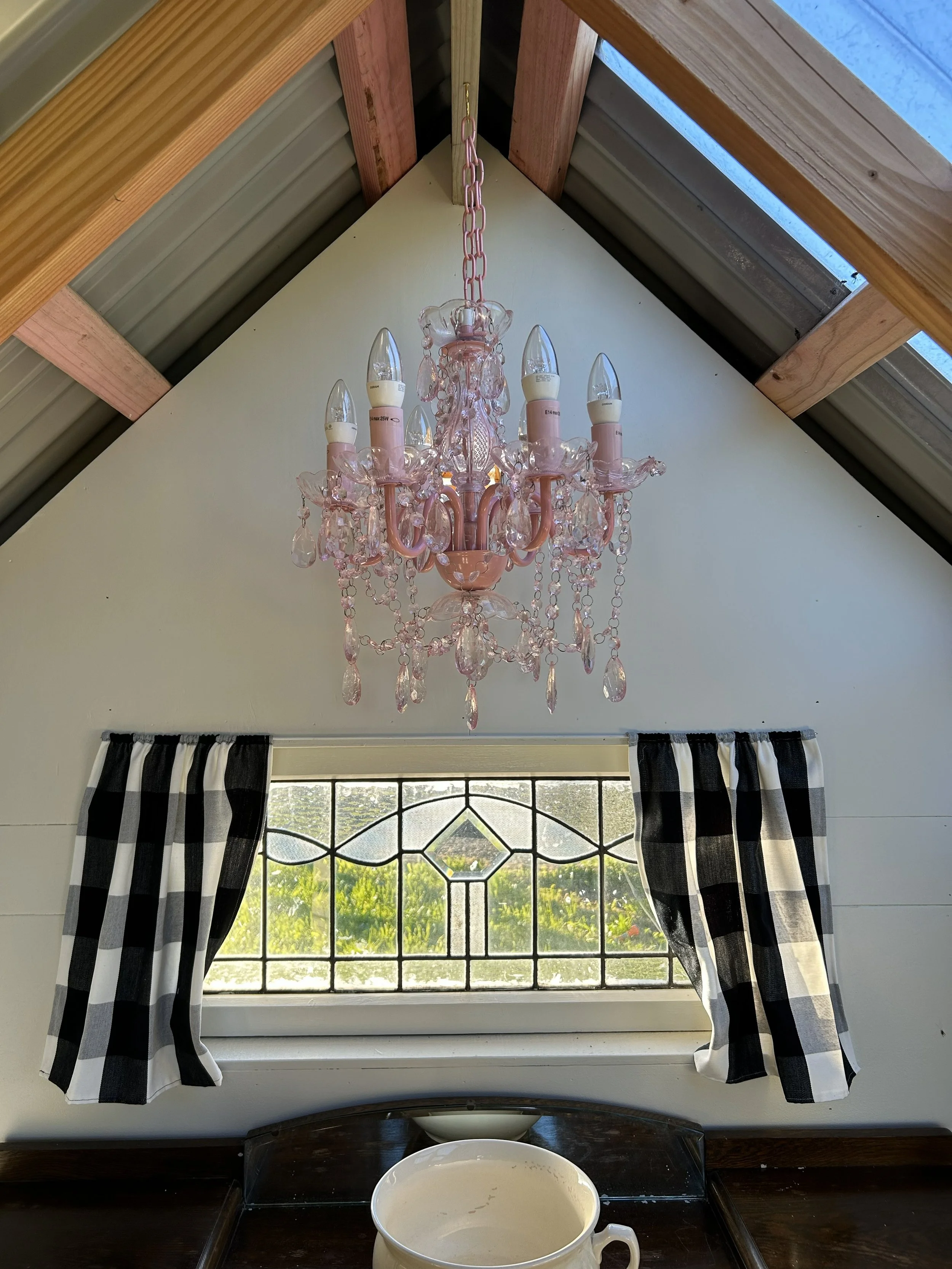
The first chandelier was installed in Cluckingham Palace. Now, in my defence, if you’re going to name something a palace, it does feel like there are certain expectations. You can’t very well have a palace without a chandelier. That would be underdelivering. So the chickens got one. They also got a china cabinet (for nesting, obviously), wall décor, and a general level of interior styling that they absolutely do not care about but I enjoy immensely.
The chandelier ties it all together. It says: “Yes, you lay eggs… but you do it with ambience.”
Then came the greenhouse
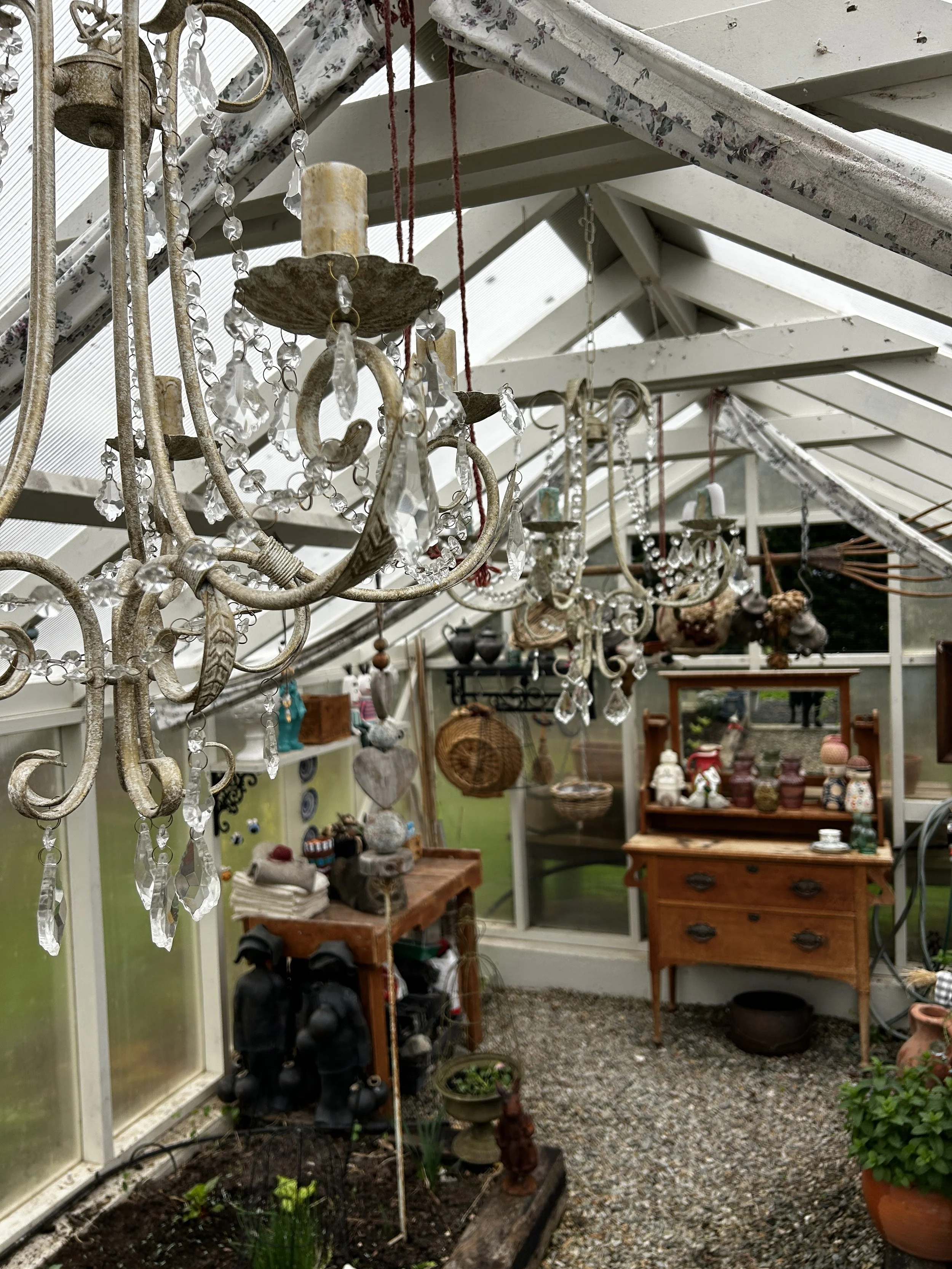
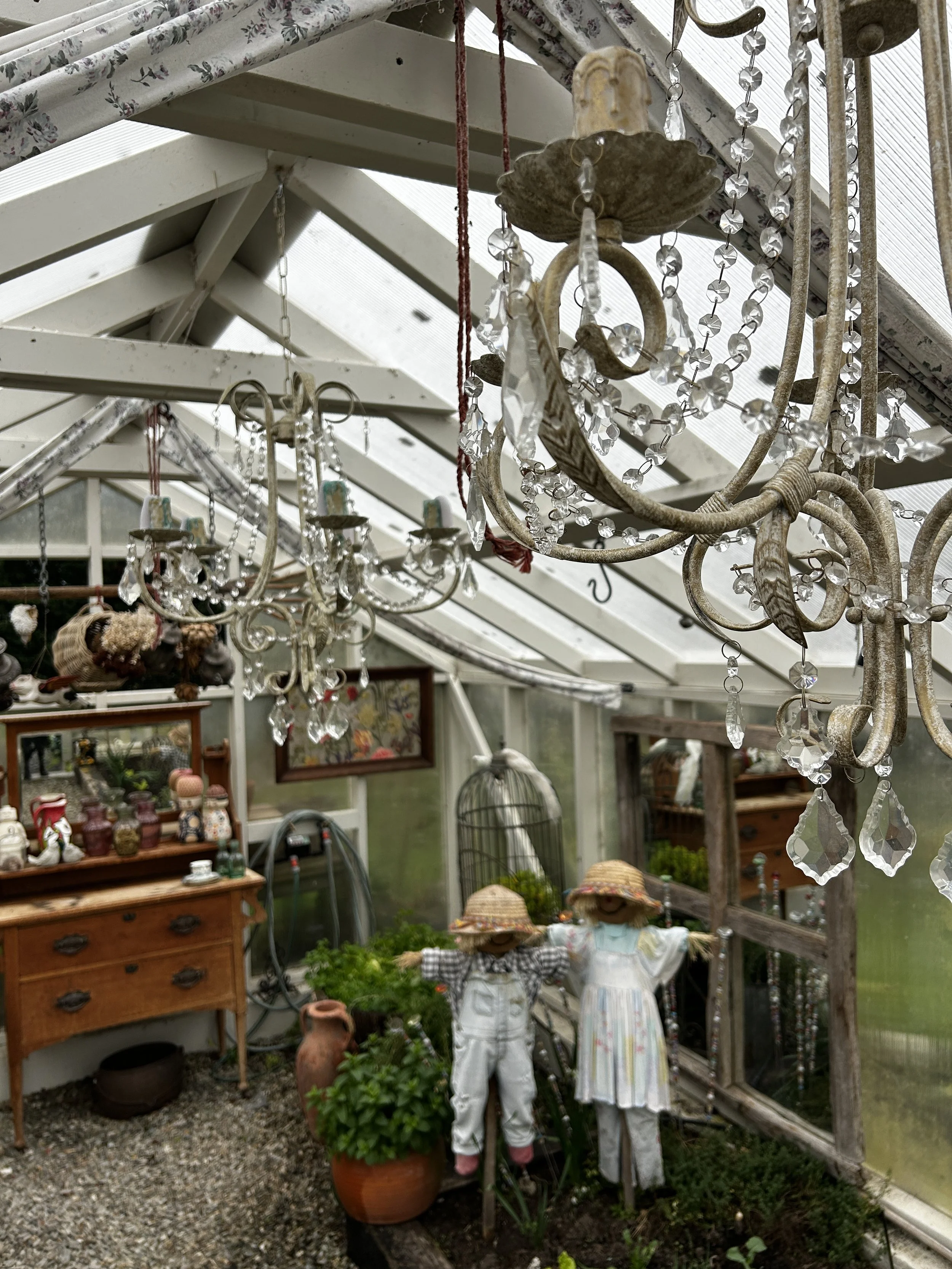
Next, the greenhouse, which is called The Whitehouse, because subtlety has never really been my strength. Now, I cannot confirm whether the actual White House has chandeliers… but I feel like it probably does. Somewhere. At least one. Possibly several.
So, naturally, mine has two…and they match. Because if you’re going to commit to a theme, you commit properly.
And now… the pergola
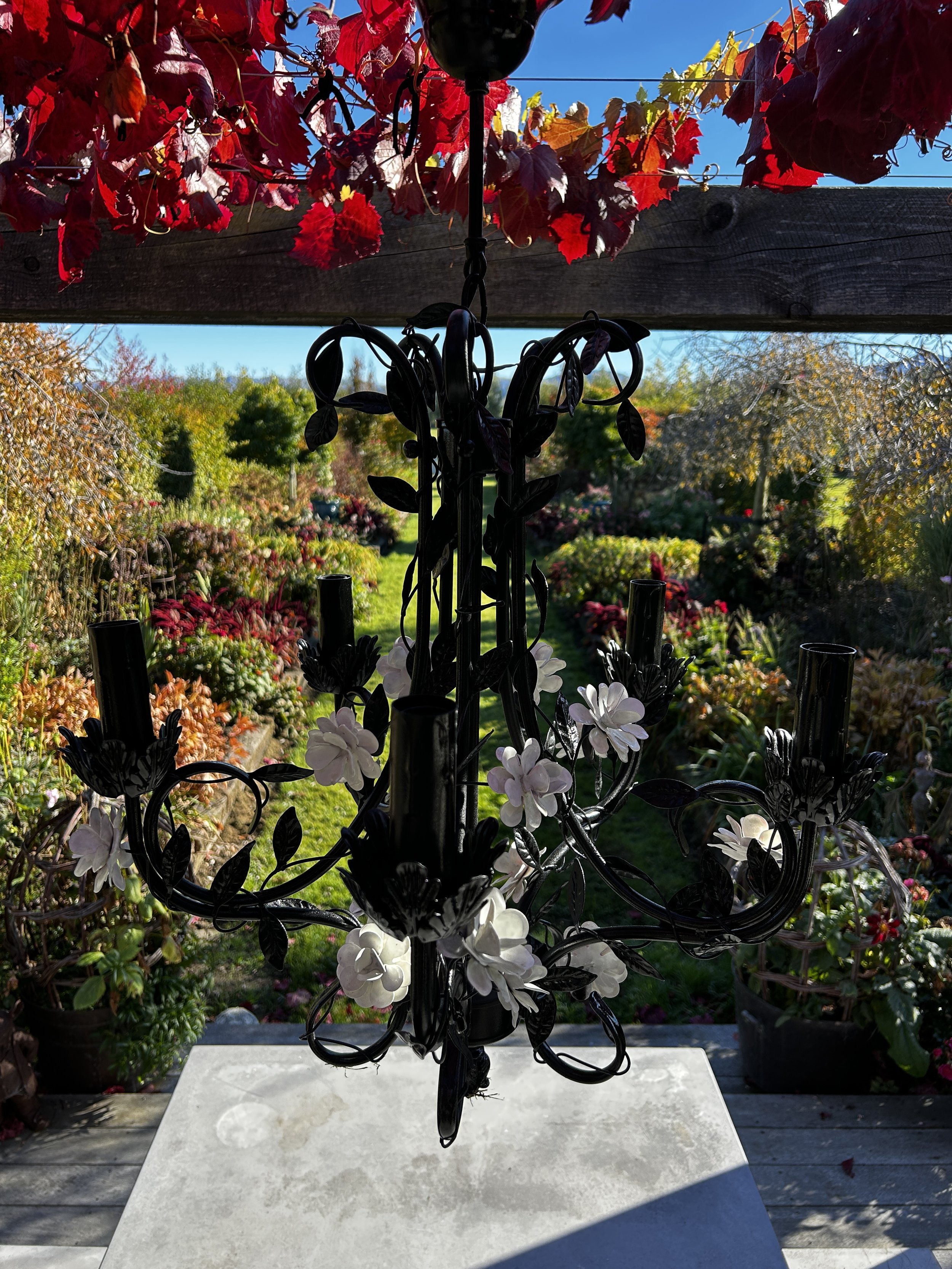
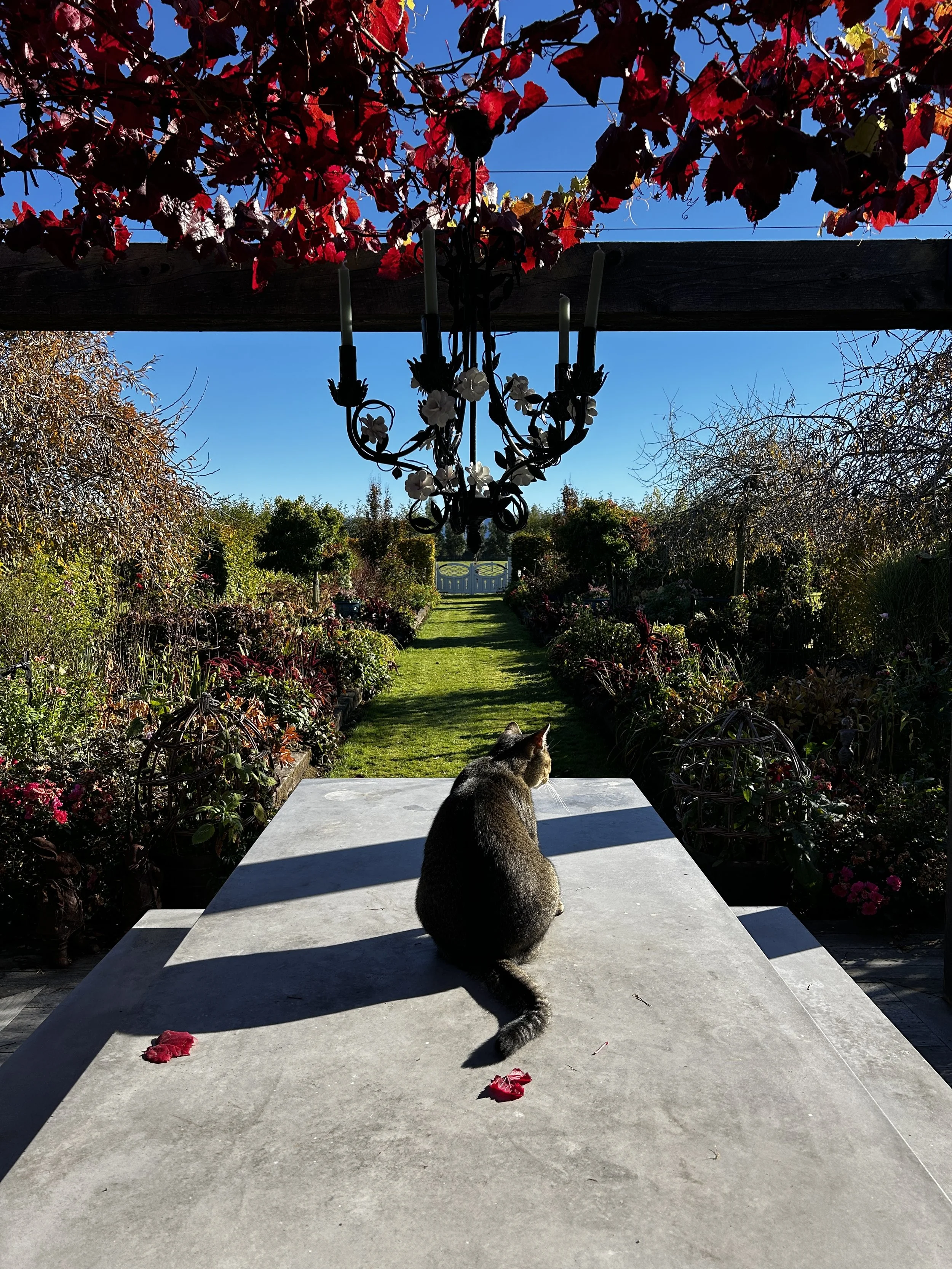
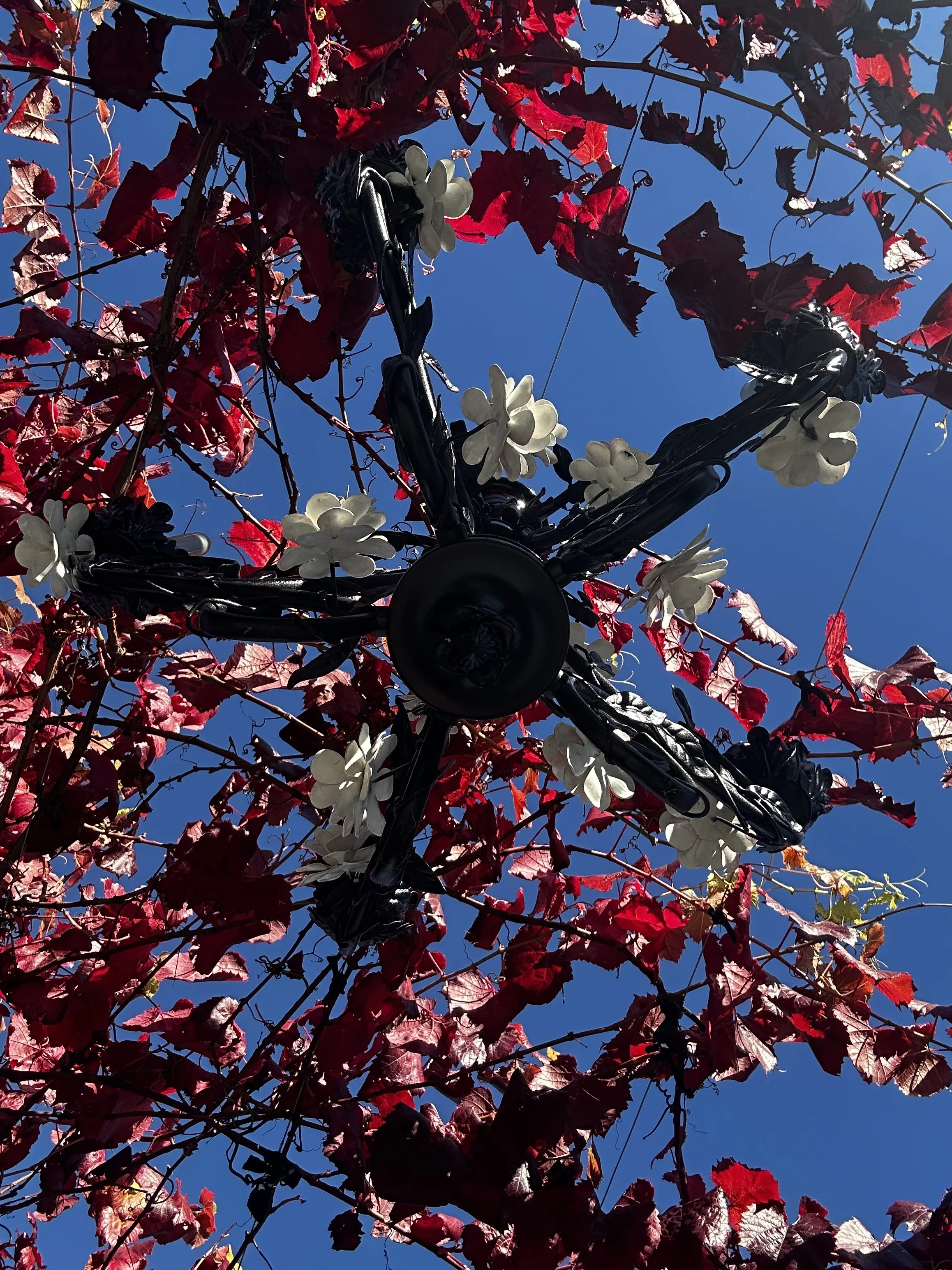
This is where things have taken a turn. I’ve recently acquired another chandelier to hang over the outdoor table, under the pergola, nestled beneath the ornamental grapevine.
The Husband has expressed concerns. Mainly that it’ll “obscure the view.” I’ve explained, several times now, that it’ll enhance the view. ‘Obscure’…’enhance’….these are not the same things. He doesn’t agree. And I respond, naturally, with ‘the shed is your domain, the garden is mine.’ This is a subtle way of saying “you have no dominion here, husband”.
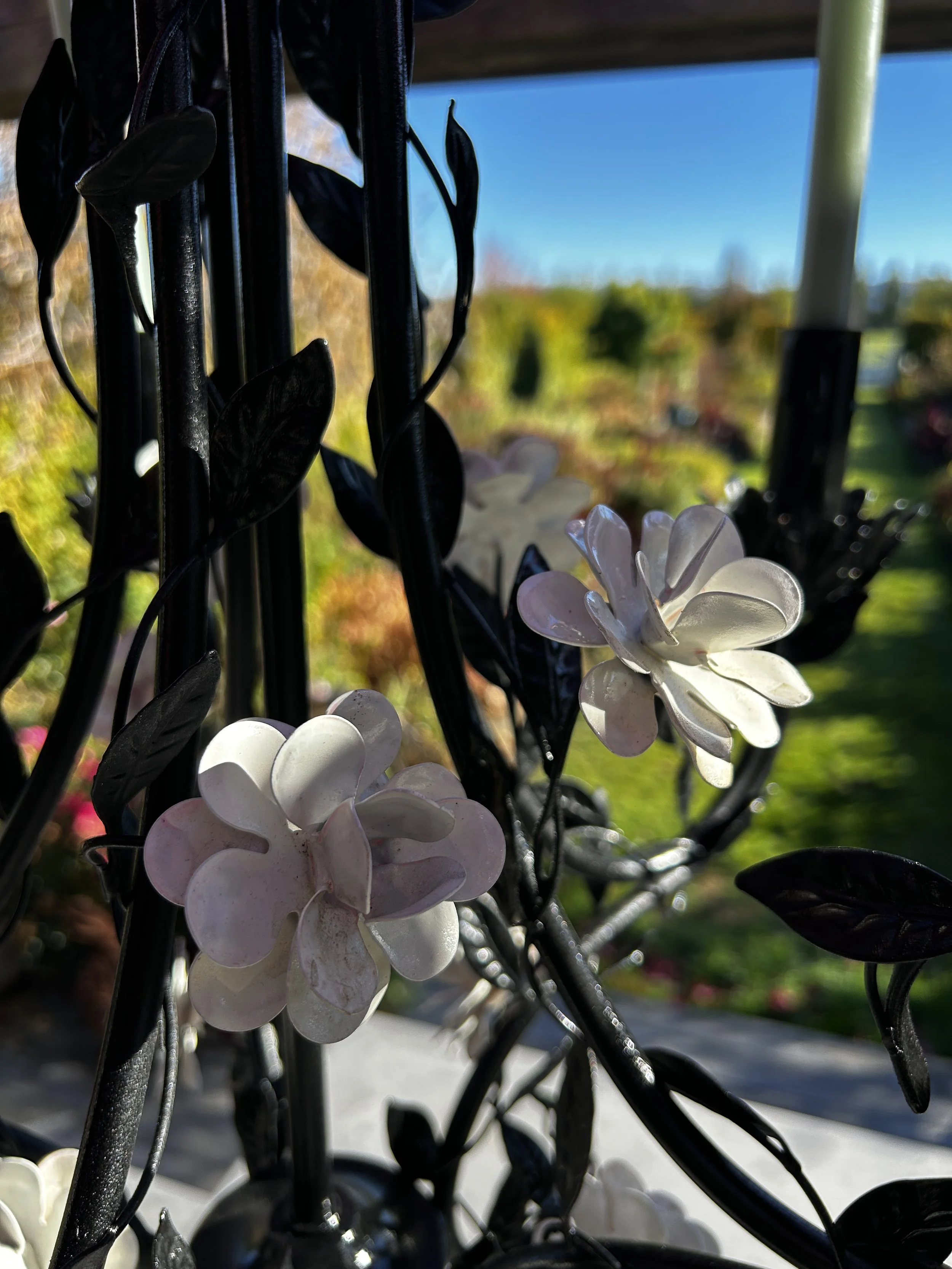
The chandelier in question was originally a very tasteful sage green - lovely and subtle. It blended beautifully into the surroundings. Too beautifully. You could barely see it, which completely defeats the purpose of owning a chandelier.
So, I’ve spray painted it black. The flowers remain white, which now makes it look quite striking and a class act of the highest order. In my humble opinion.
The new problems I’ve created
Of course, with every design decision comes a fresh set of highly niche concerns. For example:
How do I stop a chandelier from violently swinging itself to death in a nor’wester?
Will spray paint hold up in a hailstorm?
At what point does “garden feature” become “weather event casualty”?
These are not questions I ever expected to ask myself. And yet, here we are.

A perfectly normal gardening dilemma
I suspect most gardeners spend their weekends thinking about things like:
soil health
pruning schedules
what to plant next season
Meanwhile, I’m standing under a pergola, holding a chandelier, wondering if it’ll survive impact from frozen sky debris. It feels, in many ways, like a perfectly logical extension of my gardening journey. Because once you’ve accepted:
a chicken palace with a chandelier
a greenhouse with matching lighting
and a general disregard for restraint
Then really… what’s one more chandelier?

Where this ends (it doesn’t)
I’d like to say this is the final one. That I’ve reached chandelier capacity. That this is a contained and reasonable situation. But I think we all know that’s not true.
For now, I’ll focus on solving the immediate problems:
securing it against the wind
testing the durability of my paint job
and convincing The Husband that this is, in fact, an improvement
But also… there are future plans. Perfectly sensible, entirely grounded future plans. At some point, I fully intend to build a living chapel in the garden. A proper one - made from trees, grown over time, the sort of space that feels a little bit magical and slightly unnecessary.
And then there’s the she-shed. Not just any shed, obviously. A she-shed made from recycled stained glass windows, because if you’re going to sit in a garden shed, it may as well feel like a small, slightly impractical cathedral.

Now, I’m no design expert…but it does feel like both of these structures are absolutely crying out for chandeliers. I mean, it would be odd not to.
So while I can’t say for certain where this ends, I can say with some confidence that it ends with:
a tree chapel
a stained glass she-shed
and, quite possibly, an entirely unreasonable number of outdoor chandeliers
At which point, I assume, the garden will finally achieve its full potential. Or I’ll simply have more very specific problems to solve.
Either way, I look forward to it.
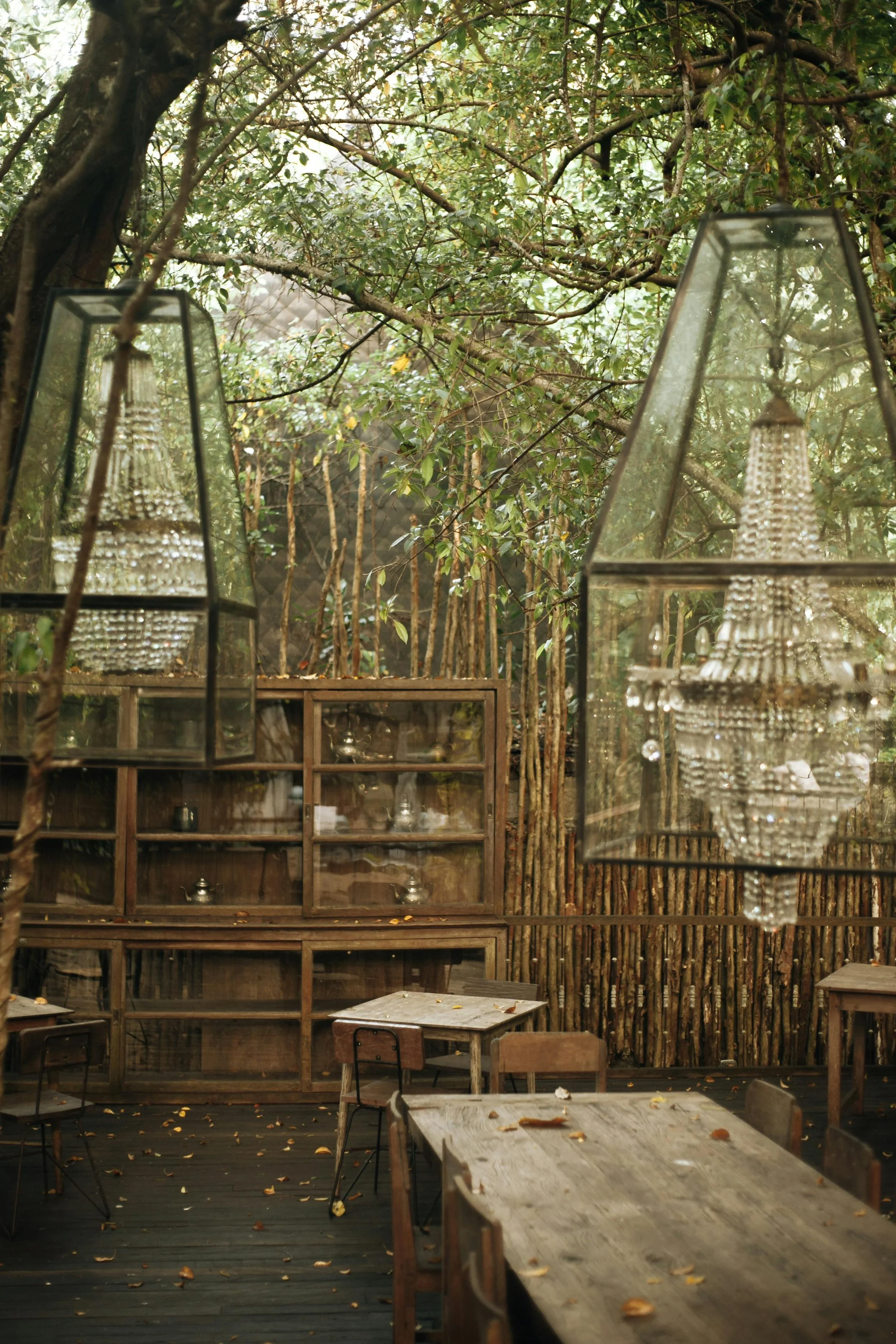
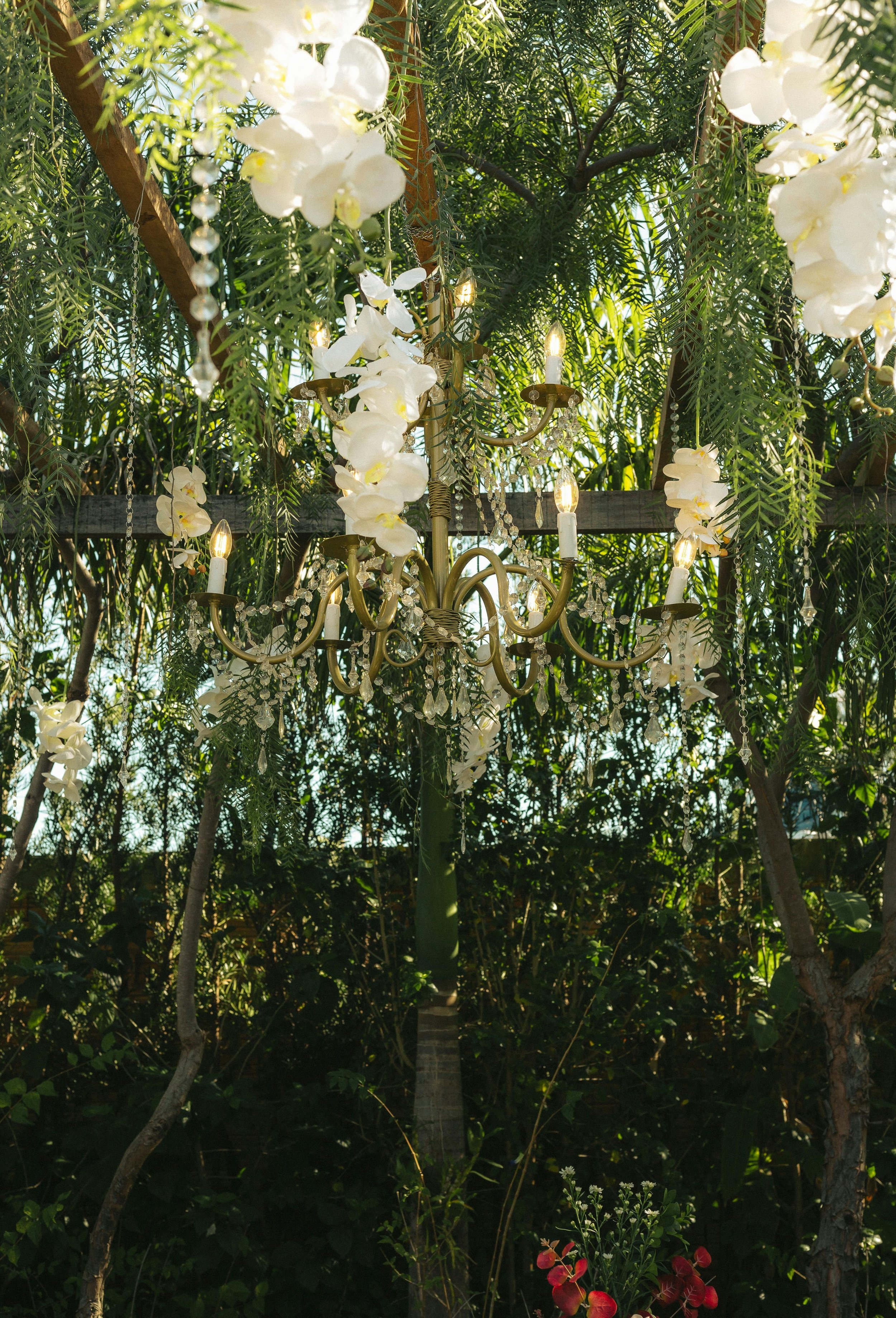
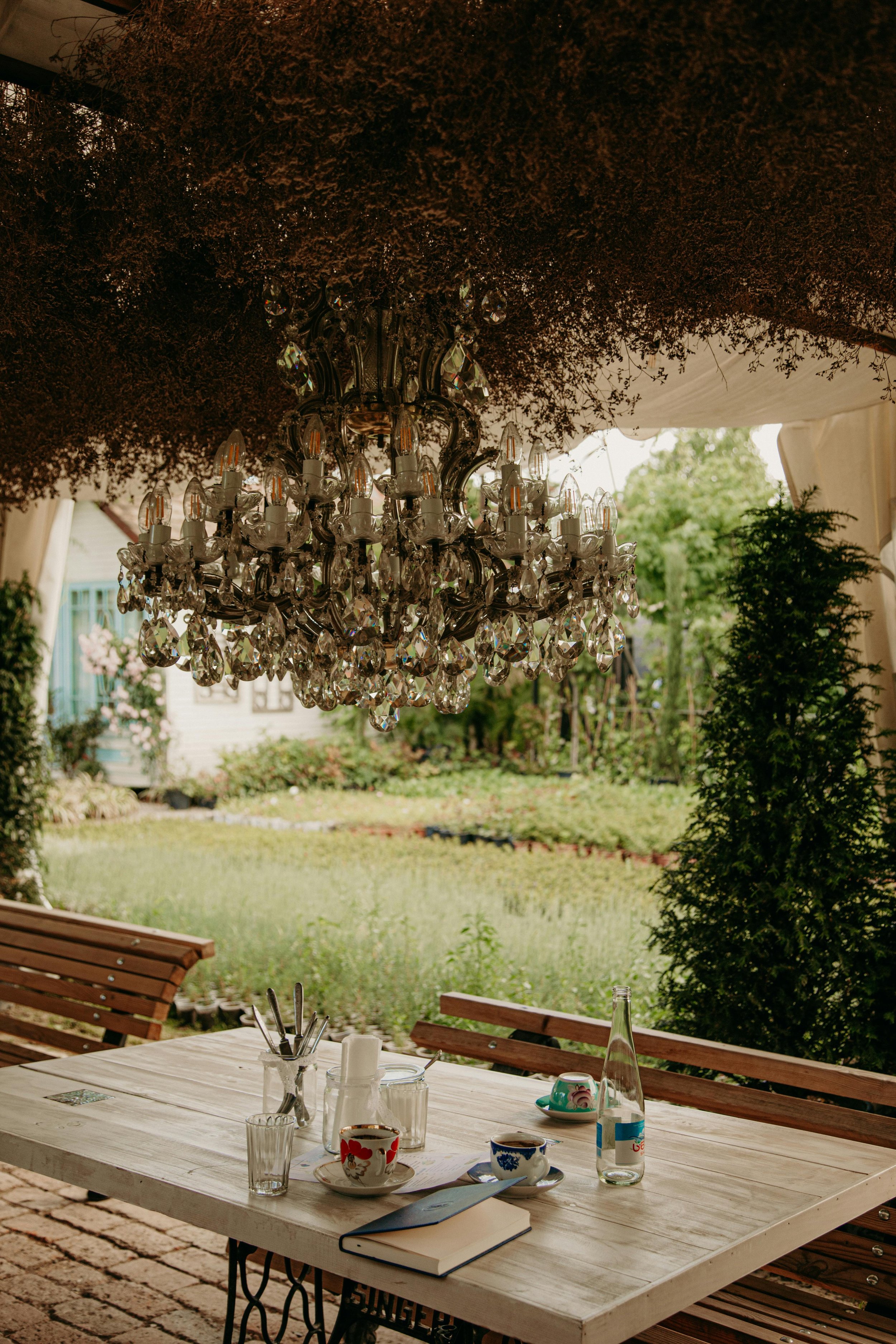
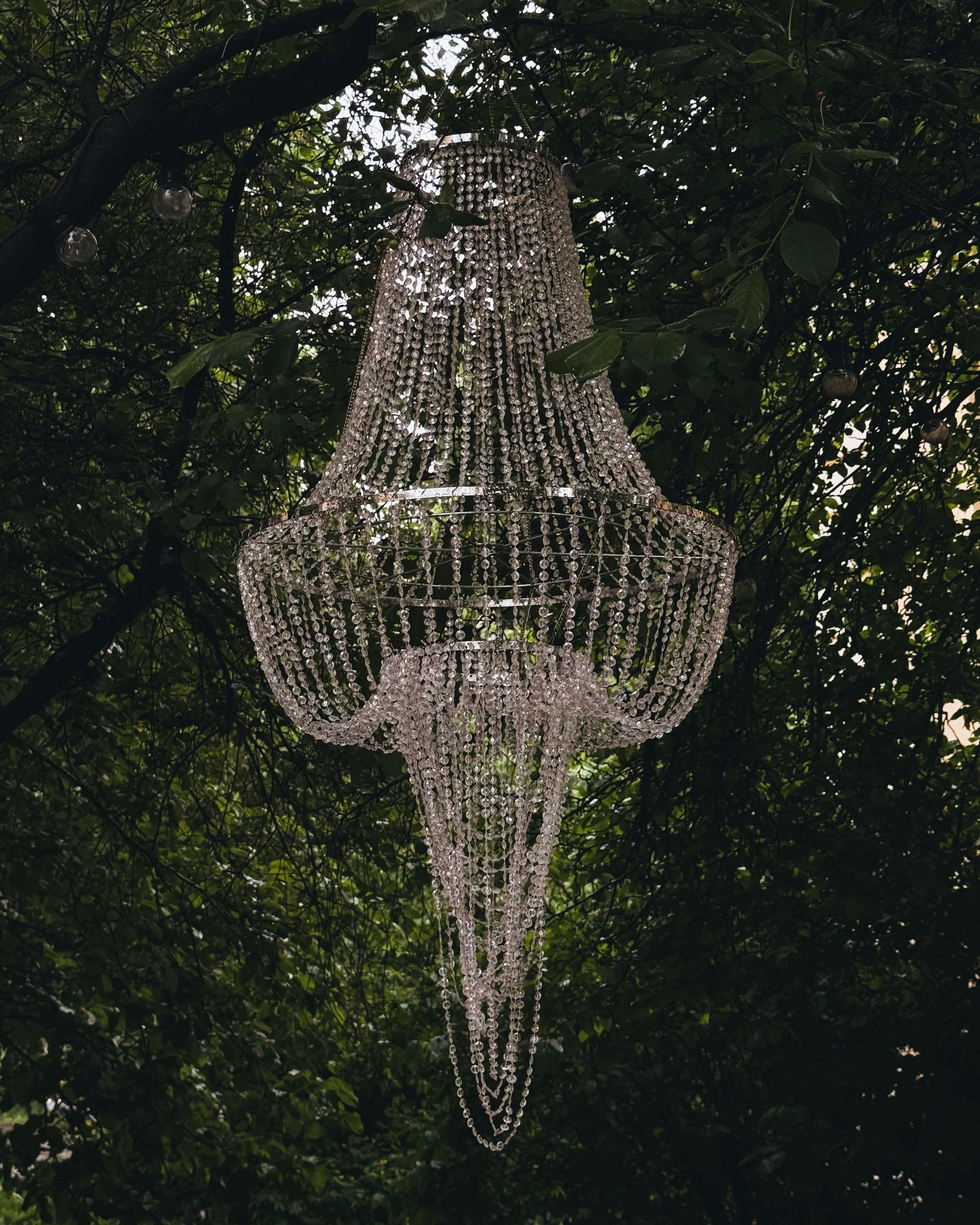
Photos: Random free internet pictures showing other people are just as mad as I am.
Did you know?
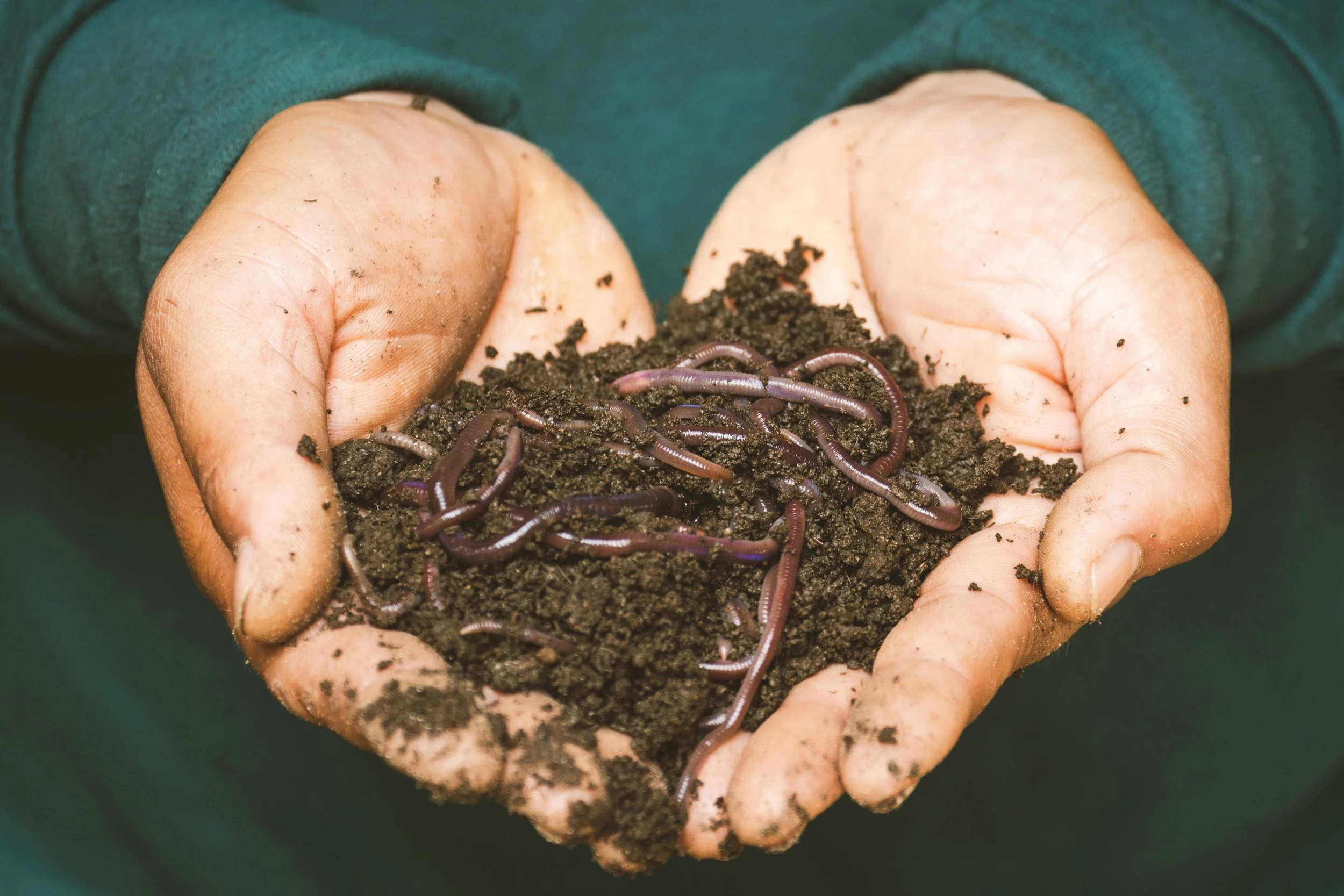
Worms are quietly running your garden like an underground empire. They’ve got five pairs of hearts, breathe through their skin, and spend their days tunnelling, aerating soil, and turning organic matter into some of the richest fertiliser your plants will ever get. A healthy patch of soil can hold thousands of them per square metre - a whole wriggly workforce you didn’t hire but absolutely rely on. Basically, if your garden looks good, it’s not you… it’s the worms.
What to do in the garden this week
Northern hemisphere
🌹Fast growers like roses and veggies are gearing up so give them nutrients or they’ll just sit there judging you. You’ll find suitable fertilisers in any good garden centre, but if you prefer homemade, organic options, then consider well rotted manure, compost, or liquid fertilisers that you can make at home like Comfrey tea. I’ve already published an article about Comfrey tea including how to make it. You’ll find it on my Substack page available to paid subscribers.
🍏Thin fruit early. It feels wrong but it’s a good idea if your trees have set a heavy crop. Remove some of the fruit now so you get bigger and healthier - even if fewer- fruit in the end. With too many fruit, the tree tries to do everything and does it badly.
✂️Clean your tools. Mid-season is prime disease-spreading time. A quick clean and sharpen means healthier plants and less silent sabotage.
🌞Take photos now. It sounds trivial but it’s not. You’ll forget what worked, what was overcrowded, and where the sun actually hit. Your future planning depends on remembering, and photos serve as perfect reminders.
💦Water deeply, but not frequently. A proper soak once a week beats a daily light sprinkle. It trains roots to grow down and not hover near the surface. How long should you water for? It really depends on your soil type and what you’re watering. For veggies and annuals you really want moisture to soak in 15-30cm. For perennials and shrubs, more like 30-45cm and trees deeper still. If you stick your trowel or finger in the soil and it’s only wet on top but dry underneath, then that wasn’t a deep soak.
Southern hemisphere
🌿Stop feeding now. High nitrogen fertiliser now just encourages lush, frost-prone growth so ease off until spring.
🌸When you mulch, don’t smother the crowns. Mulch helps regulate soil temperature and moisture but piling it against stems invites rot. Consider mulch as a blanket, not a burial.
🌼Clean up diseased plant material properly. Don’t compost it. Bin it. If you put it in your compost you’re just preserving next season’s problems.
🪷Frosts have arrived in my area. I’ve got a couple of shrubs that are hardy when established but as babies are still a bit frost tender, so they’ve been covered with frost cloth. The frosts will knock off the dahlias and Amaranthus so as soon as the foliage shows signs of dying off, I’ll cut those all back and the dahlias will be mulched with pea straw as a winter blanket. I don’t lift my dahlias unless I want to move them. They’re in raised beds. I’ve found over the years wet soils are far more damaging to dahlia tubers than cold soils. They’ll cope with cold so long as it’s free draining. I’ve never lost many in my clay-based soil in raised beds, but I have lost some when I’ve overwatered them in pots. So, yes, you can leave dahlias in the ground if you live in frost-prone areas. Frost only kills the foliage and flowers, not the tubers. But if you have wet soils over winter, then definitely lift them.

What’s new on Behind the Garden Gate this week?
🥶Nitty Gritty: this week it’s all about frost heaving. Yep, that thing that took me a few years to work out, and in the meantime I thought I was going slowly mad. If you’ve ever thought someone or something has been digging up your bulbs and perennials but you can never find the culprit, you might be looking in the wrong direction. Learn all about how frost can pop your plants right up and out of the ground.
📚Nitty Gritty: I’ve also written all about how recent global events have highlighted the extent to which we’ve lost the knowledge and skills to be self-reliant, and how we need to relearn these so we can be less reliant on ‘the system’ to feed ourselves.
As I mentioned a couple of weeks ago, I’m in the process of migrating my articles to Substack. It’s so much better set up for publishing this type of content, and I also think probably a much better user experience for you too. The articles I publish arrive straight to your inbox rather than you having to make an effort to head onto my members-only page to find the content. It’s just easier on Substack. I’ve realised that now, and so I encourage any of you who would like to receive my content in that way to head over and subscribe over there. I have free and paid options. Free subscriptions give you my free Sunday newsletter each week plus all the photos and notes with little tips and guidance that I add to my feed every day. Paid subscribers get all that, plus two additional articles each week with much deeper dives including garden knowledge, design tips, plant care advice, the odd recipe, and a bit of humour. You’ll find me as The Manic Botanic on Substack - not Behind the Garden Gate.