
The appearance of competence
I sometimes think my children have spent nearly two decades slowly coming to terms with a difficult culinary truth: I’m not, and never will be, a MasterChef finalist. This is not said with anger. More with disappointment. Lingering, long-term, quietly accumulated disappointment.
In their heads, I suspect they had once hoped I might become the sort of person who could casually whip up something involving a reduction, a glaze, and a dramatic drizzle, then present it like a television judge might appear from the mist and nod approvingly at my general existence. Reality, however, has been less “television kitchen” and more “is this meant to be doing that?”
In fairness, I have tried.
Most recently, I attempted to make caramel sauce from a Gordon Ramsay recipe. The kind of recipe that looks deceptively simple on the page. A short ingredient list. Very confident instructions. The implication being, if you’re a functioning adult, this will all go smoothly.
It did not go smoothly.
Attempt number one resulted in what can only be described as a warm, sweetly flavoured bowl of cream-adjacent liquid. It bore no resemblance to the glossy caramel in the picture, unless the picture had been taken during a different recipe entirely. Possibly a different cuisine. Possibly a different universe.
In a moment of misplaced optimism, I poured it down the sink and started again.
Attempt number two was worse.
It burned so aggressively and so completely that it stopped being food and became a kind of structural adhesive. It clung to the pan with the determination of something that had no intention of ever being removed by human means. Scraping it off felt less like cooking and more like archaeological excavation of a very recent tragedy. Failure number two was decisive.
Attempt number three is the only reason I’m still allowed in the kitchen unsupervised.
By this stage, I had abandoned strict obedience to the recipe and entered what I can only describe as “negotiation mode.” I adjusted things. I interpreted instructions more loosely. I made peace with the fact that Gordon Ramsay and I were now collaborating rather than me simply obeying instructions under duress. And somehow, this one worked. Not perfectly. Not television-perfect. But recognisably caramel sauce. The sort of result where you can serve it without immediately giving a disclaimer about its origin story.
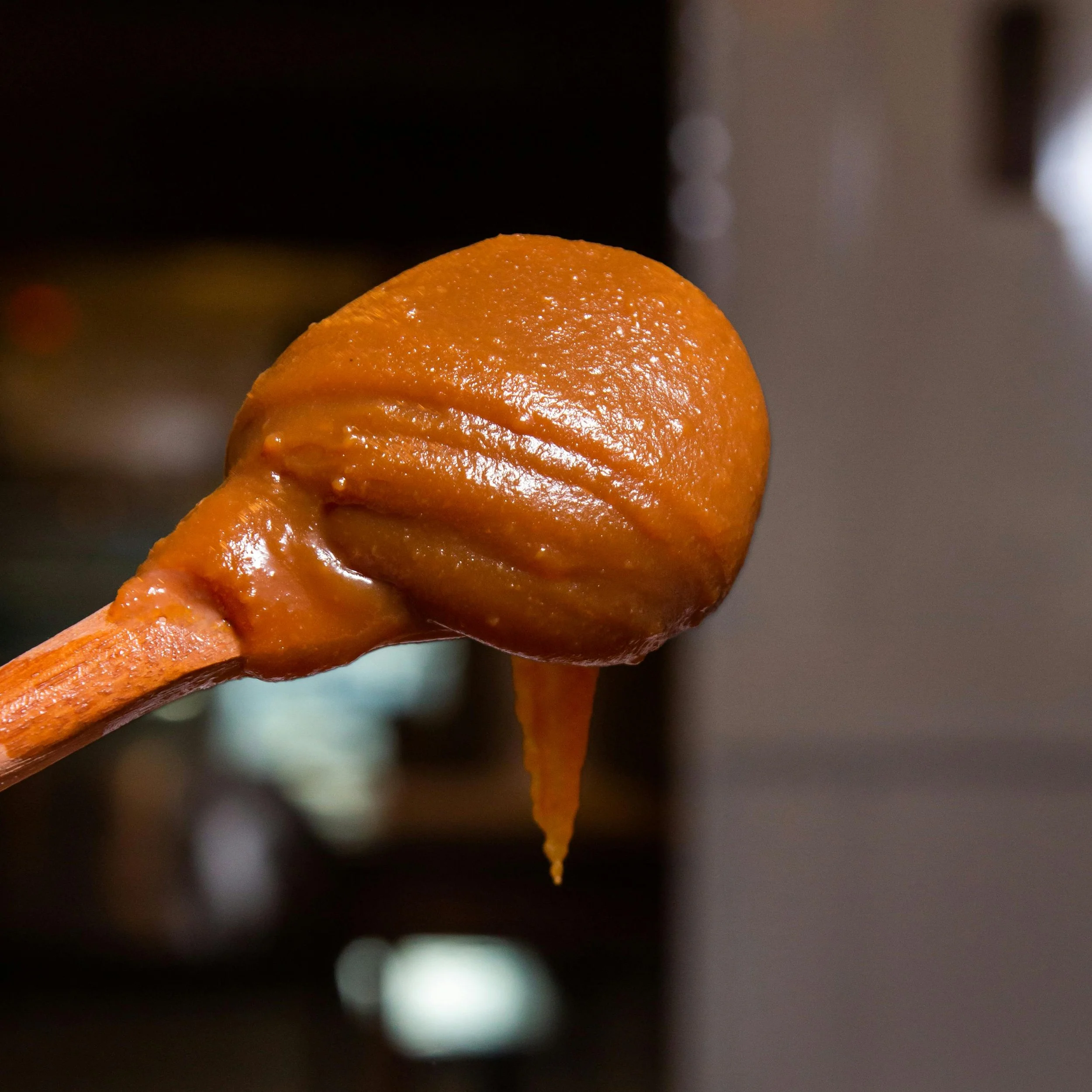
Not my caramel sauce. Mine did not look like this. Not once.
This brings me to something I’ve noticed about MasterChef-style cooking generally: they make everything look suspiciously easy. A few ingredients. A confident pan movement. A flourish. A clean plate. A slow camera pan that suggests chaos has never once entered the kitchen.
Meanwhile, in real kitchens, there’s smoke, doubt, unclear timing, and at least one moment where you consider whether “ruined” is actually a legitimate flavour profile.
And this is where I’ve realised something about myself. In the garden, I seem to get away with it. Not because I’m more talented at gardening than cooking, but because gardening is more forgiving. It allows for recovery. It allows for revision. It allows for quietly replacing something that’s died and pretending that was always the plan.
A failed plant can be:
moved
cut back
replaced
or simply described as “not suited to this position”
A failed sauce, on the other hand, becomes an immediate, irreversible event involving heat, sugar, and regret.
Gardening also has the advantage of time. Plants forgive you slowly. Sometimes over months. Sometimes over seasons. Sometimes by simply reappearing when you had mentally given up on them entirely. A stove doesn’t offer that kind of emotional support. And I suspect this is part of why my children remain slightly confused about my abilities.
From their perspective, I’m apparently capable of producing a garden that looks reasonably intentional most of the time, but unable to reliably produce food that resembles what’s shown in recipe books. Worse still, much of what I grow successfully is green, seasonal, and enthusiastically healthy. Which is exactly the category of food that teenagers are constitutionally suspicious of.
So, my culinary reputation at home remains somewhere between “enthusiastic amateur” and “why is this slightly burnt.” Whereas in the garden, I can at least appear competent. Mistakes are easier to hide among foliage. Failure can be absorbed into soil. Recovery is often just a matter of waiting and quietly replanting something when nobody is watching.
Cooking offers no such camouflage. It’s immediate. It’s revealing. It demands precision and then announces your lack of it to everyone involved.
And so, I’ve come to a simple conclusion. I’m not a MasterChef finalist in disguise. I’m someone who should probably not be left alone with caramel unless supervision or fire extinguishers are nearby.
But I am, at least, a gardener. Which is fortunate, because in gardening, failure has a habit of looking like part of the design. And in cooking, it just looks like you’ve burned the sauce.
Did you know?
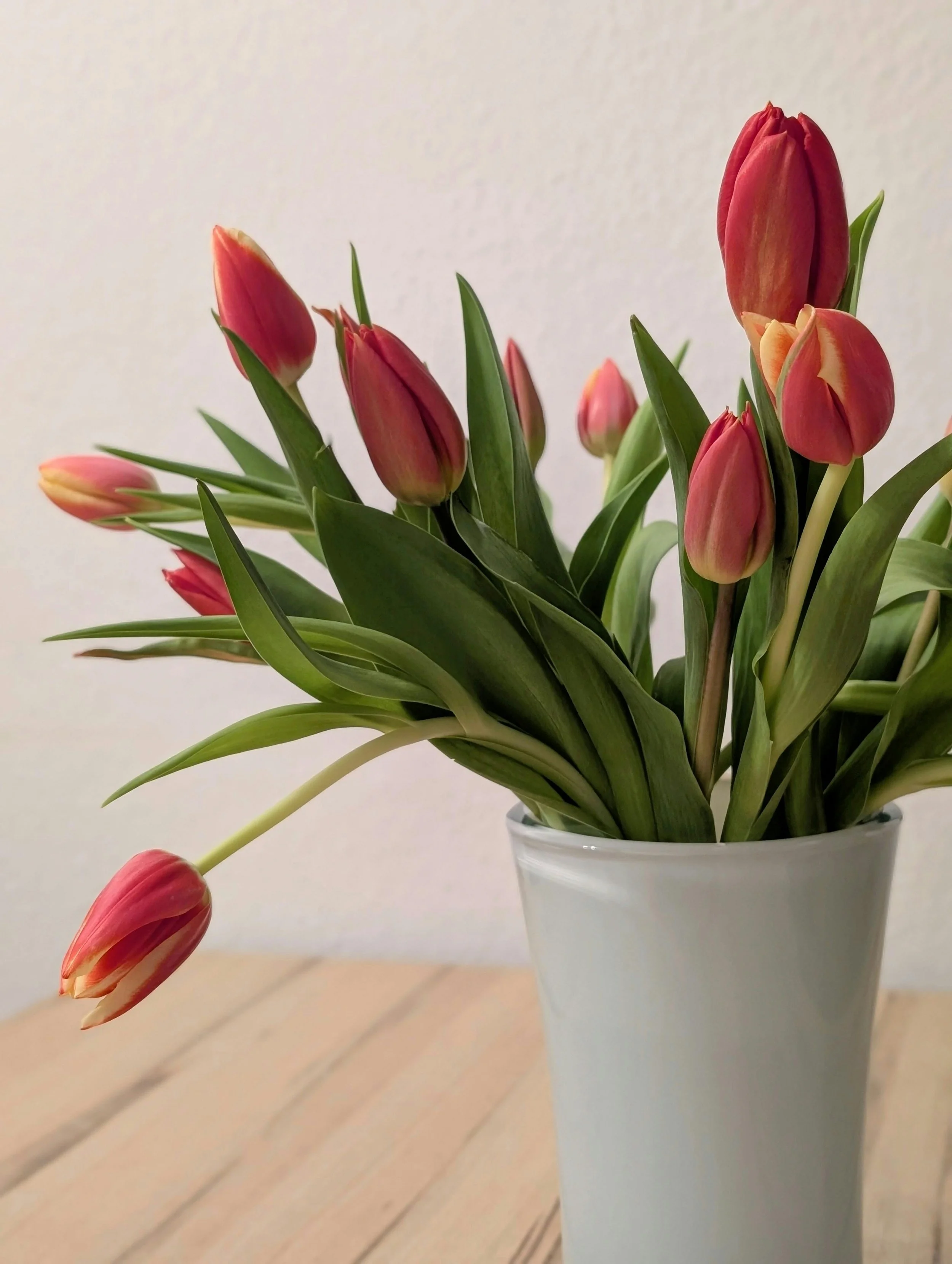
I always assumed that once you cut a flower and put it in a vase, that was pretty much the end of its growing career. Tulips, however, have other ideas.
Unlike most cut flowers, tulips continue to elongate after they've been cut, sometimes growing several centimetres while sitting in a vase on your kitchen bench. They also bend and twist towards light sources, meaning a perfectly arranged bouquet can look entirely different a few days later. Scientists have studied this behaviour, with research showing that tulip stems continue to elongate even after harvest.
What’s new on Behind the Garden Gate?
🌿Nitty Gritty: it’s easy to feel glum about winter, but trust me when I say this, there’s beauty in decay. Yes, really.
➗Nitty Gritty: the truth about gardening is that it forces us to face the mathematical realities of life. But I also think gardening makes us eternal optimists.