
The glamour of being an airline pilot’s wife

People often assume that having an airline pilot husband is glamorous. They imagine exotic destinations, exciting travel stories, and a sophisticated lifestyle. What they don’t imagine is me standing in a paddock at 7pm trying to explain to a sheep why I am entirely unqualified to deal with whatever nonsense it has chosen to do today.
The fundamental problem with airline pilot husbands is that they’re frequently in another country when things happen. And things always happen...not occasionally...always.
Normal people can look at a large gardening project and think: “I’ll wait until my husband gets home.” I am unfamiliar with this concept. The Husband might not be home for three days…sometimes five. By then I’ll have had at least 72 hours to overthink the project, redesign it twice, and convince myself that moving several hundred kilograms of something by myself is entirely reasonable.
I’m five foot two and a half and, unfortunately, I possess the confidence levels of a six-foot Amazon warrior who regularly wrestles bears for recreation. This combination has produced some spectacular results and several less spectacular visits to the chiropractor.

Over the years I’ve developed a highly specialised skill set. I can move railway sleepers, rocks, sculptures and large garden ornaments that, in hindsight, were probably never intended to be moved at all. My methods are not always elegant…or safe...or endorsed by any recognised workplace health and safety authority. But eventually the object arrives at its destination... well, usually.
One of my proudest qualities is that I simply get things done. One of my least admirable qualities is that I never stop to ask whether I should. Take the vintage milk can incident...the vintage milk can was full of dirt…a lot of dirt…an amount of dirt that should have immediately ruled out any lifting activities. Instead, I looked at it and thought: “How heavy can dirt really be?” The answer, it turns out, is quite heavy. My lower back conducted a detailed investigation into the matter for the following fortnight.
The animals, meanwhile, have developed their own system. I’m convinced they know when The Husband is away. Somewhere there’s clearly a group chat and the moment his plane leaves the runway a notification goes out…HUSBAND AWAY. COMMENCE SHENANIGANS.
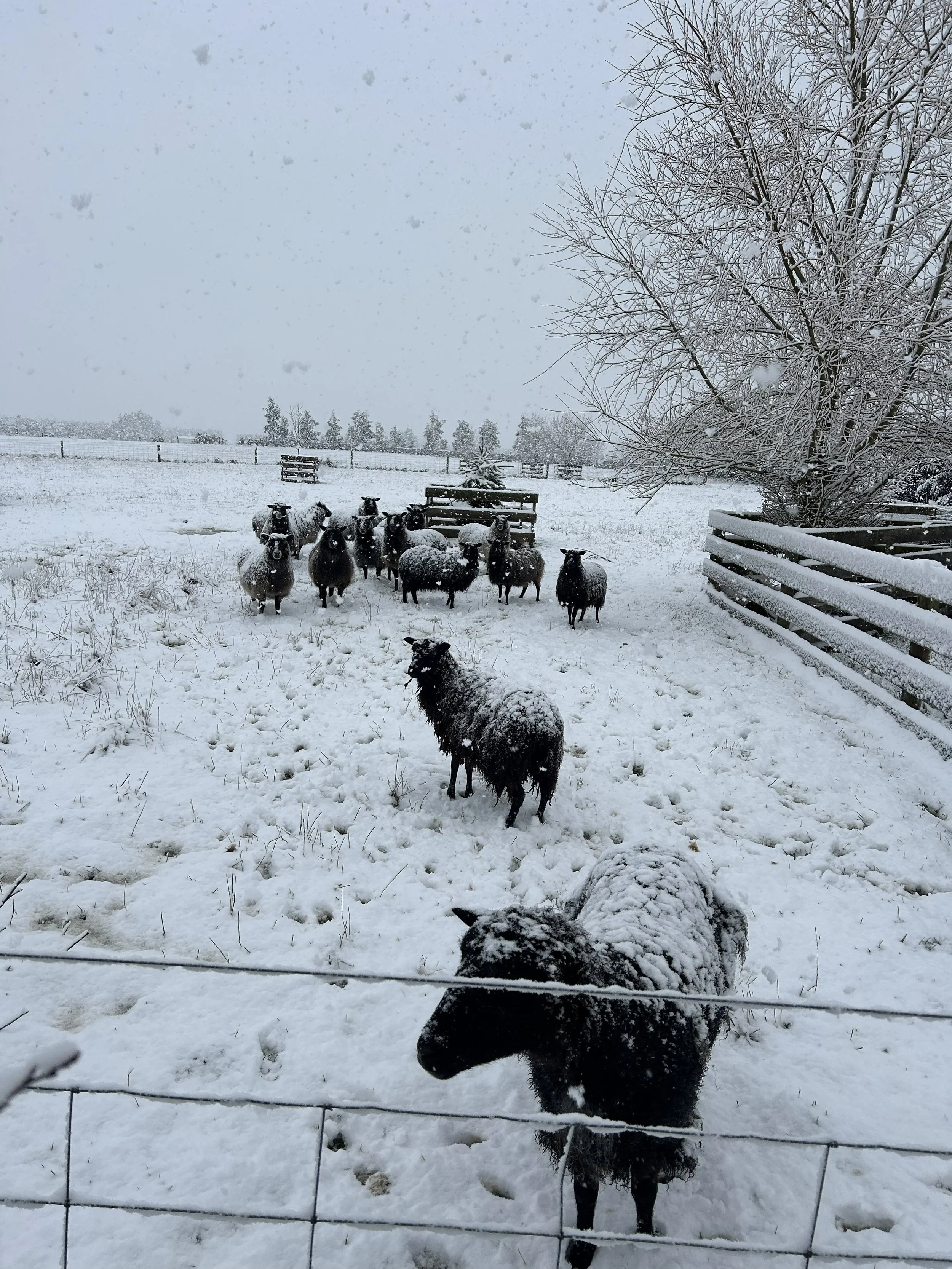
If a cat requires an emergency vet visit, he’ll be away; if a sheep jams the ballcock on the trough and drains the water tank, he’ll be away; if a wether develops pizzle rot and suddenly can’t wee, he’ll be away; if something needs rescuing, medicating, untangling, lifting, catching, fixing, or euthanising, he’ll be away. The animals are nothing if not organised and unlike the airline industry, they appear to run on schedule.
There is, however, one major advantage to his absence. The power tools. When he’s home, there are questions…like: “What’s your plan?” “Do you know how to use that?” “Don’t wreck my chainsaw”.
When he’s away, there’s freedom...pure, unrestricted freedom. I can wander around the garden with power tools and absolutely nobody can stop me. As a public service, I occasionally send him photographs…just a photograph…no explanation. A chainsaw next to a hedge, an angle grinder beside a garden sculpture, a drill balanced on a wheelbarrow. Sometimes a ladder appears in the background. Then I put my phone down and wait. A few minutes later the message arrives. “What exactly are you doing?”
And that, right there, is one of the great joys of marriage. Not the trust, not the companionship….but the ability to create mild psychological distress from several thousand kilometres away.
The truth is that having an airline pilot husband has made me incredibly self-sufficient. I can solve problems, fix things, move things, catch things, and generally muddle through whatever crisis presents itself. Would life be easier if there were another pair of hands available? Probably. Would I wait for them? Absolutely not. I’ve already started the next project.

Did you know?
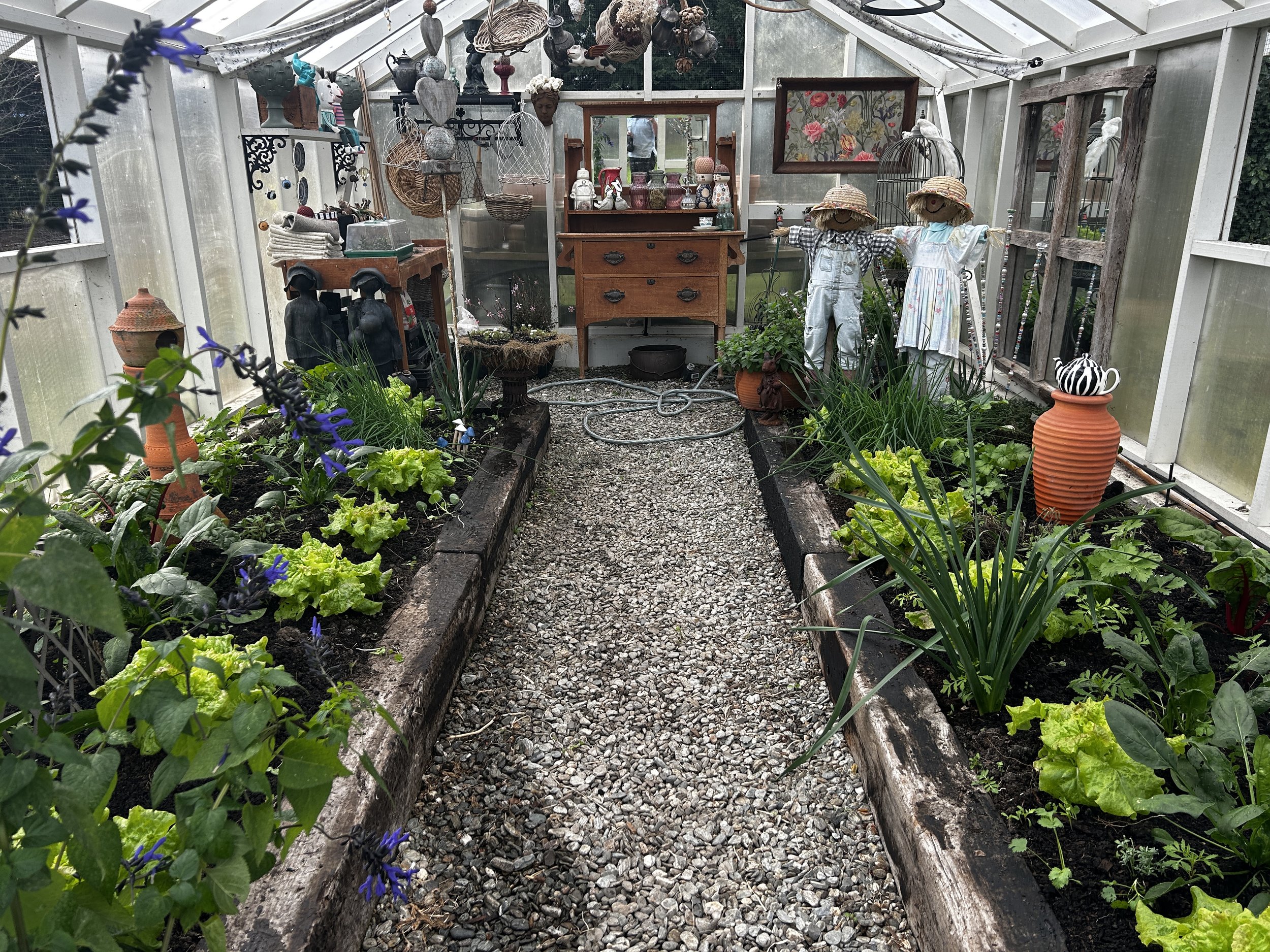
Companion planting is basically the garden version of choosing your neighbours wisely. Some plants are generous friends, offering shade, attracting pollinators, confusing pests or even improving the soil for those growing nearby. I use a very simplified version of companion planting in my greenhouse, interspersing plenty of useful herbs and flowers amongst the edibles. The best herbs that pack a punch when it comes to pest deterrence are mint and rosemary. Always plant mint in a pot or container as it has ambitions of world domination. Future You will ugly cry if you don’t heed my advice on this. The other herbs and flowers I plant directly into the raised beds….chives, sage, thyme, marigolds, nasturtium and borage. I’m going into year six of having a greenhouse and the worst I’ve had to deal with is small infestations of aphids early in the spring when many of the companion plants are still getting established for the season. Other than that, nothing. I’ve never used a spray, not even an organic one. It’s a reminder that in nature, plants are constantly interacting, communicating and helping each other survive. If you’re constantly battling pests in your greenhouse or veggie patch, I recommend you seriously consider employing companion planting concepts. It’s not a myth…it really does work.
What’s new on Behind the Garden Gate this week?
🌿Garden to table: Am I the garden a%$*hole here? Have a read of this and tell me if you think I’m the most selfish person ever.
🌹Nitty Gritty: achieving seasonal colour. It’s something most gardeners struggle with, especially when starting out. This article will help you plan a garden that looks colourful almost all year round. Almost.