I never stood a chance
The gardening gene: why I never stood a chance
Some people choose their hobbies. Some stumble into them.
And then there are people like me. People who never had a hope in hell of escaping their fate because gardening wasn’t a lifestyle, it was a genetic inevitability. I didn’t stand a chance. I’m amazed it didn’t show up on my birth certificate under “distinguishing features: predisposed to excessive mulching.”
Let’s begin with my father’s side of the family, specifically, my grandmother, Gwyn Masters. She lived next door my entire childhood, which meant I spent approximately 18 years marinating in horticulture whether I wanted to or not. She didn’t just garden. No. She ran a three-acre botanical empire that she regularly opened to the public.
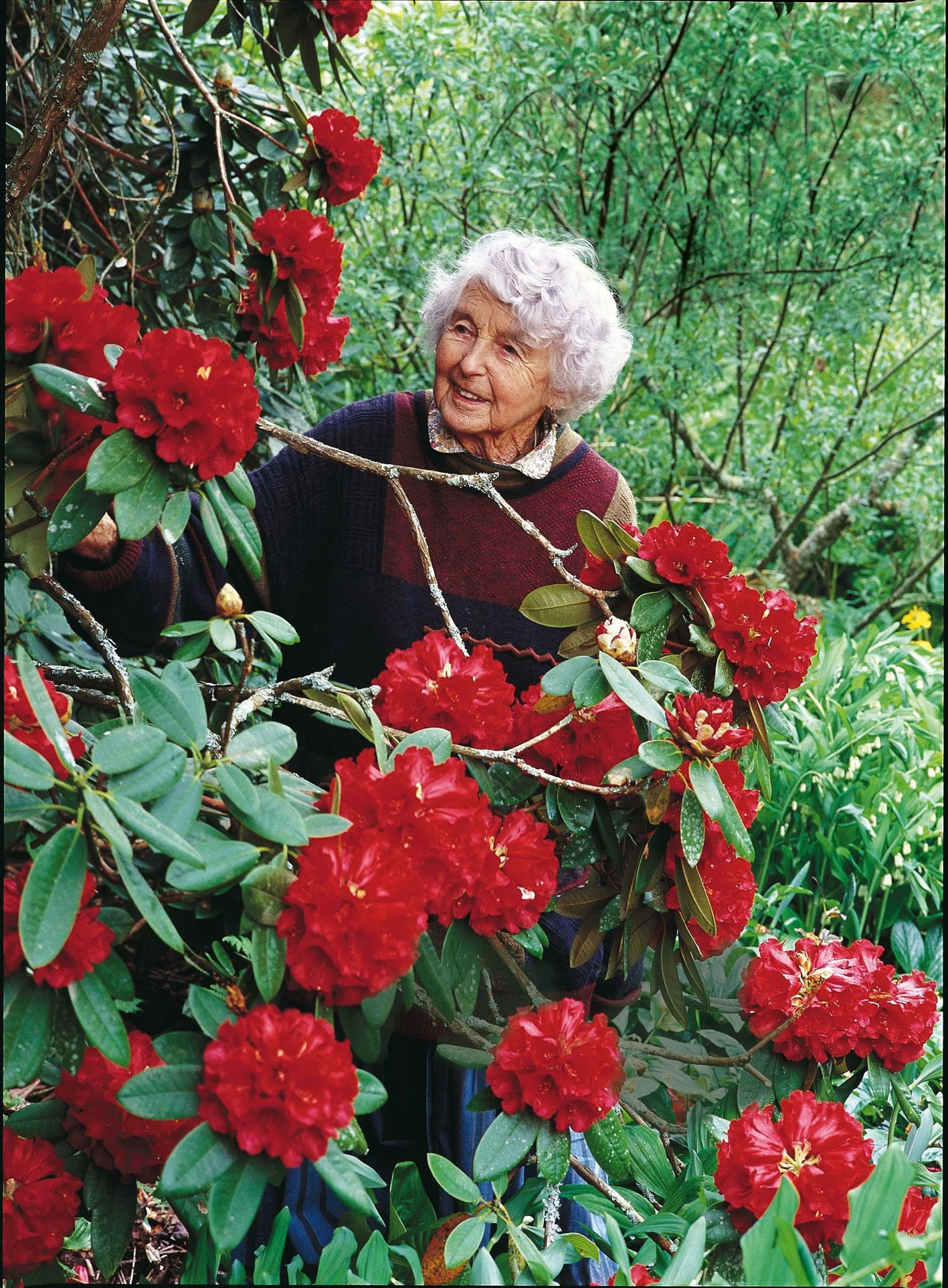
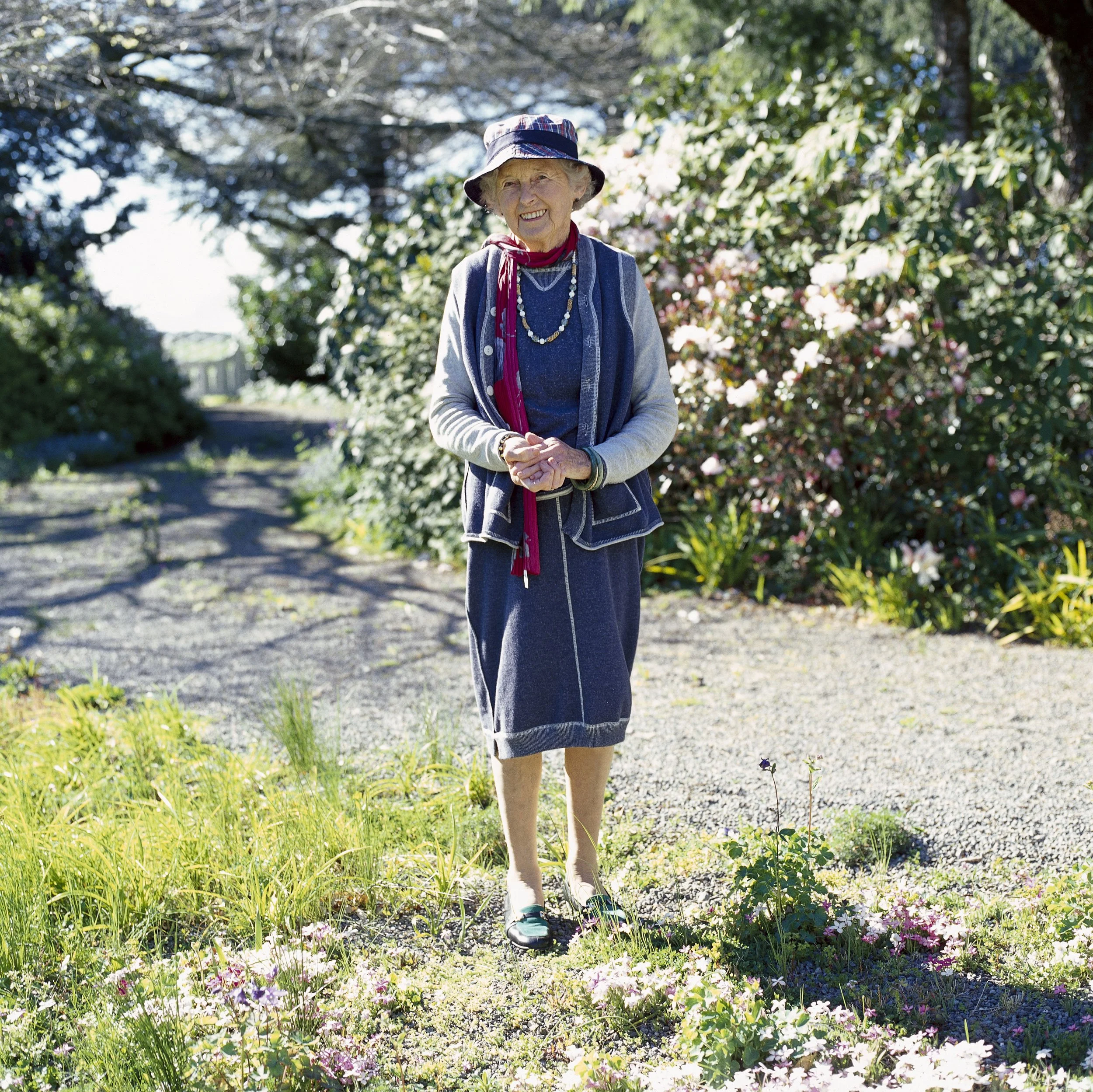
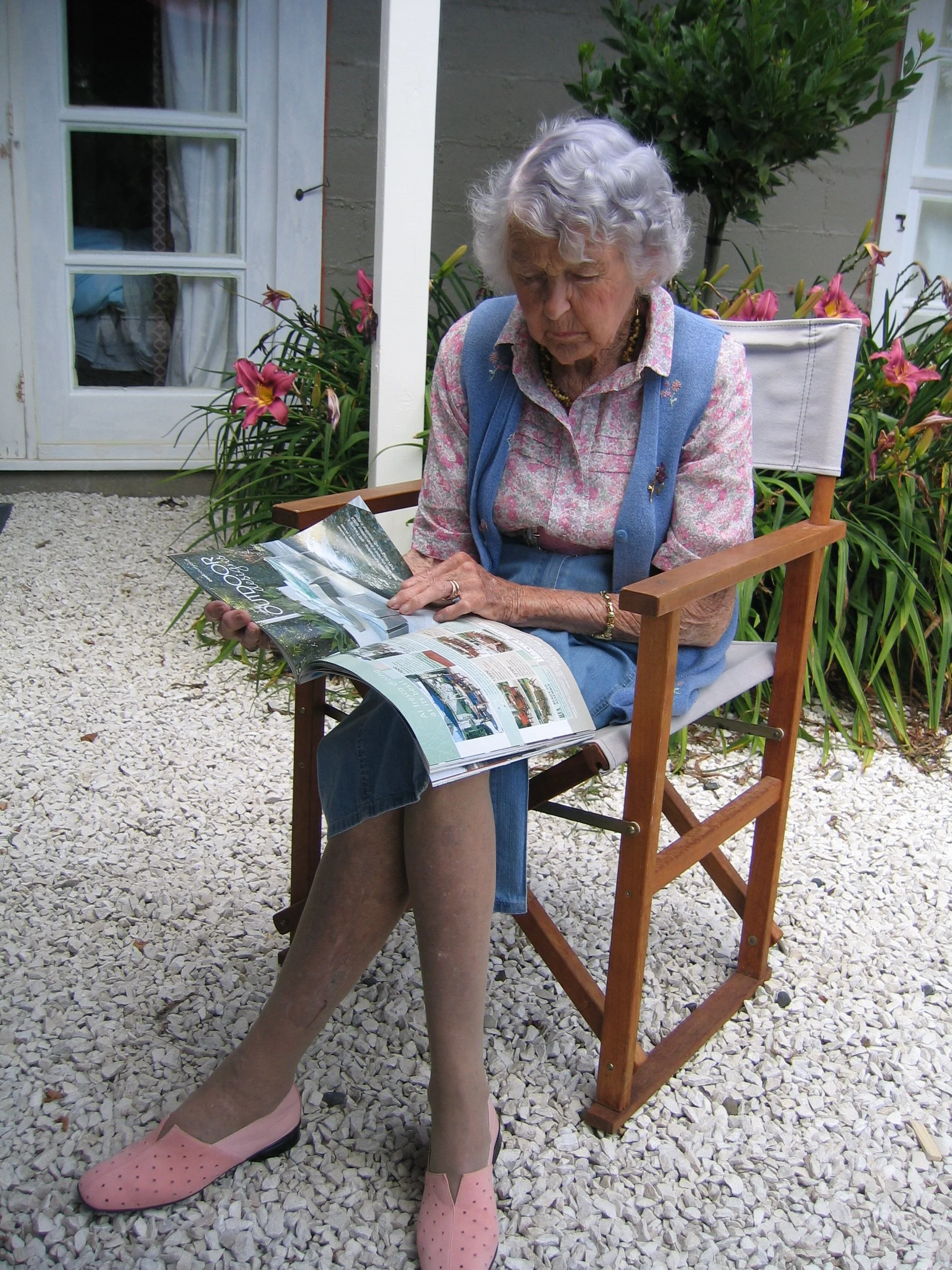

Photos: The first photo is Gwyn with the rhododendron she bred and that bears her name “Gwyneth Masters”. I have two in my garden. This photo appeared in the NZ Gardener magazine many years ago. The second photo is Gwyn standing in her driveway. A lovely photo that appeared in the NZ House & Garden magazine. The third photo is Gwyn at my previous garden in the Waikato, and the last is Gwyn all dressed up and ready to socialise. Gwyn was quite the social butterfly. And yes, we’ve always called her Gwyn, not ‘gran’, although when she became a great-grandmother, she did adopt the moniker ‘SuperGran’.
And when I say “opened to the public,” I don’t mean a friendly stroll for the neighbours. I mean proper open days, magazine features, and appearances on The Maggie Barry Garden Show - a reference that immediately reveals both my grandmother’s gardening status and my own age bracket. If you know who Maggie Barry is without Googling… welcome to the club of People Who Can Pull a Muscle While Sleeping.
My grandmother was a gardening celebrity in Taranaki. A social butterfly with secateurs in her pocket, fluttering around on open days inspiring people left, right, and centre. Meanwhile, I sat on a little chair at the gate, taking the entry fee like a ten-year-old bouncer at a floral nightclub. Very few childhood experiences prepare you for life like being responsible for greeting a never-ending stream of strangers who want to see your grandmother’s rhododendrons.
She lived to 97, and I’m convinced gardening was the thing that kept her going. That, and possibly the adrenaline of watching small grandchildren mow lawns dangerously close to bodies of water. But we’ll get to that.
On the other side of my family sits my mother, also blessed with the gardening gene. I grew up on a property that was being developed, landscaped, expanded, and re-imagined during my entire childhood. I spent years surrounded by ever-expanding garden beds, large future plans, and lawn. So. Much. Lawn. Now? Now it’s every gardener’s dream garden. It’s practically begging to be Instagrammed… if only my 80-years-young mother could survive a trip through Instagram Edits.
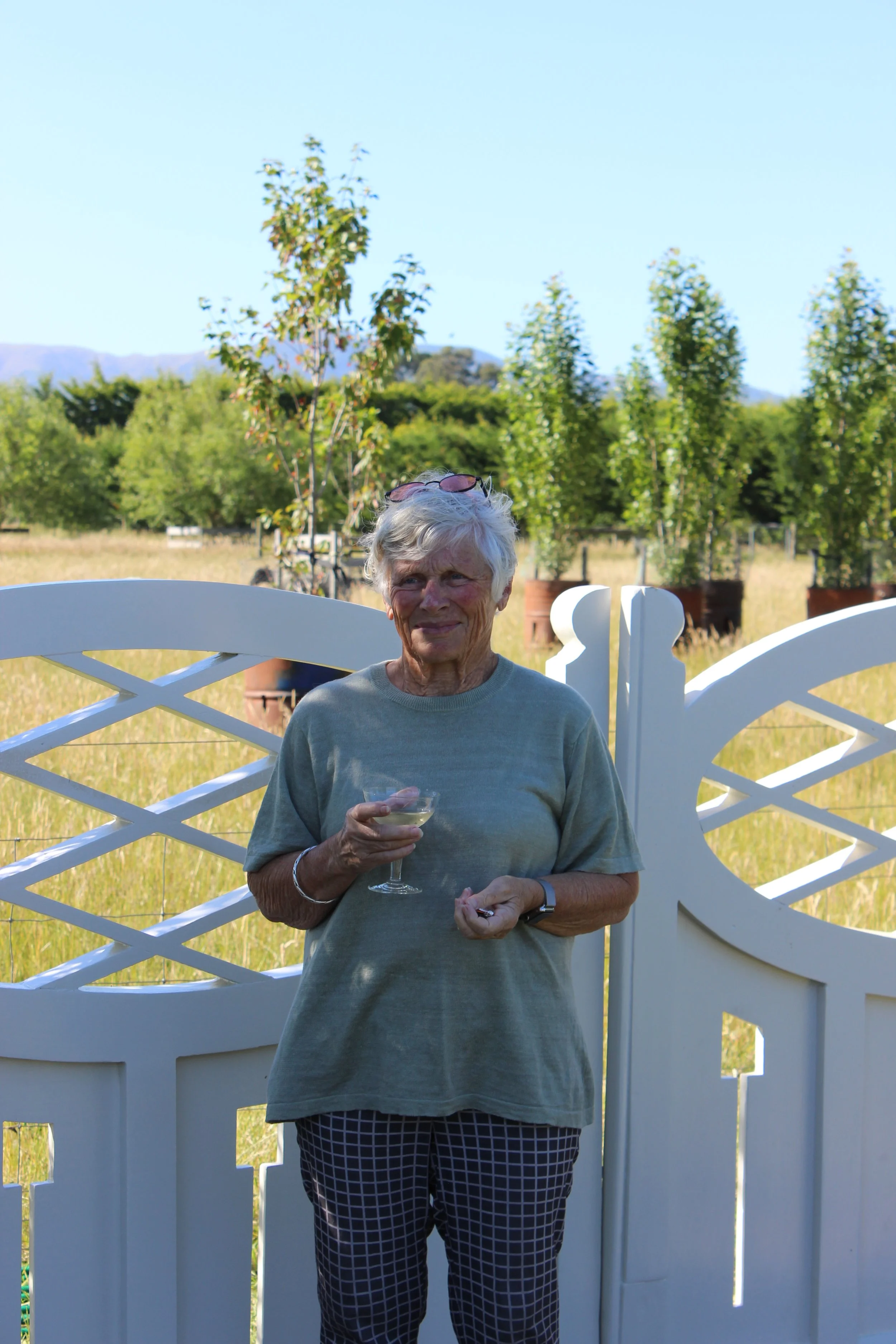
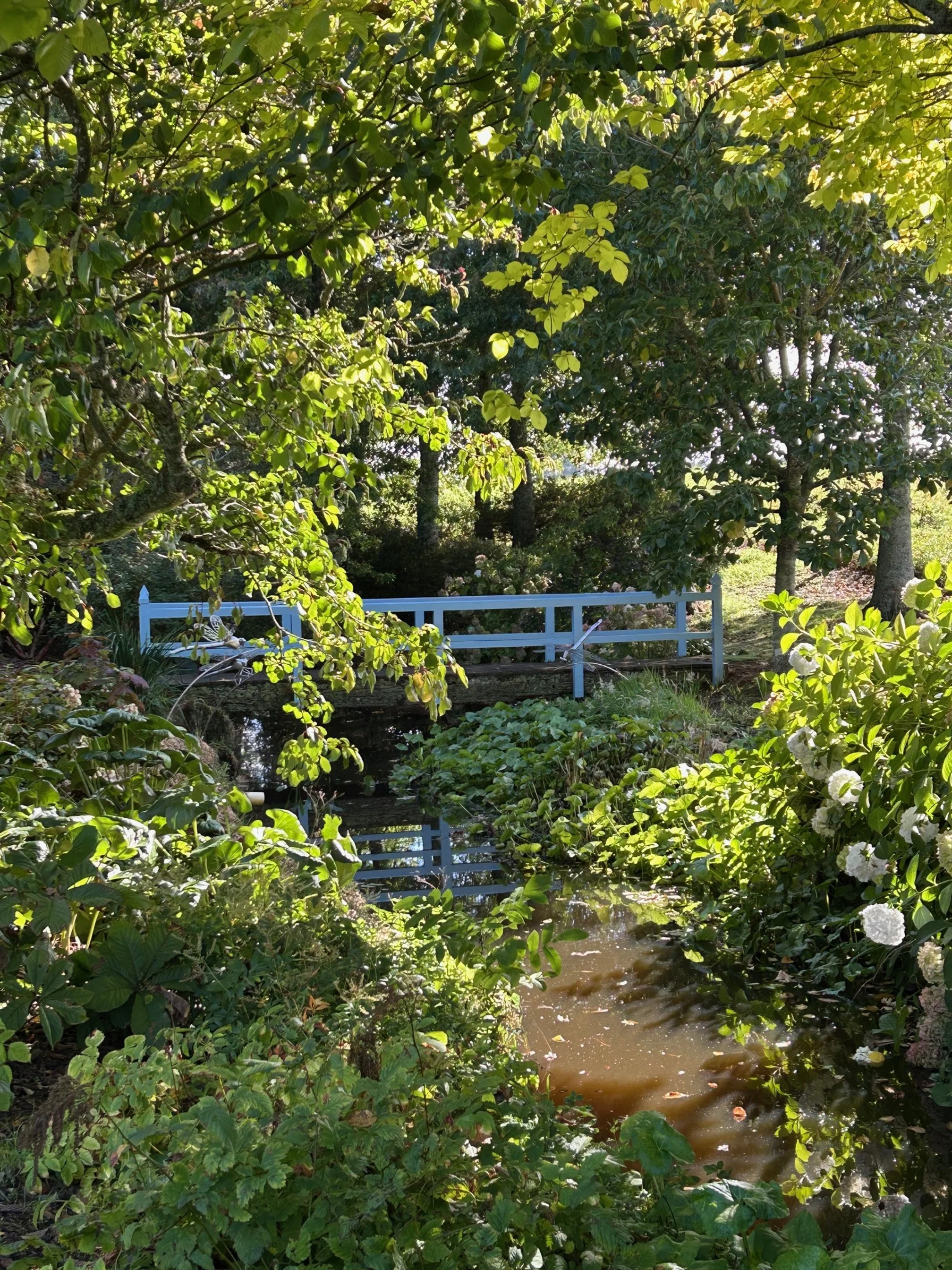
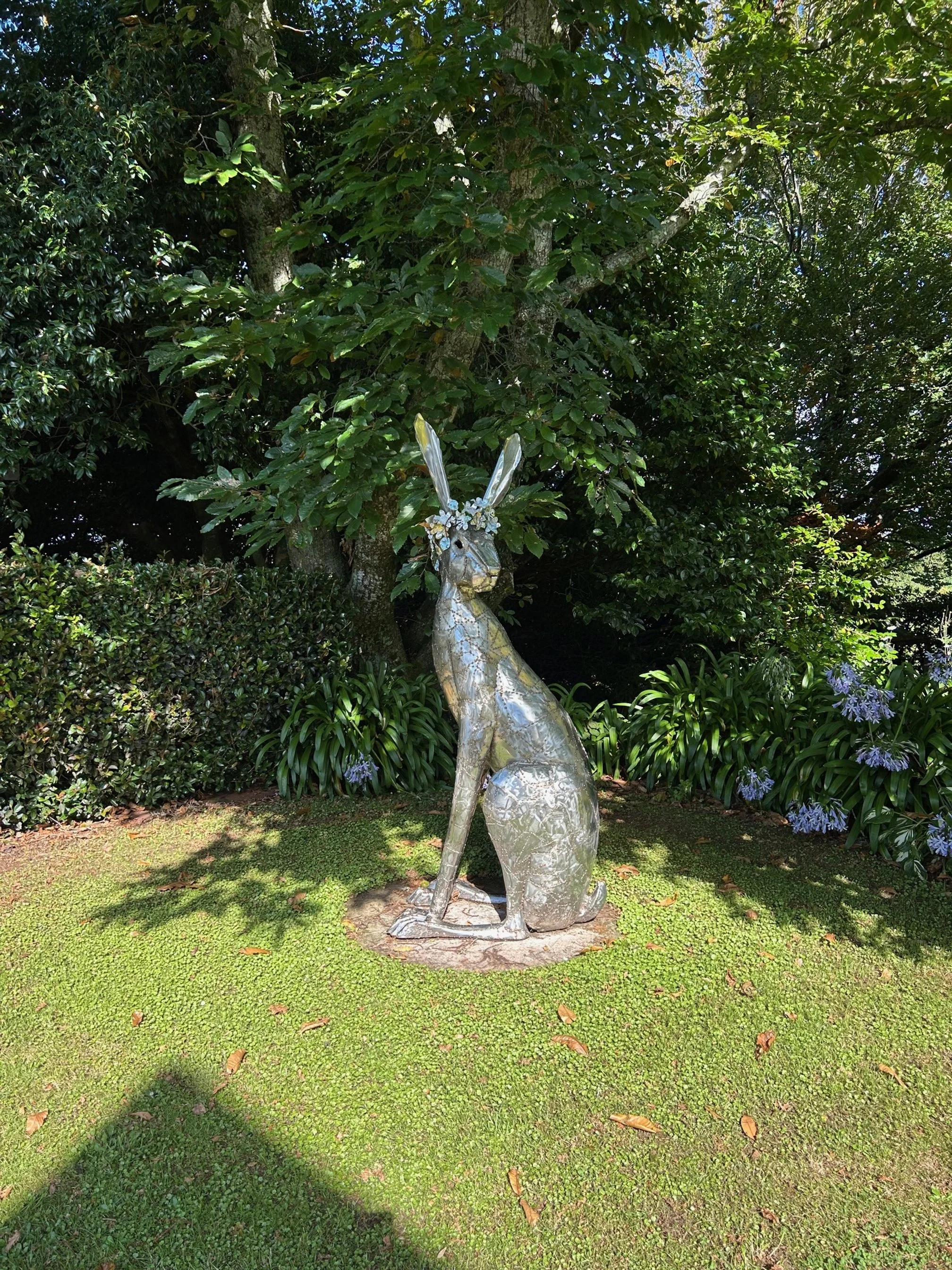
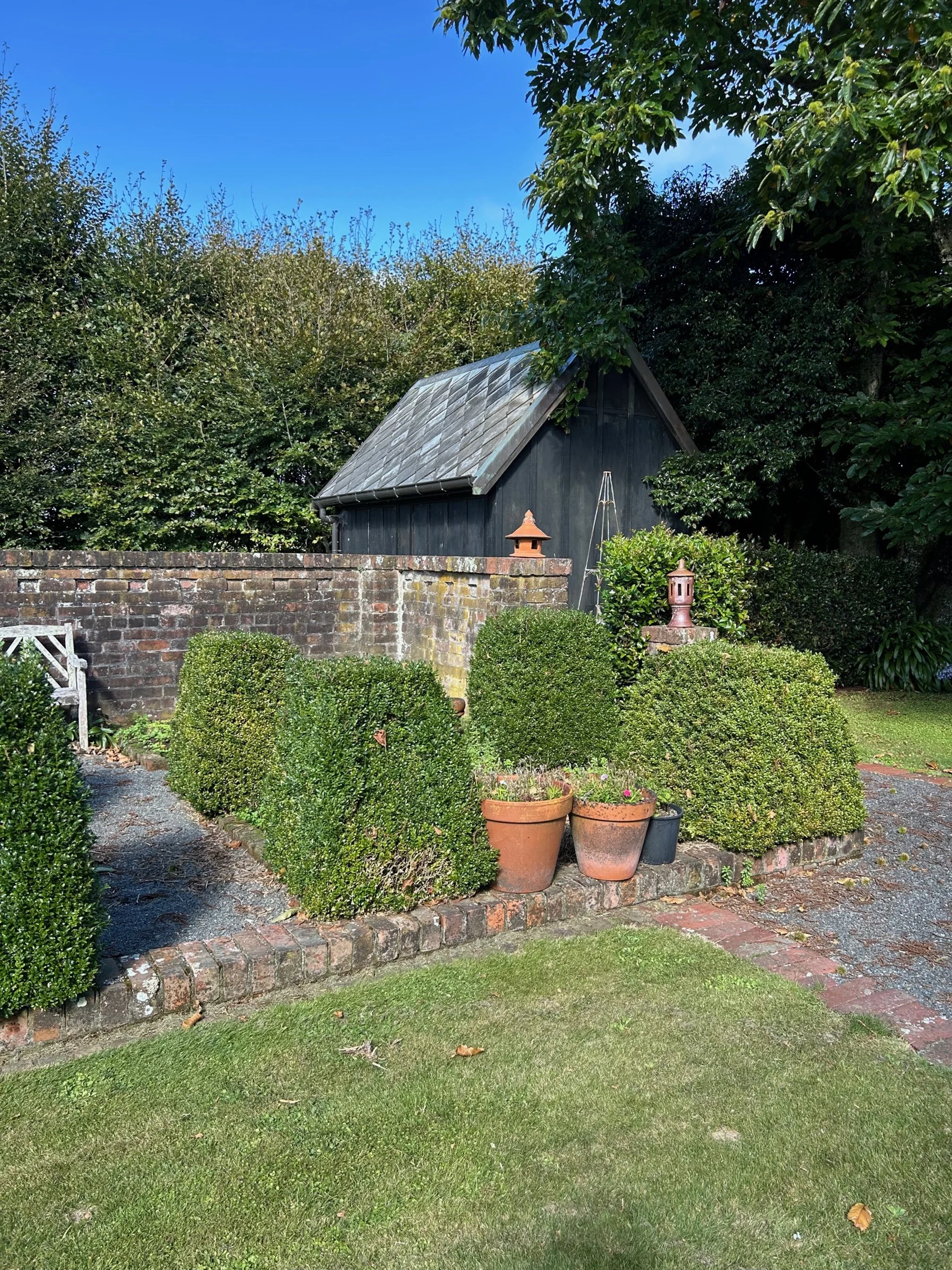
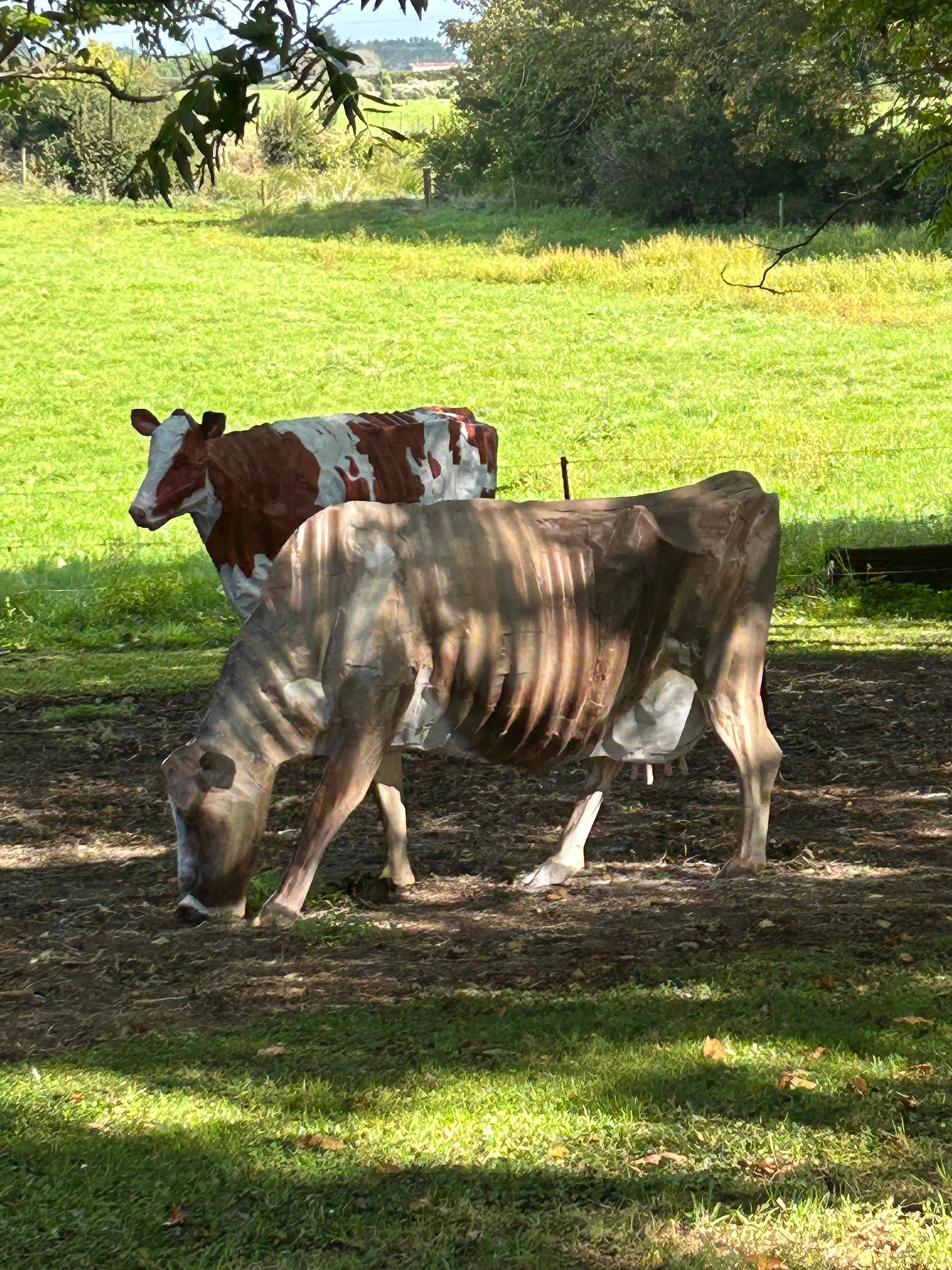
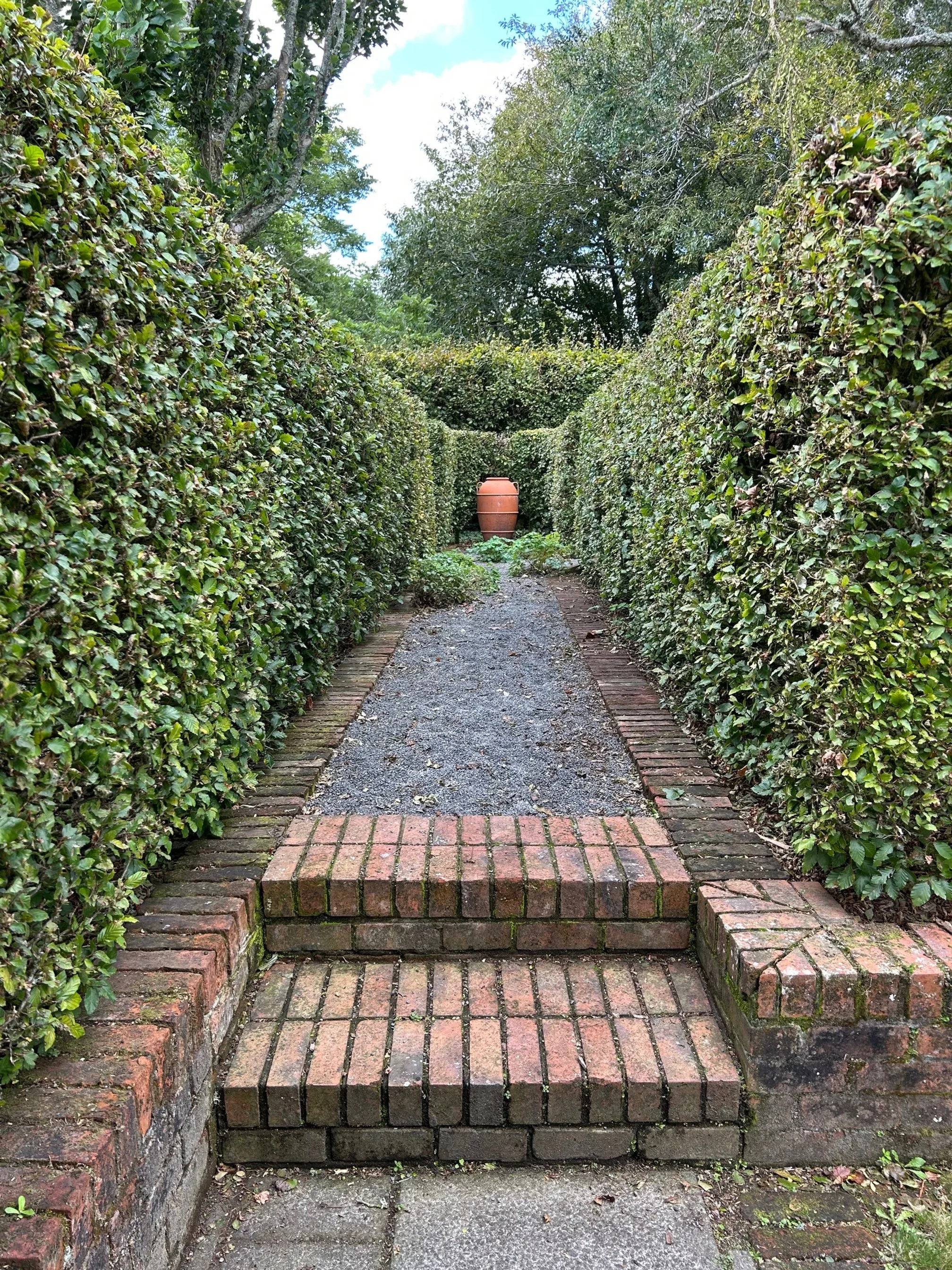
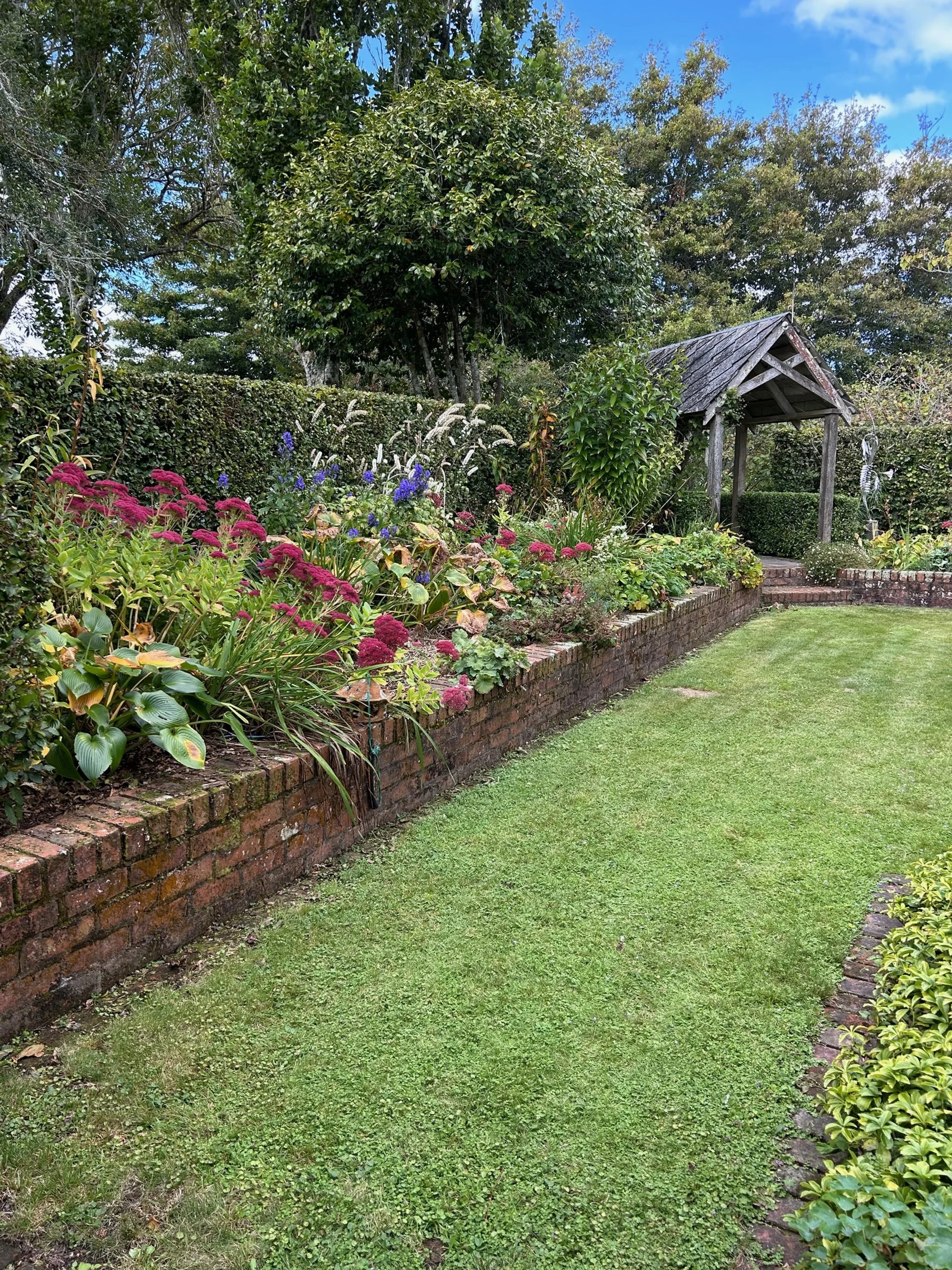
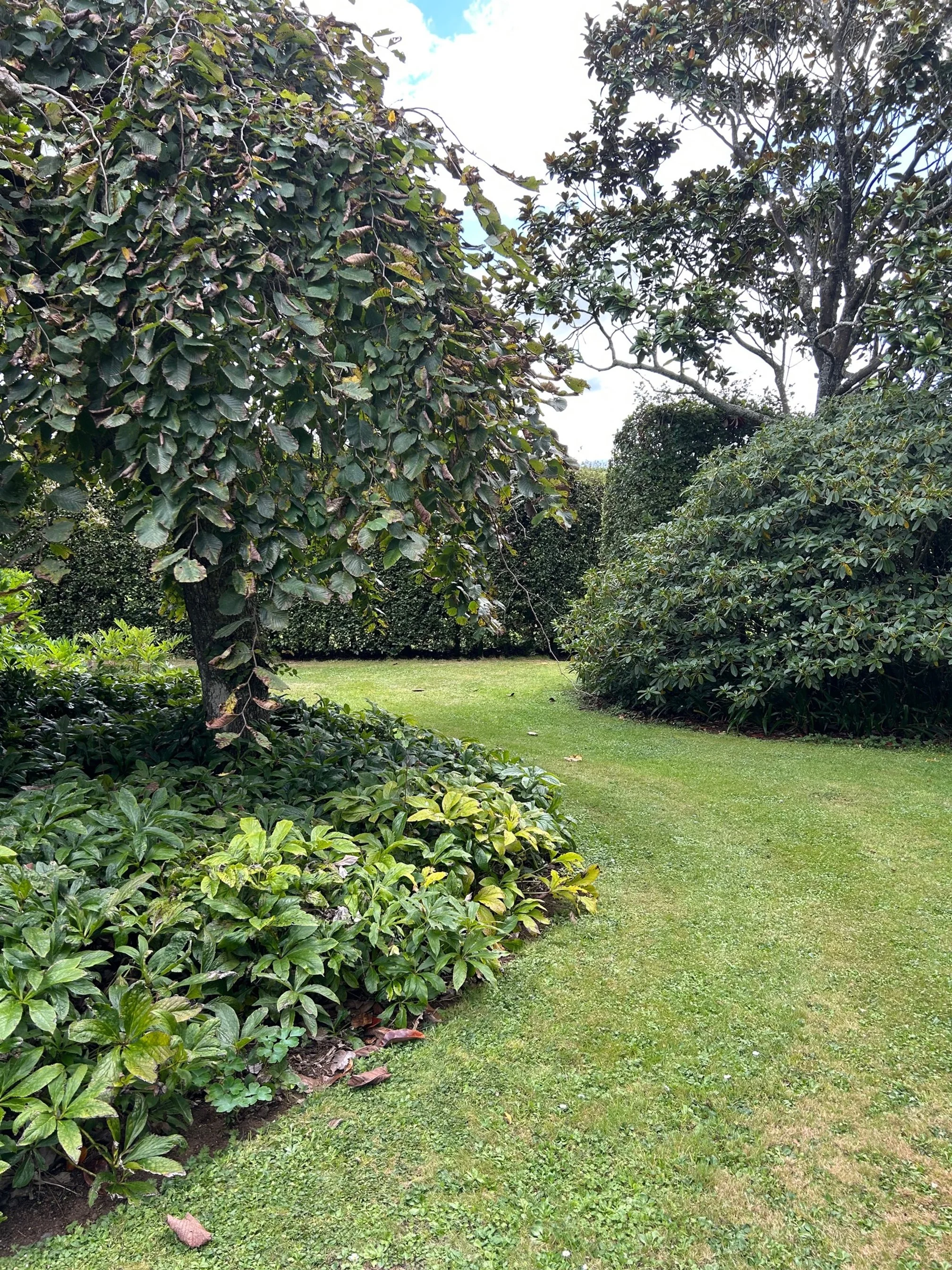
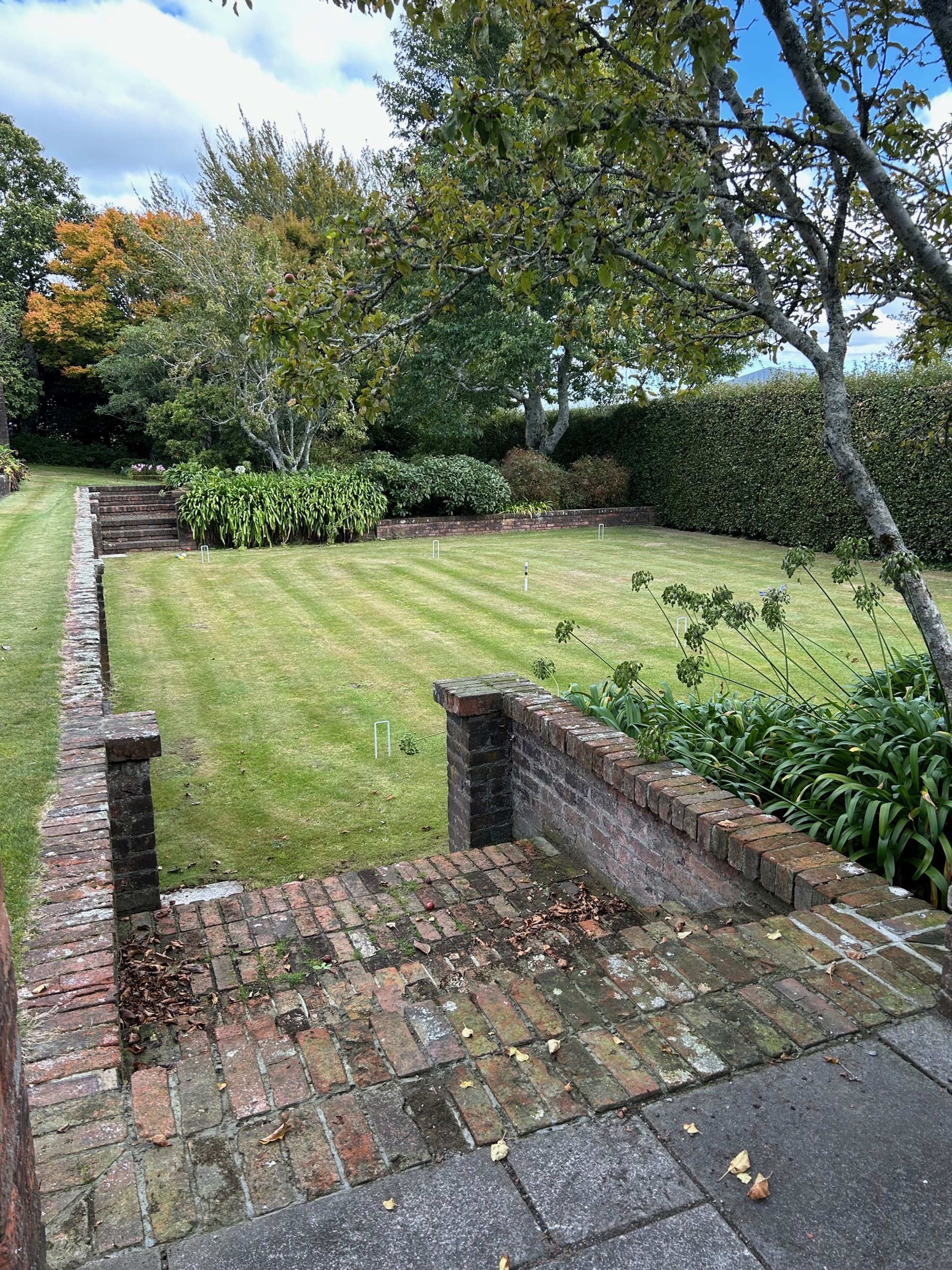
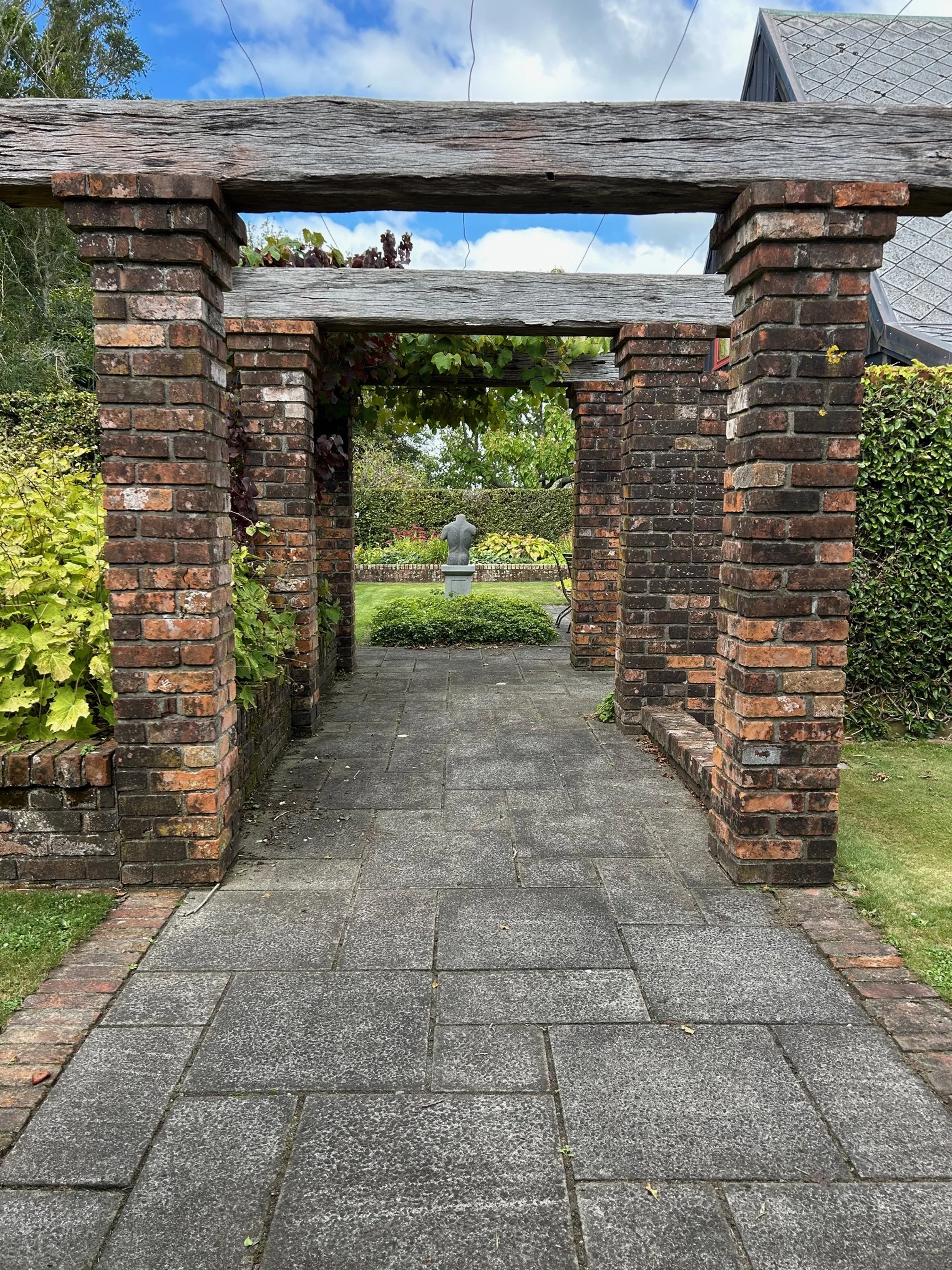
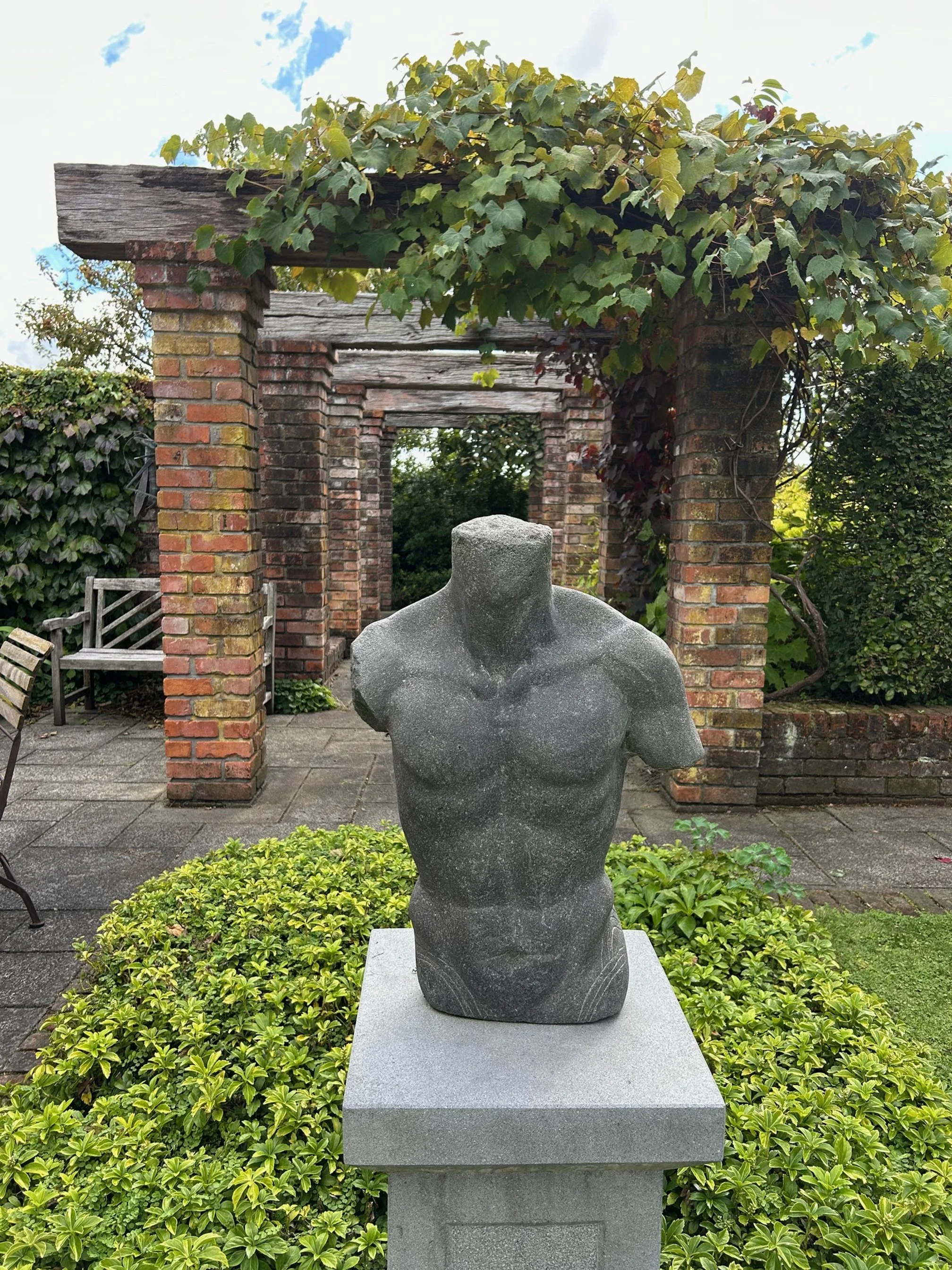
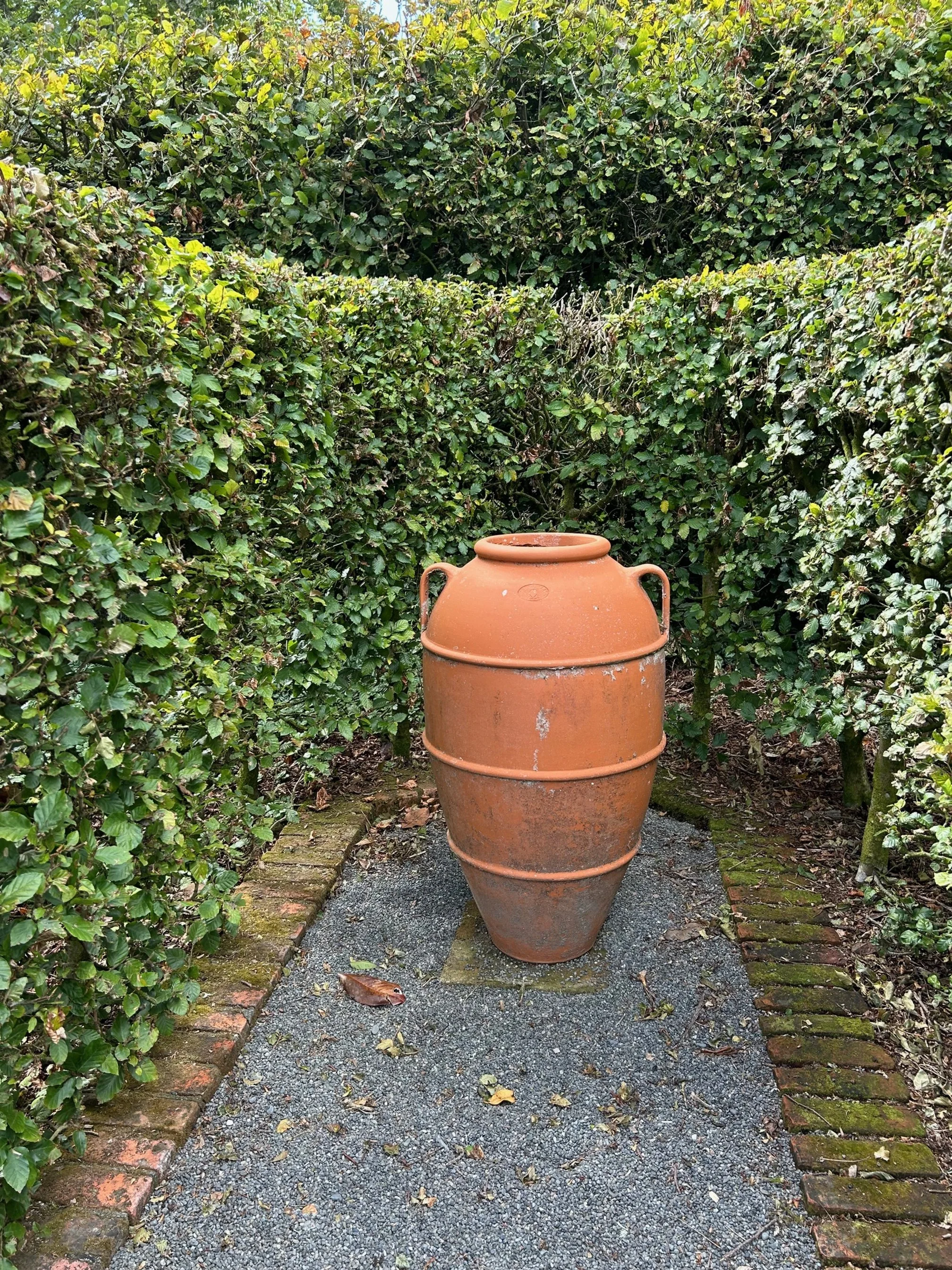
Photos: My mum’s garden near Stratford, Taranaki (except the first photo, which is of Mum in my garden when we erected Gwyn’s gates. You may recognise the gates in the background of one of the photos of Gwyn above. They adorned her front entrance for around forty years, and now they live in my garden). Mum’s garden is a formal, English-style garden. Very Instagrammable! Gwyn’s garden was more informal, cottage-style, just on a large scale. I think I’ve inherited genes from both styles.
My official contribution to these two gardens? Mowing. An enormous amount of mowing.
But not with a normal mower, mind you. No one in my family believes in such sensible things. I was given a ride-on mower of the kind that had “character” and “quirks” and “a worrying tendency to lose traction on slopes.” My grandmother had a hill leading to a lake. My mother had a steeper hill leading to a creek. Both had ageing ride-ons with very casual braking systems.
Some kids have childhood memories of playgrounds. I have memories of staring death in the face while careening downhill, yelling “THIS IS HOW I DIE” as the mower rattled toward the water’s edge. Did I ever actually end up in a body of water? No. But I came close enough that the eels probably experienced numerous bouts of startled anxiety.
Despite all this generational garden indoctrination, I managed to go through my entire youth showing absolutely zero interest in gardening. None. Couldn’t have told you the name of a single plant beyond “tree” and “grass.” I was surrounded by botanical brilliance and reacted the same way most teenagers react to anything their family cares about, which is with deep, bored ambivalence.
But here’s the thing about gardening genes: they lie dormant. Like sleeper agents. Quiet. Patient. Waiting for the moment you buy a house.
And that’s exactly what happened to me in 2001. We signed the papers for our very first home, and suddenly, BAM! The dormant horticultural DNA lit up like a Christmas tree. I went from “gardening is boring” to “I must immediately dig seventeen garden beds and plant a hedge I definitely cannot afford.” Just like that.
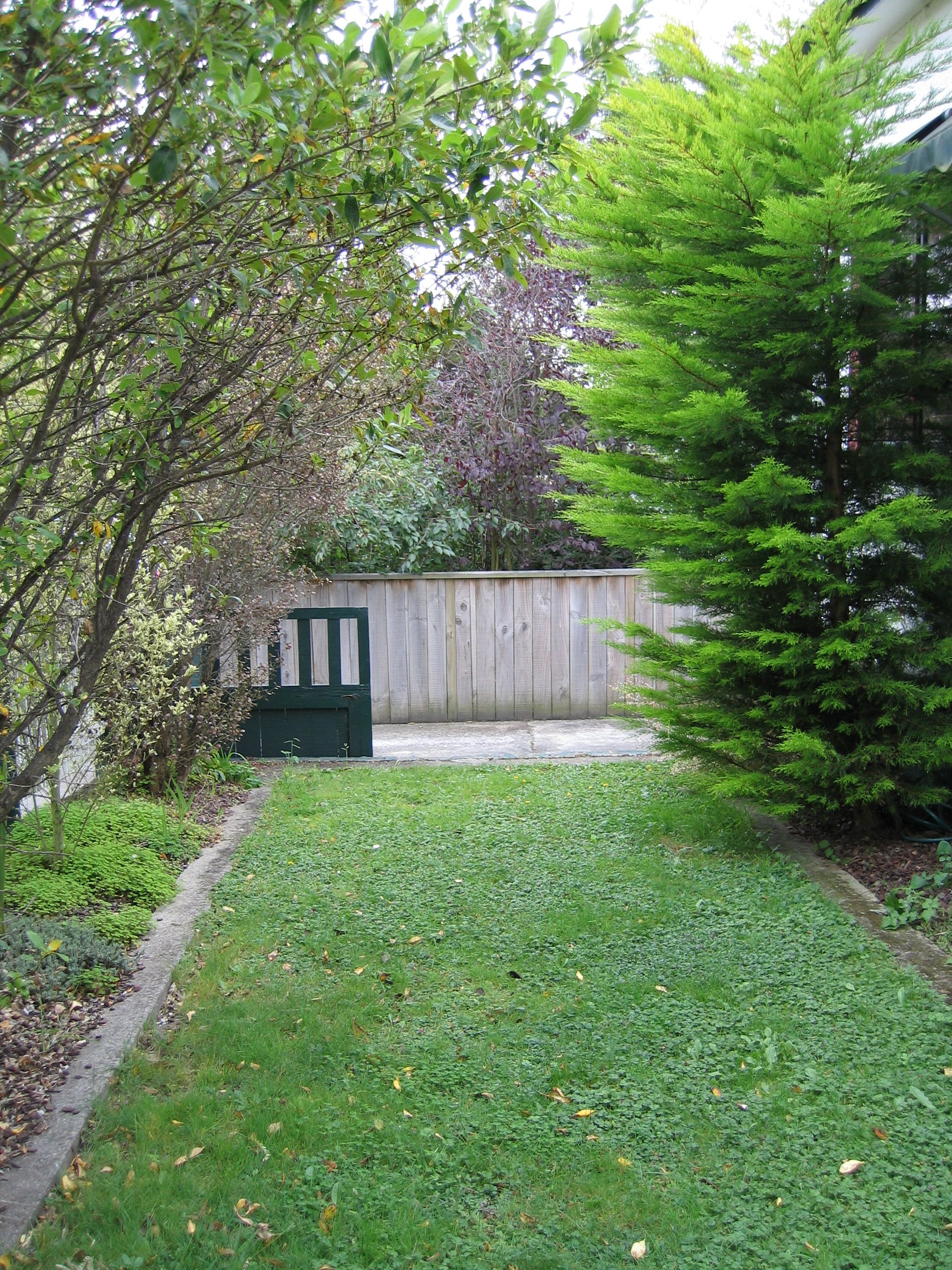
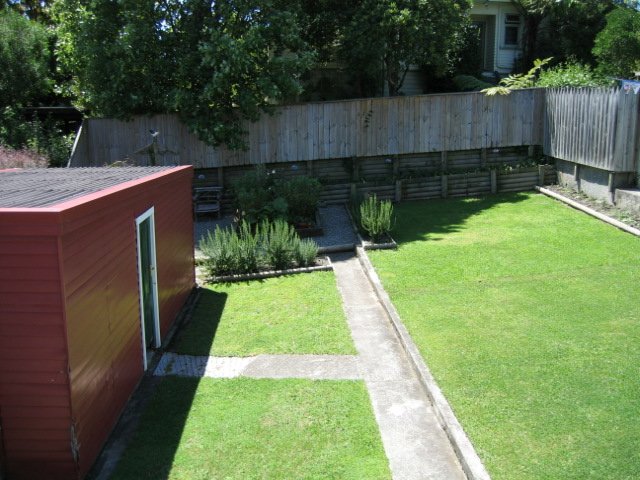
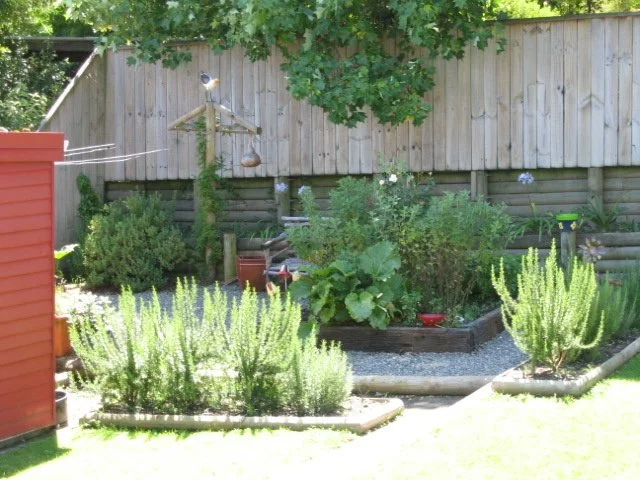
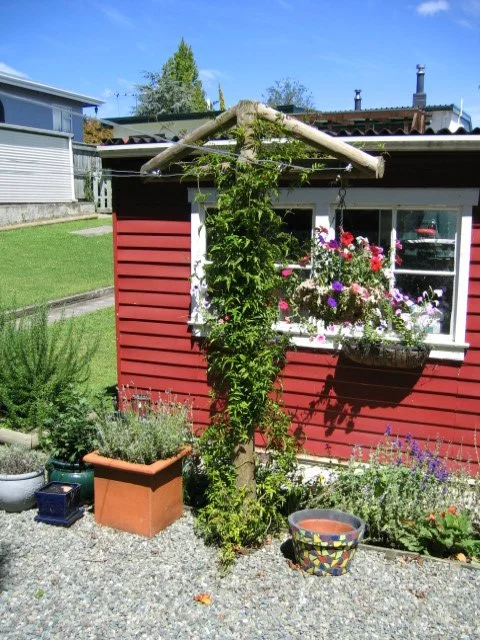
Photos: Our first garden in Nelson, New Zealand. It was very small and basic, but I was VERY proud of my efforts.
And here I am, nearly 25 years later, still building, shaping, creating, and occasionally swearing at my own garden. Still mowing lawns (mercifully on flat ground with machinery that doesn’t double as an extreme sport). Still carrying on the family tradition.
And if you think this garden is big now? Wait until the children move out and stop eating the budget. That’s when the true gardening gene will reach its final form.
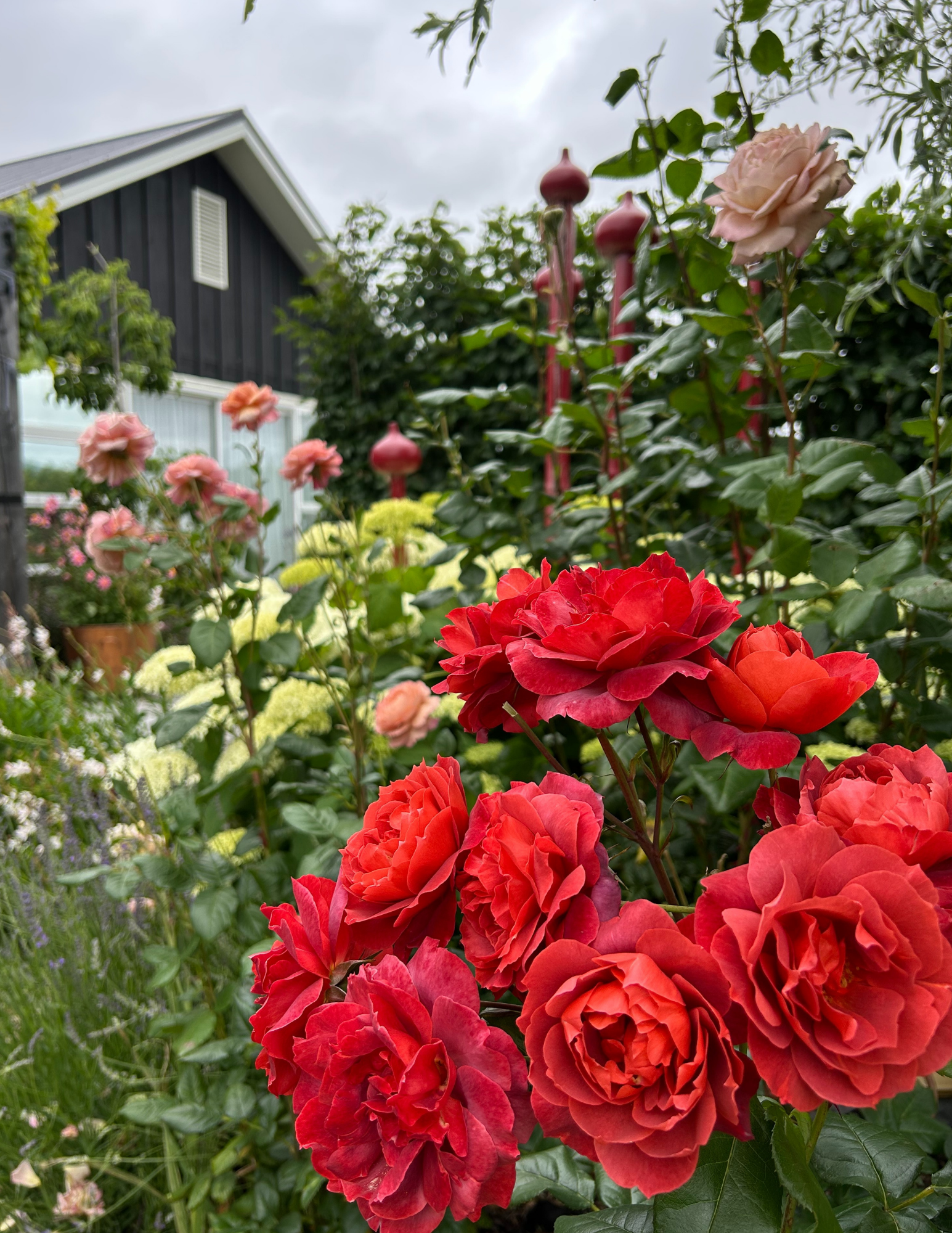
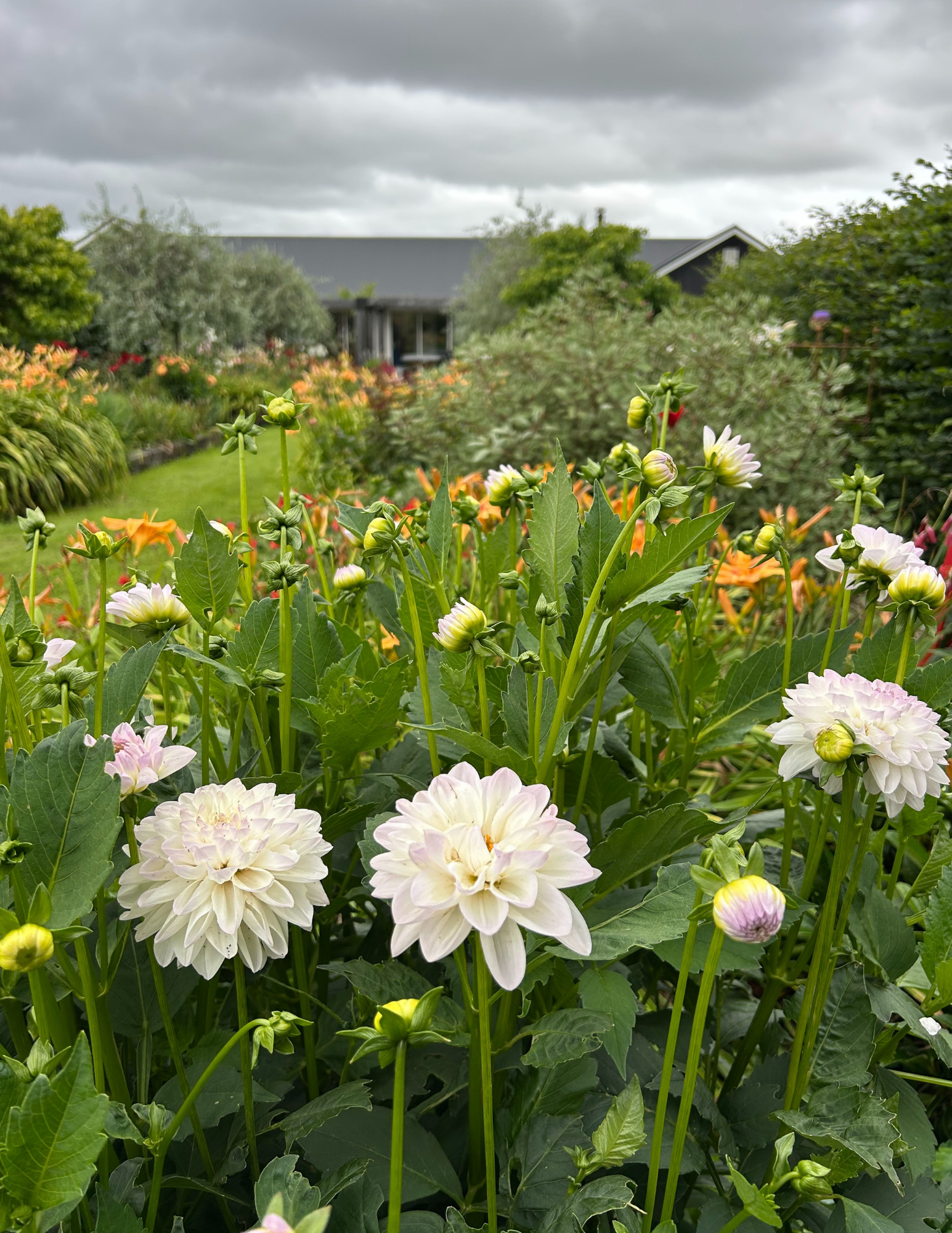
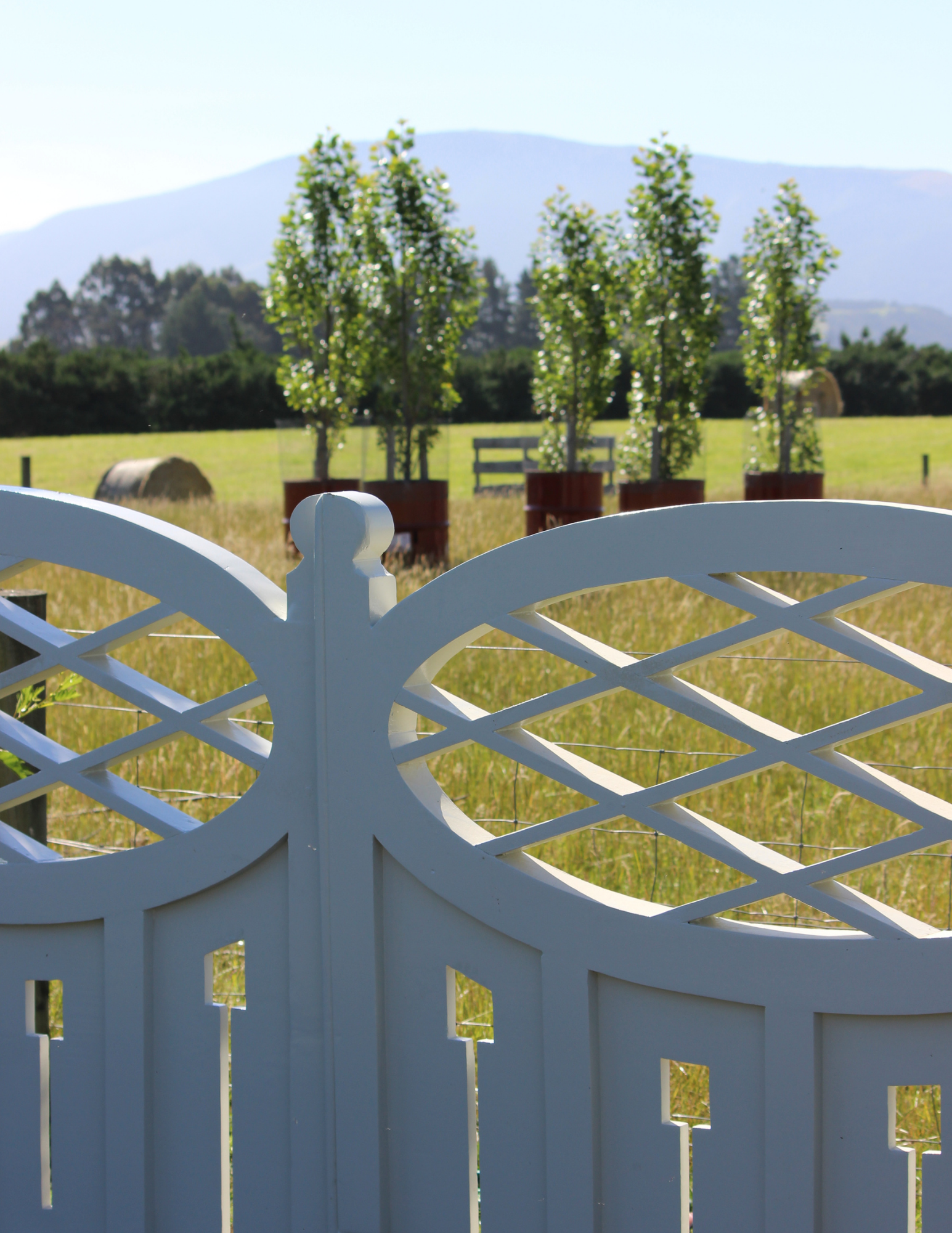
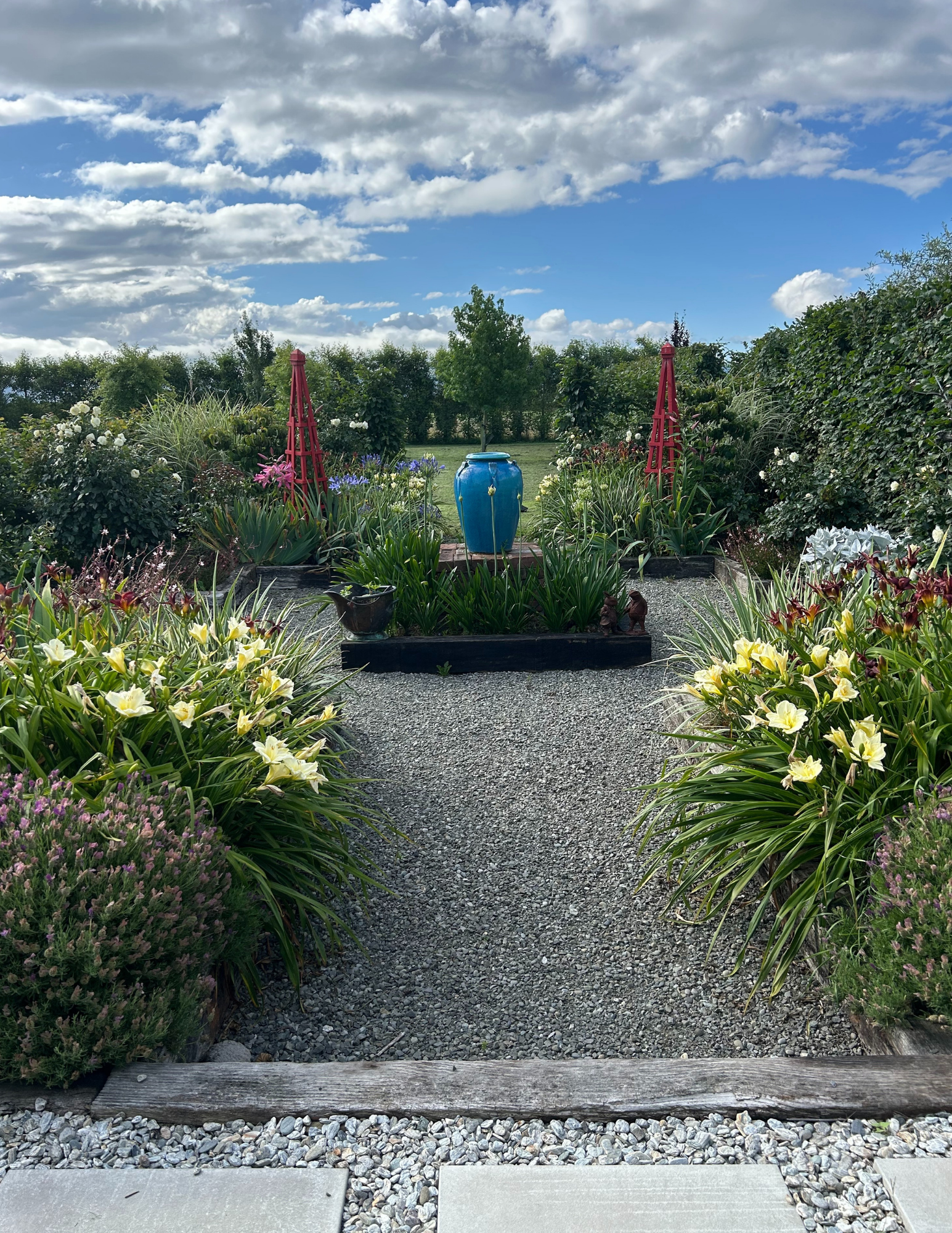
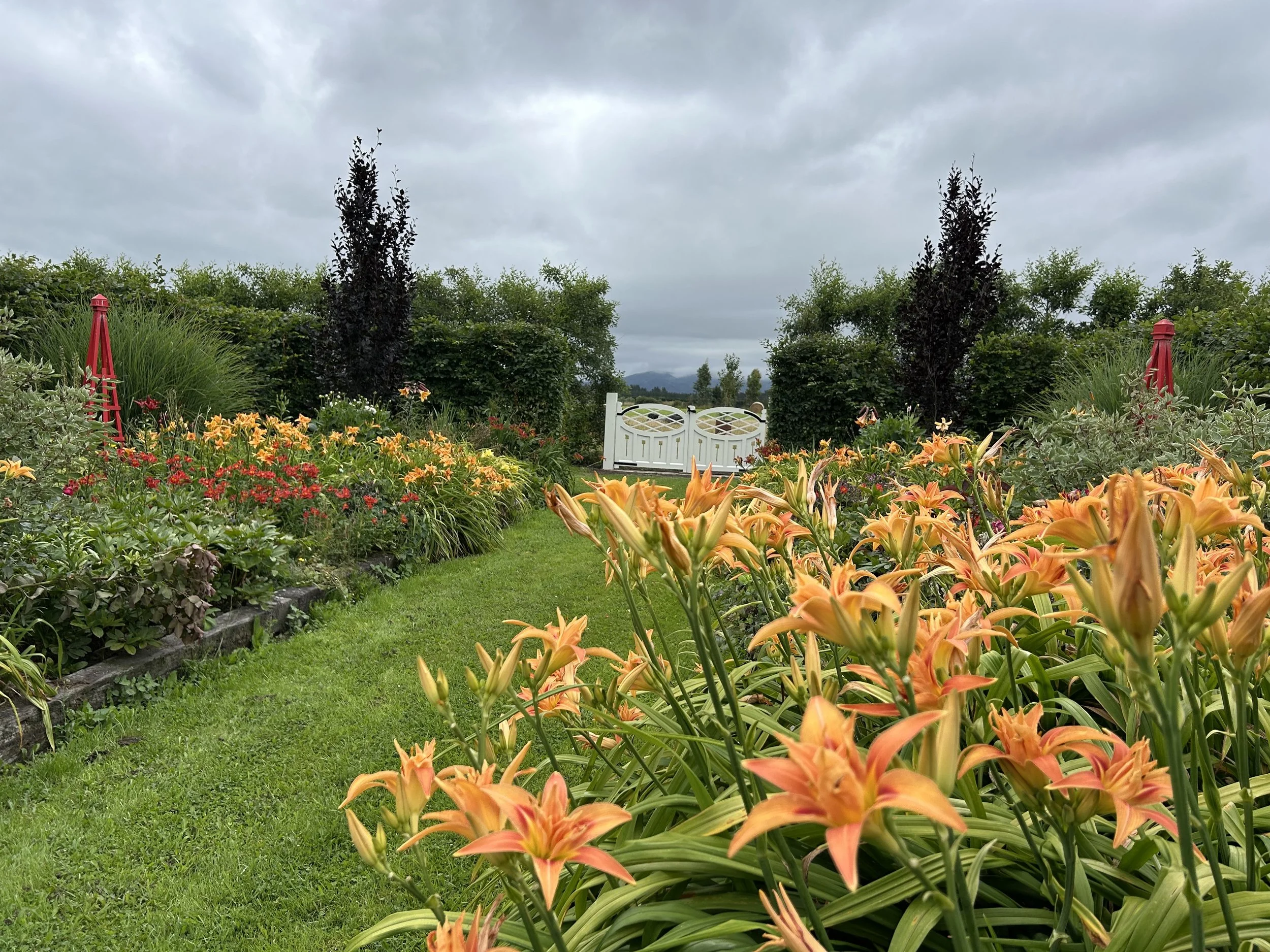
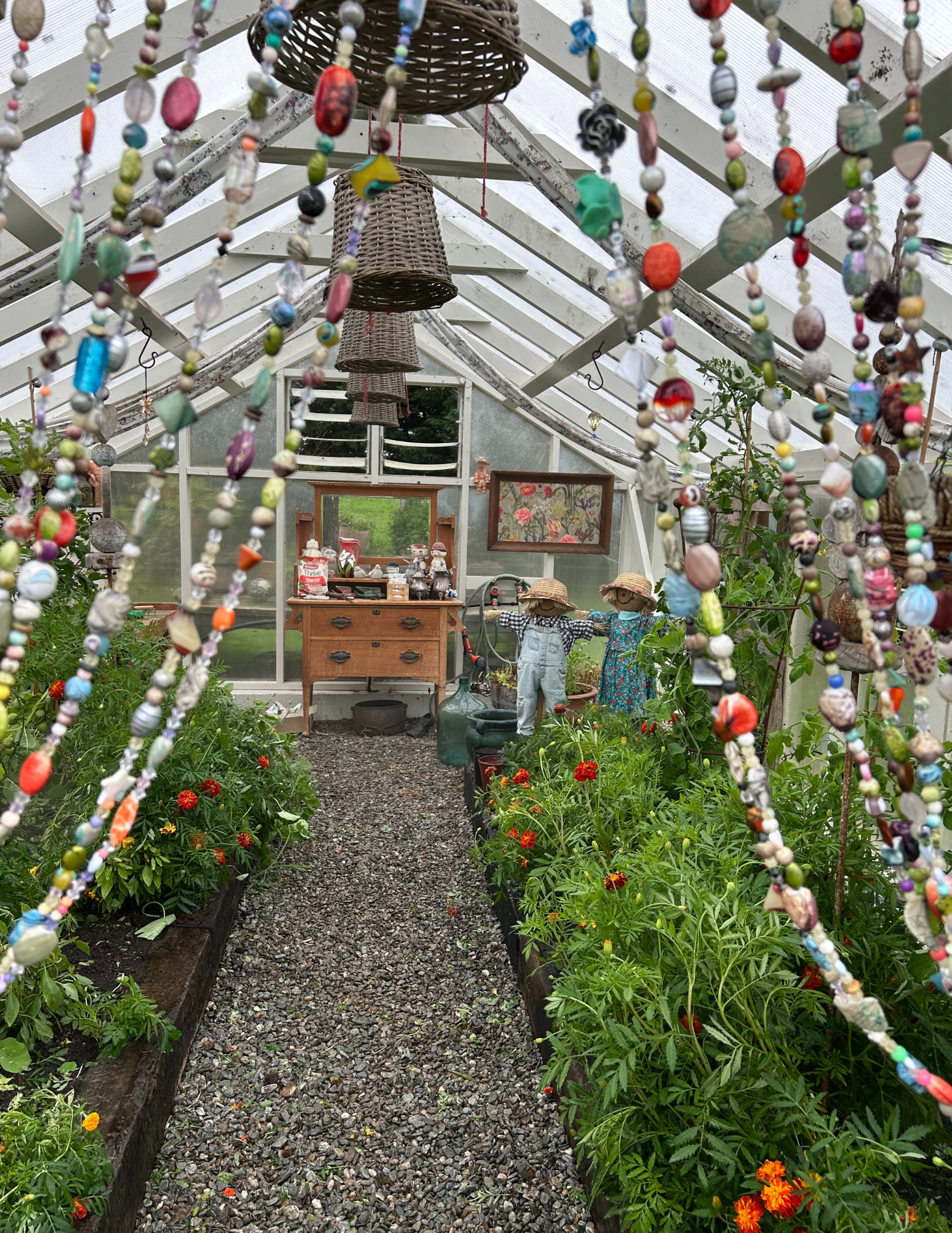
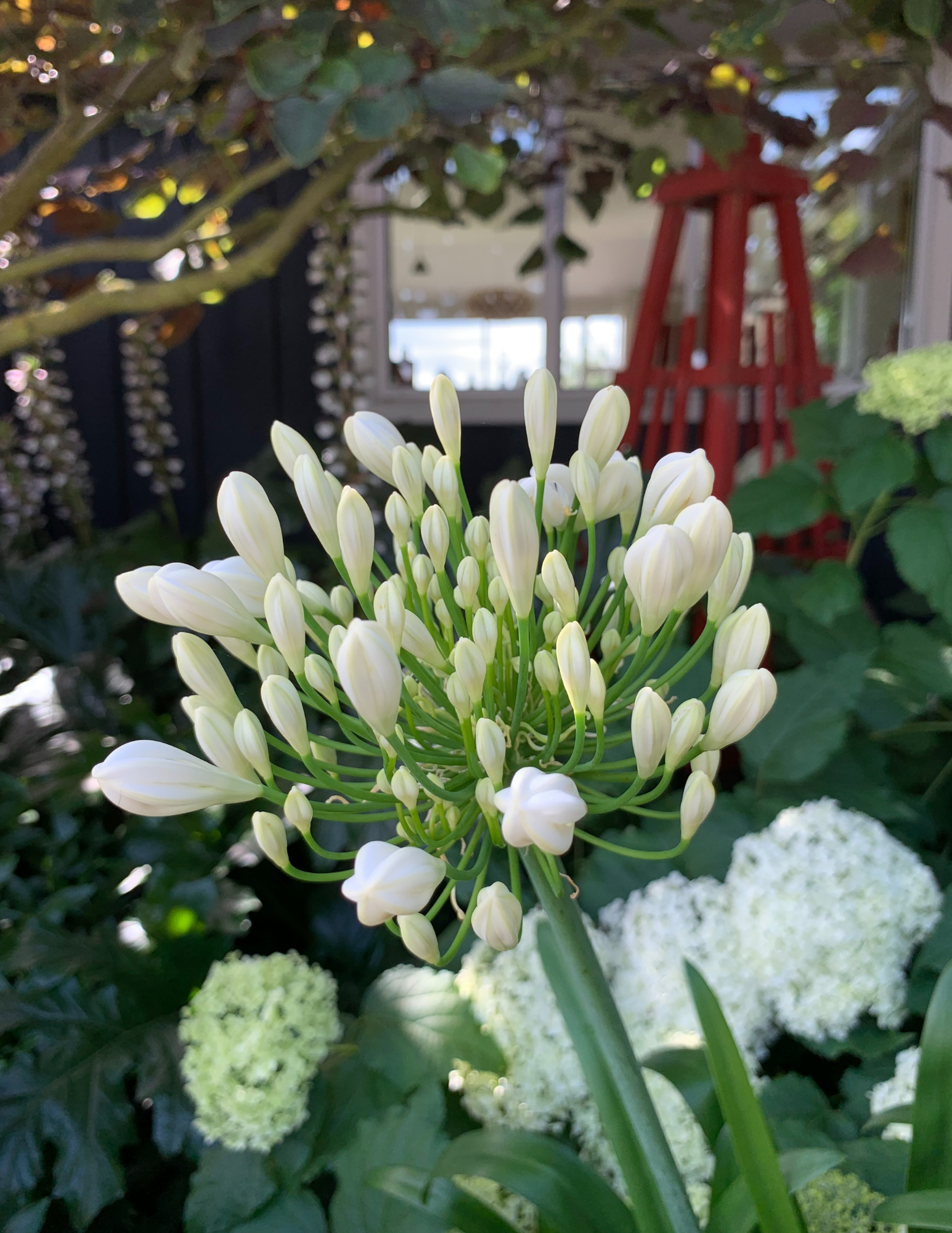
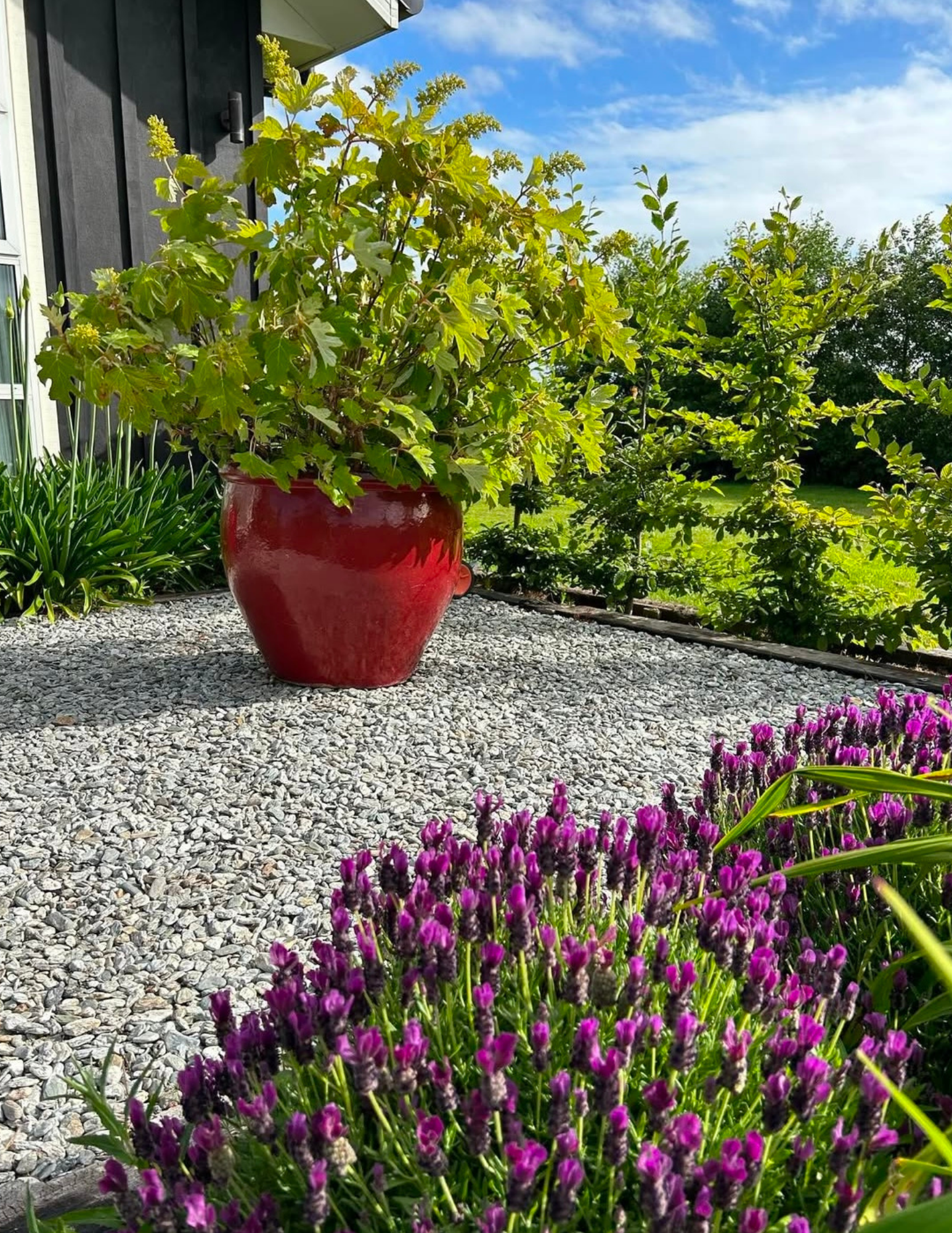
Photos: My current garden. Quite the contrast from Nelson to here! I’ve learned a lot along the way. I’ve managed to create this garden on clay soil in a high wind zone, so I guess many of those lessons I ‘ve learned over the years have stuck.
Did you know?
Plants really do respond to sound. Talking to plants to help them grow is a well-known old gardeners tale, but studies have shown vibration (like music, or perhaps even the sweet sound of your voice) can positively affect plant growth.

What to do in the garden this week
Northern Hemisphere
🌹If your ground isn’t frozen, winter is the time to plant bare root trees and shrubs such as roses. If you try to plant bare root trees and shrubs in warmer seasons, they can become very stressed as they struggle to settle in and hydrate themselves enough to survive the warmth. For best results, winter is the time to plant anything bare rooted.
🌿On the theme of bare roots, winter is also a good time to transplant shrubs such as roses and hydrangeas. There’s less stress on the plants because they’re dormant. I usually transplant these, if necessary, in mid-winter. If you have some you’re wanting to move, start planning now where they’re to go, and when they’re fully dormant, you can dig them up and move them.
🌸You’ve probably heard that winter is the best time to prune roses but hold off at the moment. Wait until later in winter otherwise they’ll sprout new growth a bit early, and it can be a bit frost tender. Best results come when you prune roses in mid to late winter.
🎅It’s nearly Christmas. Put your feet up and enjoy the festive season. If you’re looking at a snow-covered garden, I’m a bit envious. There’s no such thing as a magical winter Christmas down-under. It’s all BBQ’s, togs and jandals (bathing suits and flips flops/thongs for those of you who use weird words to describe clothing items!).
Southern Hemisphere
🍅 Feed summer vegetables and fruits with liquid feeds or balanced fertiliser to support heavy production.
🌹Feed your roses - they’ve got big appetites and need support throughout their growing season.
💚Raise mower blades, water well (if your water isn’t restricted) to keep lawns healthy and green. One benefit of my clay soil here is that my lawn manages to stay mostly green in the height of summer when the rest of Canterbury has turned well and truly brown.
🍏Thin developing fruit on trees and vines to improve fruit size and quality.
⛺Going on holiday? If you haven’t got irrigation set up on timers, you’ll need someone to come and give your pots and garden a bit of water. There’s nothing worse than arriving home to find dead plants. So, check your irrigation for leaks and weak points, and make sure the batteries in your timers have plenty of life. If you haven’t got irrigation and there’s no one to come and help out in your absence, you can sit your pots in troughs or buckets with some water at the base, or google the slow drip method of watering pots using plastic bottles. There are ways to prevent death and destruction, and Google will save the day 😊

What’s new on Behind the Garden Gate this week?
🌿Nitty gritty: This week it’s all about vistas and focal points - why they’re important, even in small gardens, how to create them, and plenty of photos for inspiration. If you want wow factor in your garden, creating vistas and focal points is a key technique to achieve it.
🌸Feature plant: this week it’s all about heavenly hydrangeas. Yes! Those divas that torment you by not giving you the blooms you want. The ones that confuse you when it comes to pruning time. If you’re a bit stumped by how to care for hydrangeas, this deep-dive is perfect for you. It details the four main types of hydrangeas, gives you the pros and cons of each, tells you where to plant them, and what makes the blue one’s blue and the pink one’s pink.
📸Snapshot shed: more photos to inspire are uploaded every week and I include names of the plants or a description of the concept I’m illustrating with each of those photos.
If you’d like to sign up to Behind the Garden Gate to access the growing library of plant knowledge, garden humour, cheat sheets and even how to monetise your garden, open this newsletter fully by clicking the link at the bottom of the email. It’ll show a sign-up button right below this sentence. Anyone who signs up using an annual membership gets a free copy of my design guide emailed within 24 hours. Or if you’re not sure and just want to try it out, it’s $5/month and you can cancel anytime. So have a look and see if it’s for you. No obligation to continue, and no Dear John letters required if you want to opt out.
Did you see this on Insta?
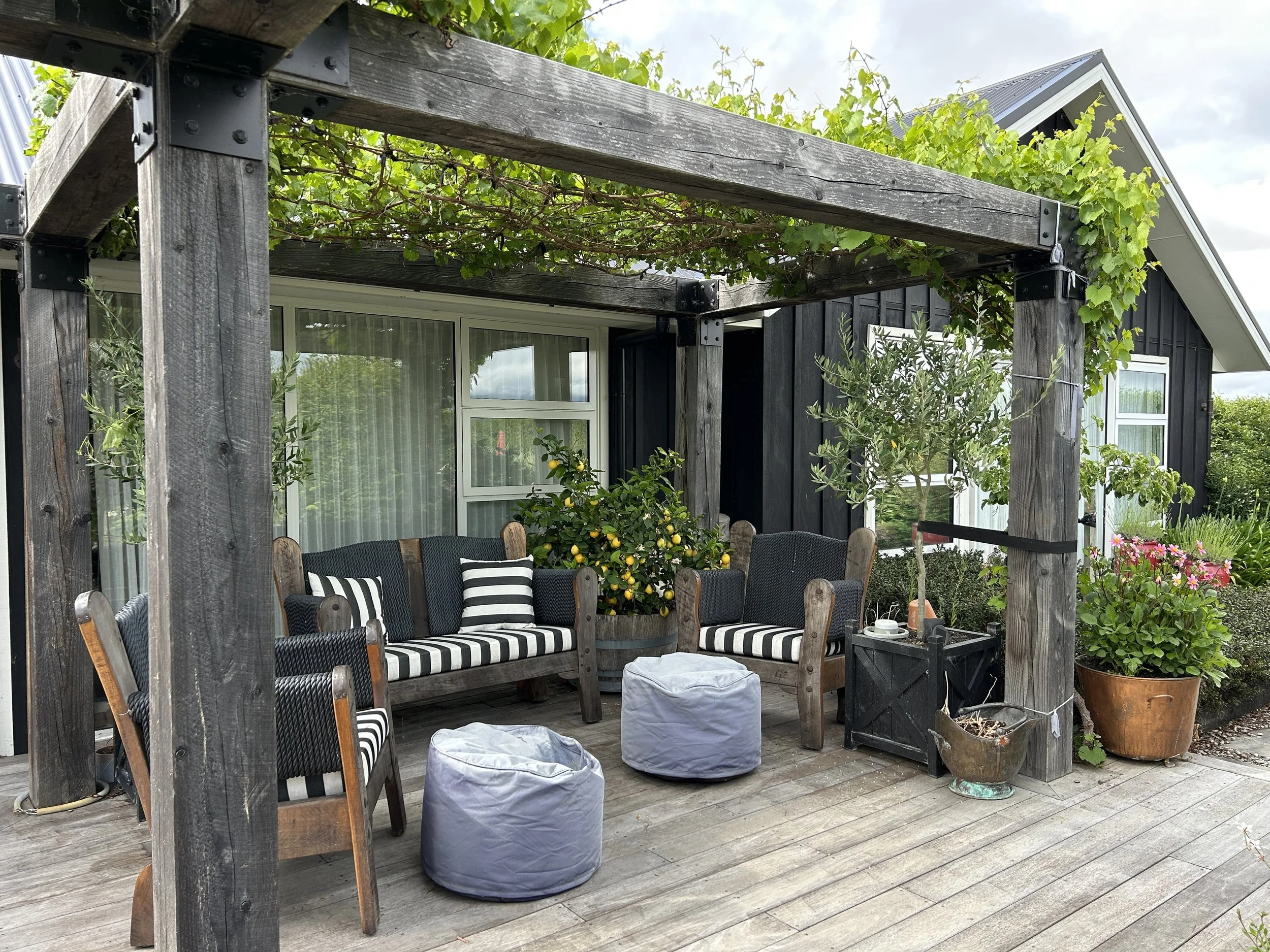
I recently posted about our deck and pergola, showing how I’ve used an ornamental grapevine to create much needed shade. Prior to the grapevine becoming established, it was just too hot to sit out there in the height of summer. But now it’s bliss (apart from late spring when all the faux grapes fall all over the place and stick to everything, necessitating an annual effort to snip them off and get rid of them). I’m continuing to grow it over my outdoor dining area too as that’s still completely hammered by summer sun. This season should see the grapevine complete its journey over the parts of the pergola we want it to cover. It took three years to get to the stage where we could use the seating area all summer.