Red wind warnings!
A warm welcome
Welcome to all our new newsletter subscribers this week! I’m so glad you’re here. This is where I share the latest from the garden…warts, winds, weeds and all…as well as the joys, the blooms, and the occasional sore muscles that come with it! Thank you for your commitment to following my gardening journey. I appreciate it immensely. This is a free weekly newsletter. For those who are subscribers to Behind the Garden Gate, my members-only pages, this newsletter will let you know about all the new content that’s been loaded during the week so that you can check it out at your leisure.
Weather watch: red wind warnings

We’ve been under a red wind warning early in the week as I write this. Thankfully, in our area it hasn’t turned into what it could have been. Yes, it’s been windy, but I’ve seen far worse. As a gardener, wind is the thing I find the hardest to deal with because it can be utterly destructive.
At this time of year, it’s not so bad because most of my deciduous trees are still bare, so there’s less drag on the branches and less chance of limbs snapping or whole trees toppling (a major benefit of deciduous trees if you live in an area with high winds in winter or early spring). But once the spring leaves burst out, and our classic North Canterbury winds flare up, that’s when the real worry begins. I am quite literally a typical mum when it comes to my garden….lying awake throughout the night worrying about my ‘wards’ and hoping they’re OK out in the big, windy world without me. But let’s face it, what good would I be out there anyway? I like to imagine it takes note of the colourful string of swear words I throw at it but considering it barrels on with the persistence of a toddler on a sugar high, I don’t think it’s listening.
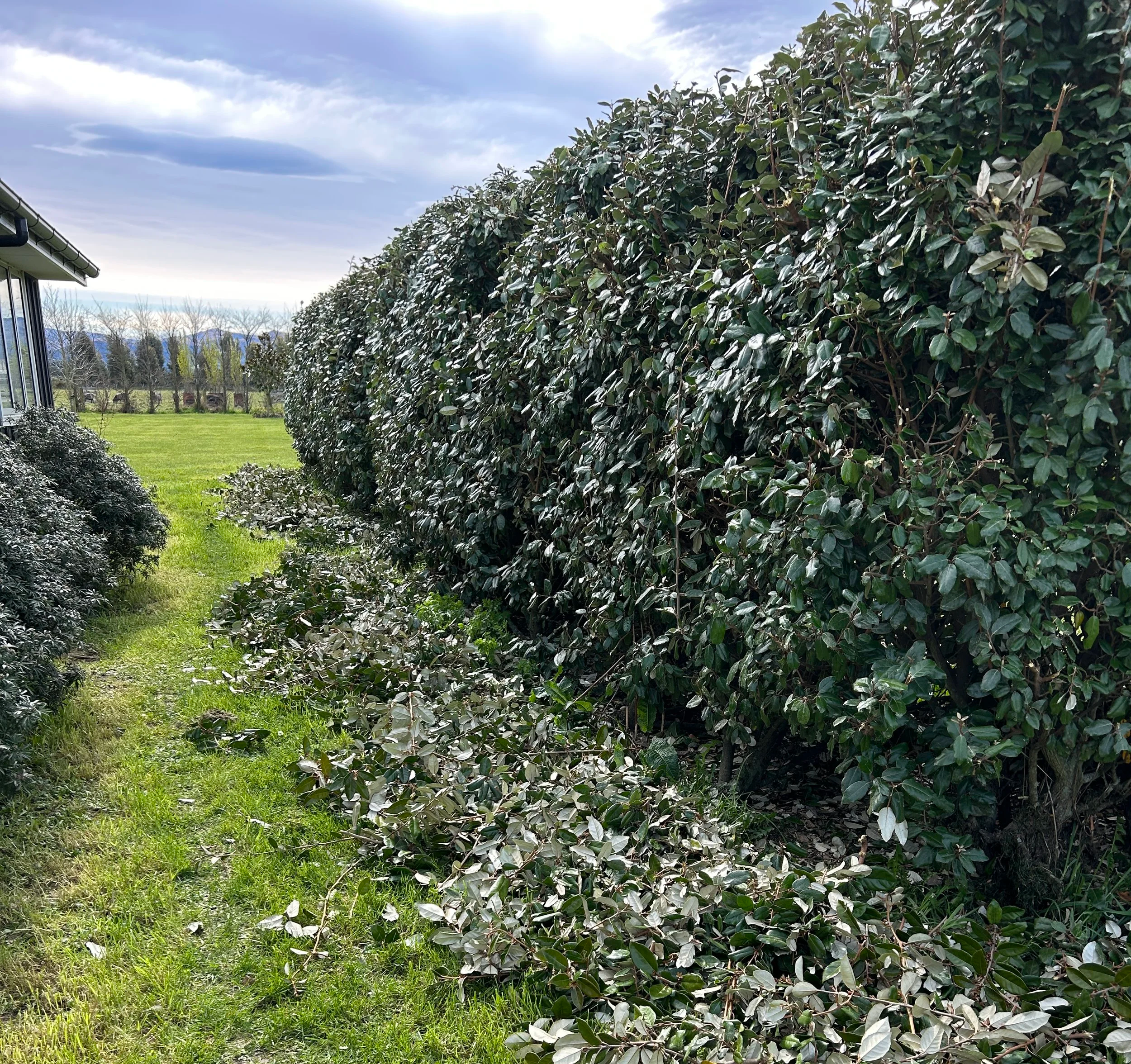
The topic of wind brings me back around to a continuation of last week’s newsletter theme - hedges. I’ve spent a good part of this week tackling one of my unruly hedges. The culprit? A Russian olive hedge (Elaeagnus ebbingei - yep, try and say that out loud!). It runs around The Whitehouse and my future She-Shed area and acts as a very effective wind buffer.
Hedges need regular trimming (once or twice a year), but I’ll admit, life got in the way and I haven’t trimmed it in TWO years. It was well beyond “softly natural” and was firmly in the “bad hair day” category. So out came the hedge trimming apparatus, and after a very long day (and some very sore muscles), I’ve given it a serious haircut. I’ve been moving about the house like a 90-year-old ever since, but these are the sacrifices we dedicated gardeners must make for the cause😄.
It looks patchy and ragged now, but hedges are forgiving. With a bit of time, it will knit back together, dense and green again, and continue doing its important job of buffering the wind. So, if you’ve got a hedge that’s got a bit out of a hand, don’t despair. It can be brought back to a nice shape with a bit of tough love and patience. And while I vow and declare never to leave it two years again… I suspect life may well have other plans. Or as we prefer to say in New Zealand, ‘yeah, right!’
![IMG_5761[1].JPG](https://images.squarespace-cdn.com/content/v1/68a501cca58fdb69735e8c43/1758410519649-7XT59IG7F26M7DBDSW8I/IMG_5761%5B1%5D.JPG)
![IMG_5776[1].JPG](https://images.squarespace-cdn.com/content/v1/68a501cca58fdb69735e8c43/1758410573348-JCKST1FVWO0TDUBJSN4G/IMG_5776%5B1%5D.JPG)
![IMG_5754[1].JPG](https://images.squarespace-cdn.com/content/v1/68a501cca58fdb69735e8c43/1758410599555-SJ19MMBYE0U6C0YFN0S5/IMG_5754%5B1%5D.JPG)
Tulips in all their glory
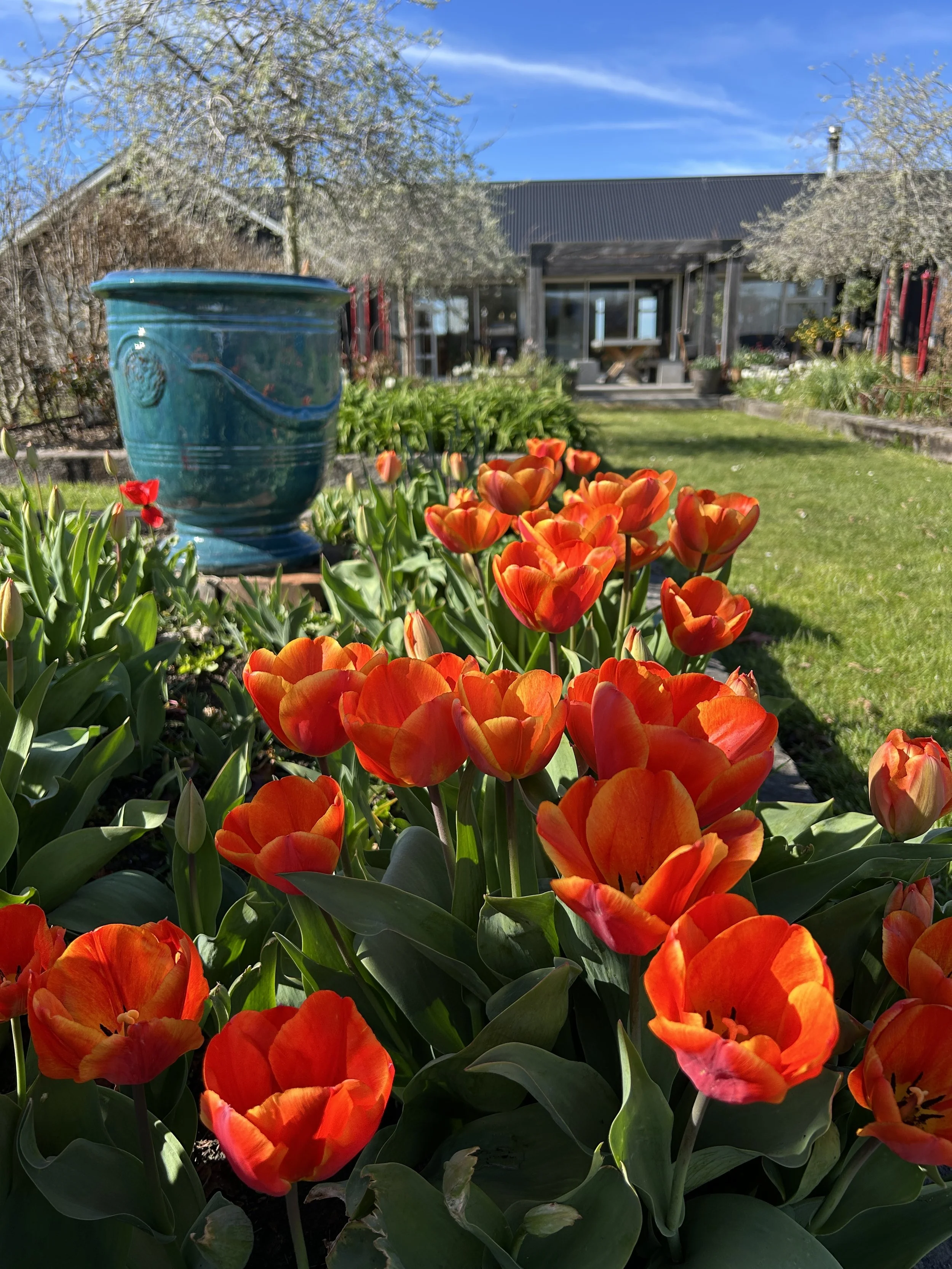
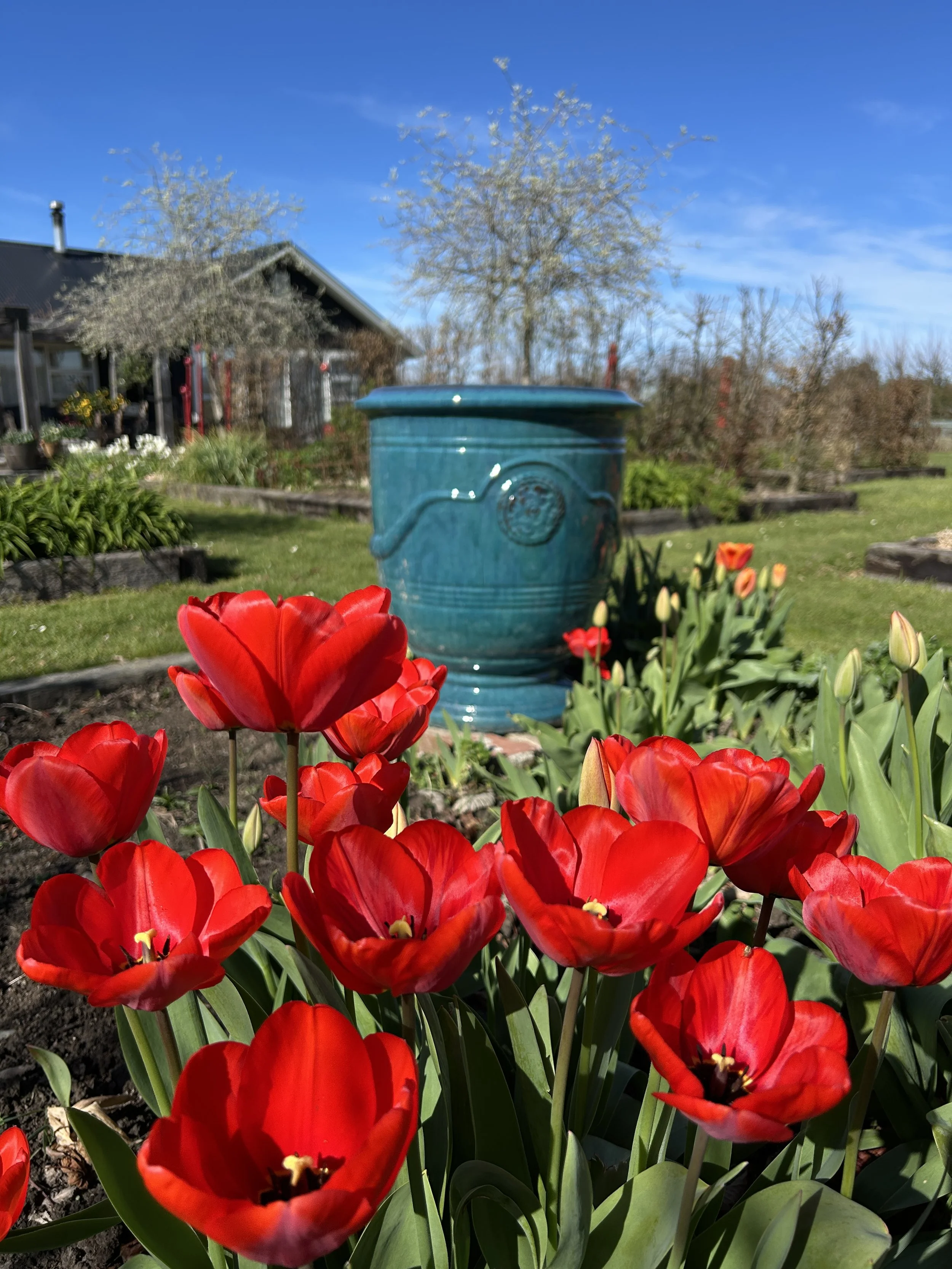
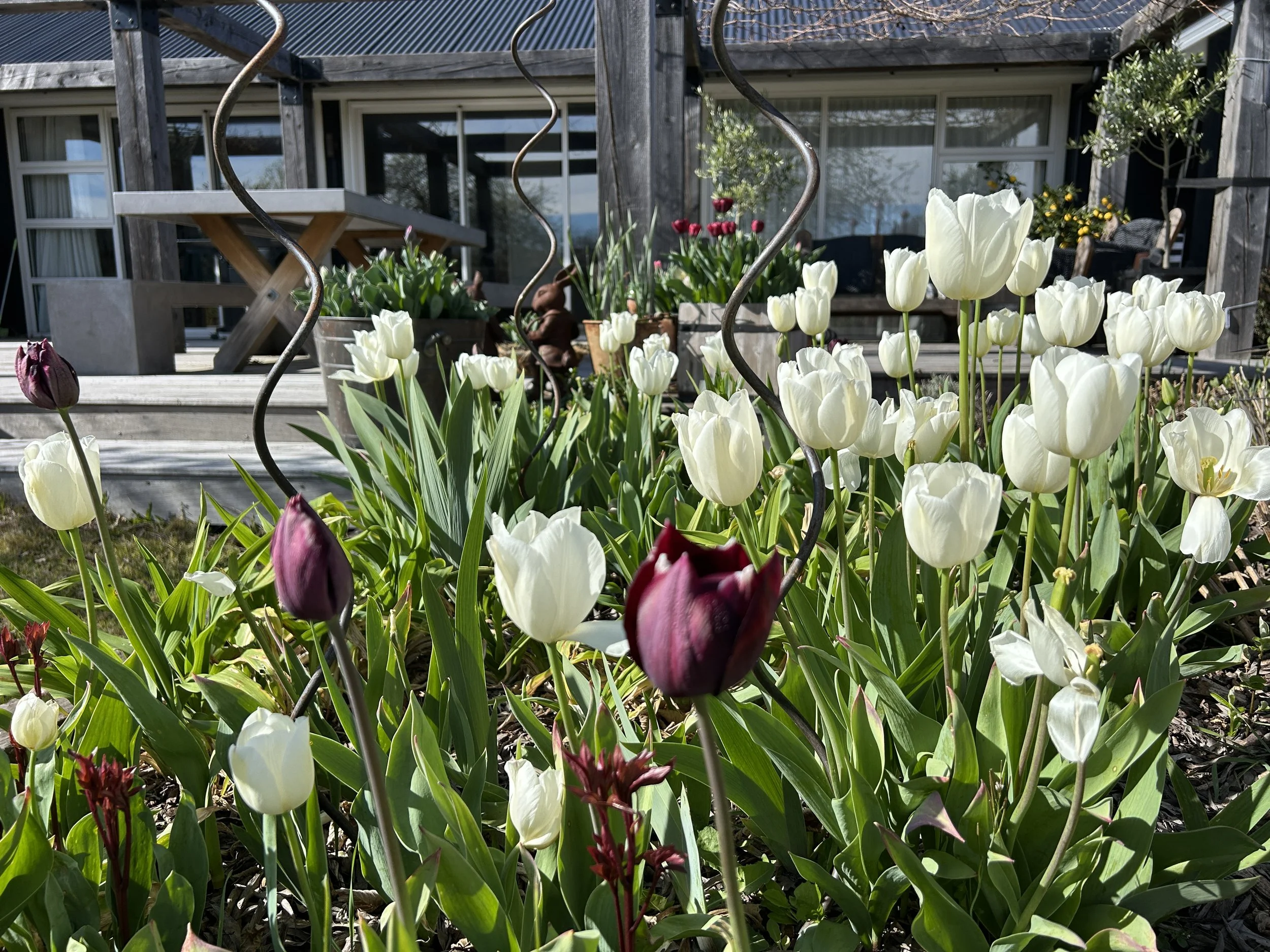
The tulips are still stealing the show this week. What I love about tulips, and many bulbs and perennials, is the range of early, mid, and late-season varieties. That means you can extend the show for weeks if you plan ahead.
But a word of warning: if you’re planting colour combos together, make sure the varieties actually flower at the same time. There’s nothing more disappointing than a beautifully matched palette on paper, only to find one blooms in early spring and the other doesn’t arrive until the first is already gone.
When it comes to tulip bulbs, I completely ignore all plant spacing advice and jam them into pots and creative planters. They grow perfectly well and it makes for amazing spring displays while the rest of the garden is still waking up. They won’t flower well in subsequent years if left in the pot though, so after flowering, when the greenery has died back, I move them into the garden. My pot displays are ALWAYS new bulbs every year. But once in the garden, and with our cold winters, tulips perennialise quite well. If you live in warmer climates, you’ll need to treat them as annuals, unless you want to go to the hassle of digging them up every year and putting them in the fridge for several weeks before replanting.
In The Whitehouse: tomatoes & companions
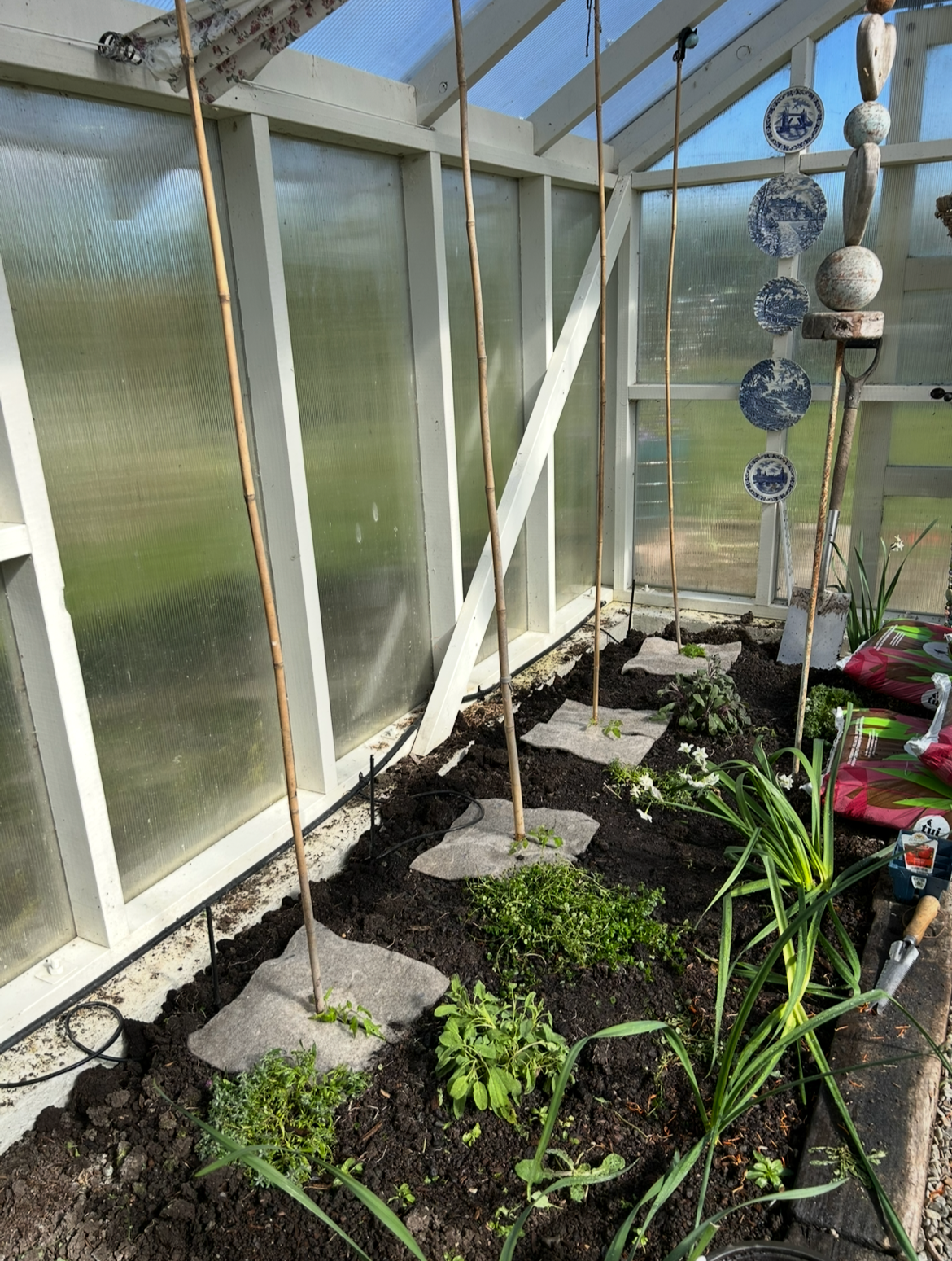
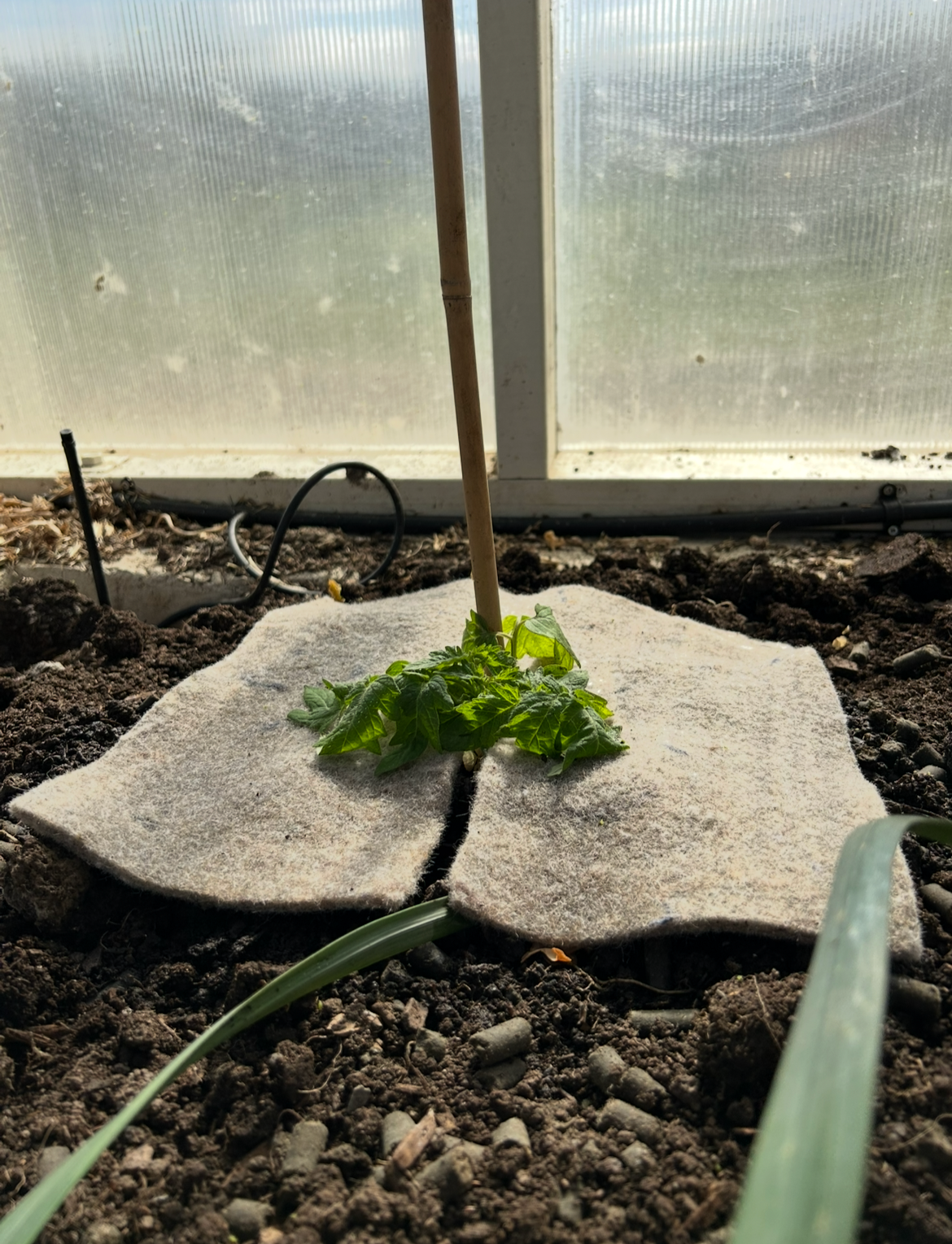
Meanwhile, in The Whitehouse, my tomatoes are living their best lives…. well-watered, growing madly, and this year tucked up with something new: wool weed mat. I’ve always mulched with sheep’s fleece, but it tends to go gallivanting across the garden in our winds, and frankly, I don’t own enough sheep to keep up with demand.
This woven version of wool looks promising. It holds moisture around thirsty roots and, best of all, breaks down over time. That’s a feature, not a flaw. Compare that to the black woven weedmat you’ll find stacked high at garden centres. They won’t tell you this (because, well, sales), but it’s basically the gardening equivalent of putting clingfilm over your soil. It stops mulch from decomposing into the earth and keeps the air from reaching plant roots. In the long run, it hinders more than it helps.
Wool won’t last forever, but that’s the beauty of it. As it breaks down, it feeds your soil instead of suffocating it. It’s not as cheap as the black fabric stuff though, so another, more economical way to avoid nasty weed mat is to use cardboard and put wood chip mulch on top. It suppresses weeds much longer than just mulch alone, and over time, the whole lot breaks down into your soil to enhance it. Wood? Cardboard? Take your pick…choose the one that fits your budget. I’m currently running a wee experiment where I’ve got wool mat on its own, wool mat under wood chip mulch, and cardboard under wood chip mulch. I’ll report back in several months and let you know which ones are performing the best.
Of course, I never plant tomatoes without their trusty companions.
Basil, nasturtiums, marigolds and mint are my go-to’s for pest deterrence and pollinator attraction. Plant mint in a pot. Only a VERY brave person plants mint directly into the garden!
I’ll plant some basil soon, now that the worst of the winter cold has passed. Basil is a tender wee thing and needs warmth to thrive.
Nasturtiums and marigolds will largely take care of themselves, popping back up from last year’s seed.
Around The Whitehouse you’ll also spot sweet alyssum, chives, sage, and thyme. Rosemary will be added soon to complete the mix. Thanks to companion planting from day one, I’ve barely had to deal with insect pests. The only villains still staging a coup are the slugs. Slimy little vandals. I do throw down a handful of pet-friendly slug pellets around at the start of the season, just to give my seedlings a fighting chance. One day I’ll crack the code on a natural deterrent and when I do, you’ll be the first to know.
Looking ahead: quirky garden art
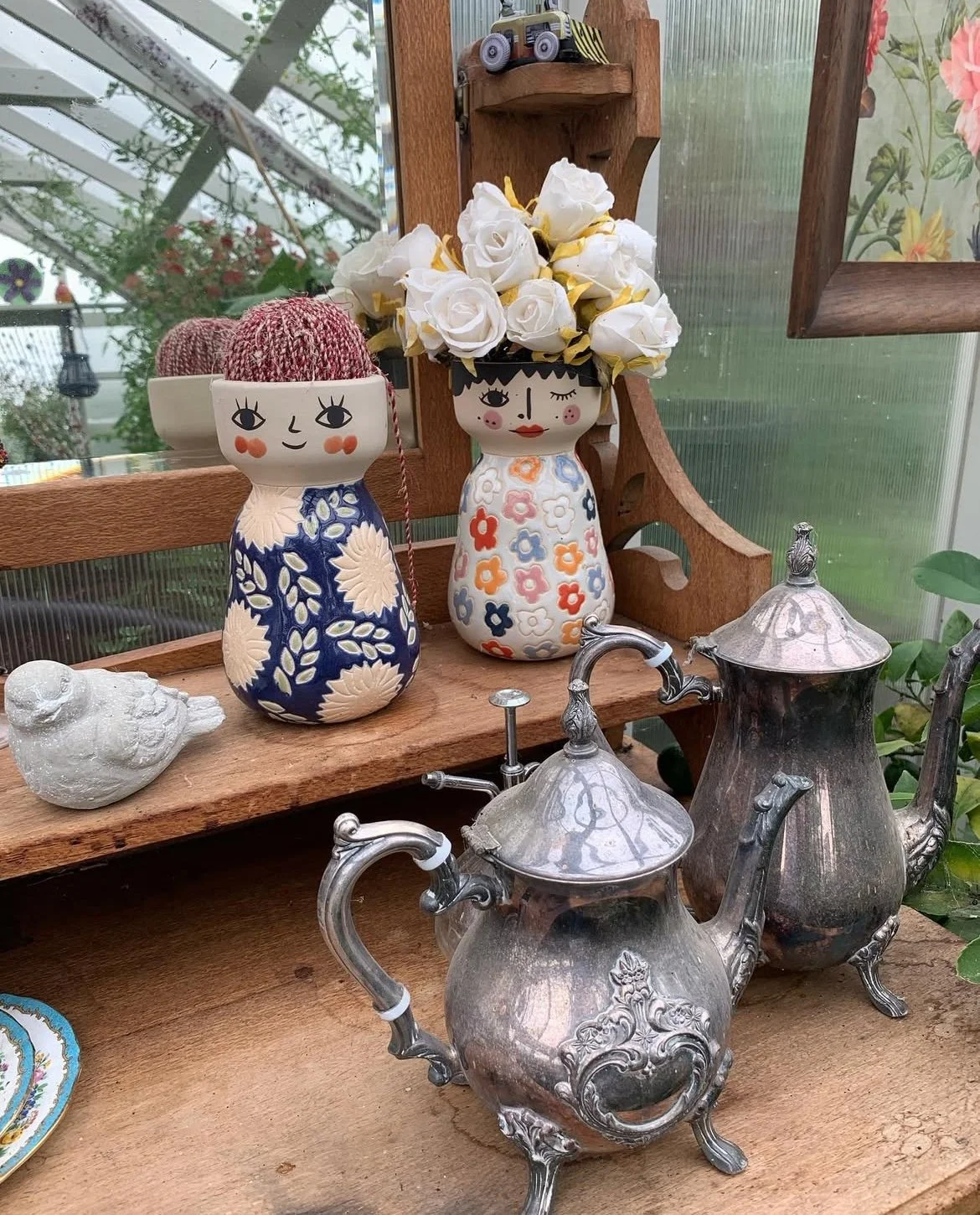
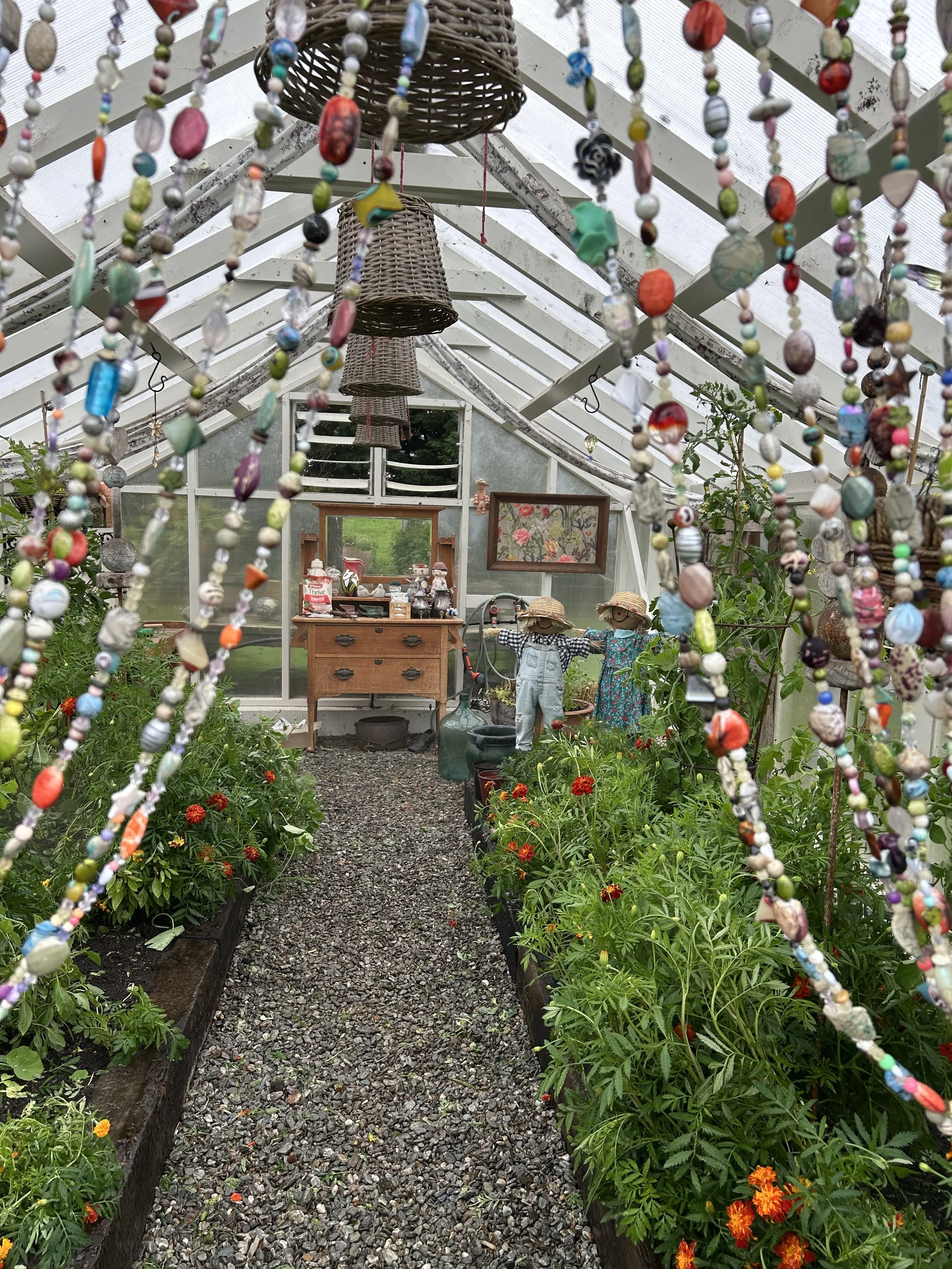
Over the next few weeks, I’ll be adding a couple of quirky pieces of garden art… one lovingly homemade, one shamelessly bought. I’ll share photos once they’re in place (brace yourselves for high art, possibly involving recycled junk). I know garden art divides people. Some gardeners prefer their borders as solemn as a Victorian funeral, while I’m over here tucking in colourful pots, sculptures, and whimsy like I’m curating a garden theme park. My view? Your garden, your rules. But mine just wouldn’t feel complete without a few eccentric extras giving the plants some company.



![IMG_5812[1].PNG](https://images.squarespace-cdn.com/content/v1/68a501cca58fdb69735e8c43/1758412156150-ROHPLUZHVP9FJEBKK6ZT/IMG_5812%5B1%5D.PNG)
New on the Behind the Garden Gate members-only pages this week
A brand new page - ‘Snapshot shed’ - where you’ll find a shed-load of my latest photos from the garden to provide with you planting inspiration. I’ll be updating it regularly, so check back to see what’s new each week.
A second brand new page - ‘Cheat sheets’ - where you’ll find quick reference resources for multiple things, including a list of seasonal tasks, the easiest flowers to grow, best flowers for the vase and more. Check it out. I’ll be adding things as I create them, so be sure to check back regularly and see what’s new.
Feature plant blog: bearded irises: a full breakdown of how to plant, grow, and care for one of my absolute favourite spring showstoppers.
Nitty gritty blog: a new entry detailing the building of The Whitehouse, one of my garden’s main features (includes building specs).
Detailed new section on the Garden to Table page to support your companion planting endeavours. Cheat sheets to tell you what to plant together and what NOT to plant together.
Earn an income from your garden blog: a new entry titled “Battling the algorithms” detailing how to keep growing your social media presence in the face of ever-changing algorithms that seem determined to throttle your reach.
Finally, a big thank you to all my subscribers, whether it’s just to this free newsletter, or to those who have signed-up to Behind the Garden Gate. I’m really grateful to you all for following along with my gardening endeavours and I hope you find value in my content.